Looking to jumpstart your progress without wasting time or money? This concise week program is built around ~1,200 calories per day and focuses on nutrient-dense, affordable foods that keep you full and energized.
You’ll get a clear, practical roadmap that reduces grocery stress and helps you make smarter choices. The structure simplifies shopping, saves time, and supports an active lifestyle with steady energy.
Whether you are new to tracking intake or refining habits, this guide gives you the tools to succeed. Follow the daily menus and simple swaps to stay on track while keeping costs low and taste high.
Key Takeaways
- The program targets about 1,200 calories per day using nutrient-rich, budget-friendly foods.
- It streamlines shopping and meal prep to cut daily decision fatigue.
- Daily menus focus on energy, satiety, and practical substitutions.
- Designed to work for beginners and those refining habits.
- Clear structure helps you stay consistent and measure progress.
Understanding Your Weight Loss Goals
Set a realistic target now to shape practical daily choices. Clear targets make actions easier to follow and reduce guesswork.
Define specific, measurable objectives. Pick a sensible short-term milestone and a broader target that fits your body and activity level.
Focus on steady progress rather than quick fixes. The science of weight loss favors consistent, sustainable habits over restrictive fads that you cannot maintain.
- Tailor goals to your composition, fitness routine, and medical history.
- Track simple markers like energy, measurements, and scale trends.
- Adjust portions and activity when progress stalls.
| Goal Type | Typical Timeline | How to Measure |
|---|---|---|
| Short-term | 2–4 weeks | Energy, clothing fit |
| Mid-term | 1–3 months | Body measurements, scale |
| Long-term | 3+ months | Sustainable habits, health markers |
The Benefits of a Structured 7 Day Healthy Meal Plan for Weight Loss
Mapping out your food for the week turns good intentions into easy habits. This approach helps you save money, cut waste, and make smarter choices without extra stress.
Why Planning Matters
A clear schedule removes decision fatigue. When you pack high-protein options and balanced plates ahead of time, you are less tempted to grab quick, less nutritious items. Planning also streamlines shopping and prep, so you spend less time wondering what to eat.
Managing Daily Calories
This program targets about 1,500 calories per day, which may suit many people aiming to lose weight. Splitting intake across predictable meals makes hitting protein targets easier and keeps energy steady.
- Meet daily protein needs while controlling total calories.
- Stay on track with your goals without complicated math.
- Reduce impulsive eating by organizing weekly choices.
Essential Nutritional Principles for Success
Build a daily pattern of meals that emphasizes fullness, fiber, and steady energy. Aim to include five portions of fruit and vegetables each day and exceed 30 g of fiber to support digestion and satiety.
Choose nutrient-dense foods that deliver vitamins, protein, and fiber without excess calories. These choices help you feel satisfied and reduce snacking later.
Balance macronutrients across meals: include lean protein, whole grains, and vegetables to maintain energy and support sustainable weight progress.
- Prioritize fiber-rich vegetables and whole grains to stay full longer.
- Focus on food quality to boost overall health and daily energy.
- Keep total calories in a reasonable range and stay consistent to sustain loss over time.
| Nutrient | Target per day | Why it matters |
|---|---|---|
| Fiber | 30+ g | Improves fullness and digestive health |
| Protein | 20–30 g per meal | Preserves muscle and curbs appetite |
| Fruits & Veg | 5 portions | Vitamins, minerals, and volume with low calories |
Preparing Your Kitchen for Healthy Eating
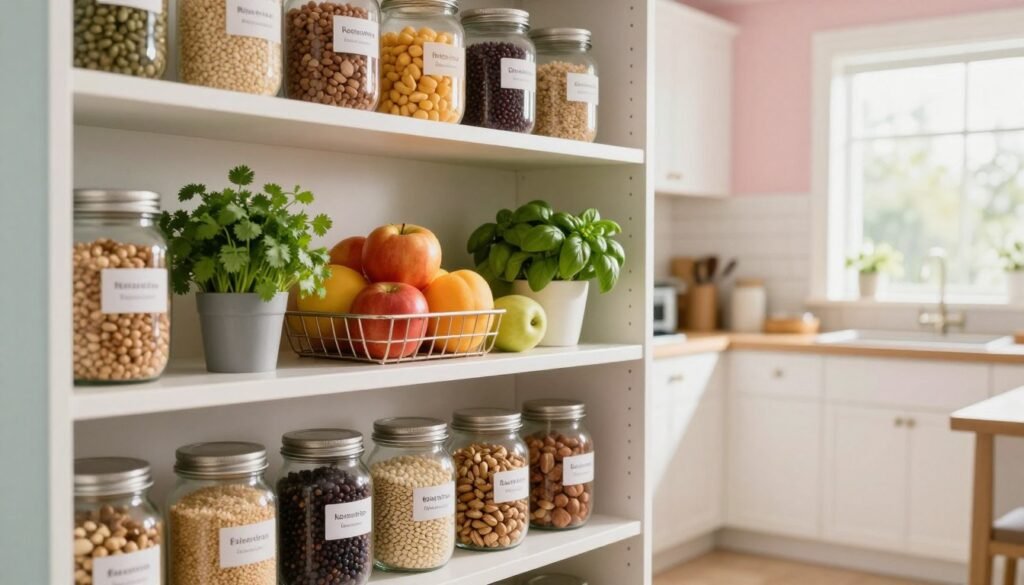
A well-stocked kitchen makes it simple to build consistent, nourishing meals all week. Small changes to how you store and arrange ingredients save time and cut stress when you cook.
Stocking Your Pantry
Start with versatile staples like canned beans, brown rice, oats, and olive oil. These base items let you create many different recipes without extra shopping trips.
Keep a selection of fresh produce and frozen vegetables so you always have fiber and vitamins on hand. Pack lean proteins like canned tuna, eggs, or tofu to meet protein needs quickly.
- Choose whole grains and legumes to stretch ingredients across meals and snacks.
- Label shelves and group similar foods to speed prep and reduce waste.
- Invest in a few spices and condiments to keep flavors interesting without added calories.
By organizing your space and keeping core items ready, you make it far easier to stick to your plan and support long-term health.
Monday Breakfast and Lunch Staples
Start your Monday with simple, reliable choices that make the rest of the week easier.
Simmer half a cup of rolled oats in water or milk for about 5 minutes. Top that bowl with a sliced banana for fiber and quick flavor.
Keep lunch classic and fuss-free. Make a whole grain turkey sandwich using two slices of bread, lettuce, and mustard. Add carrot sticks to boost crunch and fiber.
- For dinner, grill a lean chicken breast and serve with a cup of steamed broccoli and half a cup of brown rice.
- These staples take only a few minutes of hands-on prep and help you set a steady routine.
- By keeping Monday meals simple you build momentum for the rest of the week and reduce decision fatigue.
Tuesday Nutrient Density and Satiety
Choose meals today that combine probiotics and legumes to support digestion and fullness.
Incorporating Greek Yogurt
Start your breakfast with a serving of Greek yogurt topped with a handful of berries. Greek yogurt delivers concentrated protein and probiotics that help you feel satisfied through the morning.
Swap in a splash of milk if you need a thinner texture, or add a sliced banana for extra fiber and flavor.
Benefits of Lentils
For lunch, enjoy a warm lentil soup with one slice of whole grain bread. Lentils are an affordable source of protein, fiber, and iron and make a filling soup that keeps energy steady.
Keep dinner light: stir-fry tofu with mixed vegetables and serve over a cup of cooked quinoa. A small apple as a snack helps curb cravings between servings.
- Breakfast: yogurt + berries (high protein).
- Lunch: lentil soup + whole grain slices (steady energy).
- Dinner: tofu stir-fry over a cup of quinoa (nutrient-dense).
Wednesday Protein and Fiber Focus
Try a green smoothie to start your midweek with steady energy and easy protein.
Blend a handful of spinach with one banana, a scoop of protein powder, and one cup of unsweetened almond milk. This breakfast takes minutes and delivers iron, fiber, and a solid serving of protein.
For lunch, mix canned tuna with Greek yogurt or mustard. Serve it over lettuce with sliced tomato and cucumber for a crisp salad. It’s budget-friendly and high in protein.
Dinner idea: baked salmon with roasted sweet potato and steamed green beans. Pairing lean fish and fiber-rich sides helps spread your calories across the day.
“Focusing on protein and fiber reduces cravings and keeps energy steady between meals.”
- Snack: a handful of almonds to add healthy fats and magnesium.
- Keep portions reasonable and aim for balanced servings of vegetables and protein.
| Item | Typical Calories | Protein (g) |
|---|---|---|
| Green smoothie (1 cup) | 220 | 18 |
| Tuna yogurt salad (serving) | 300 | 28 |
| Baked salmon plate | 420 | 35 |
Thursday Balanced Meal Combinations
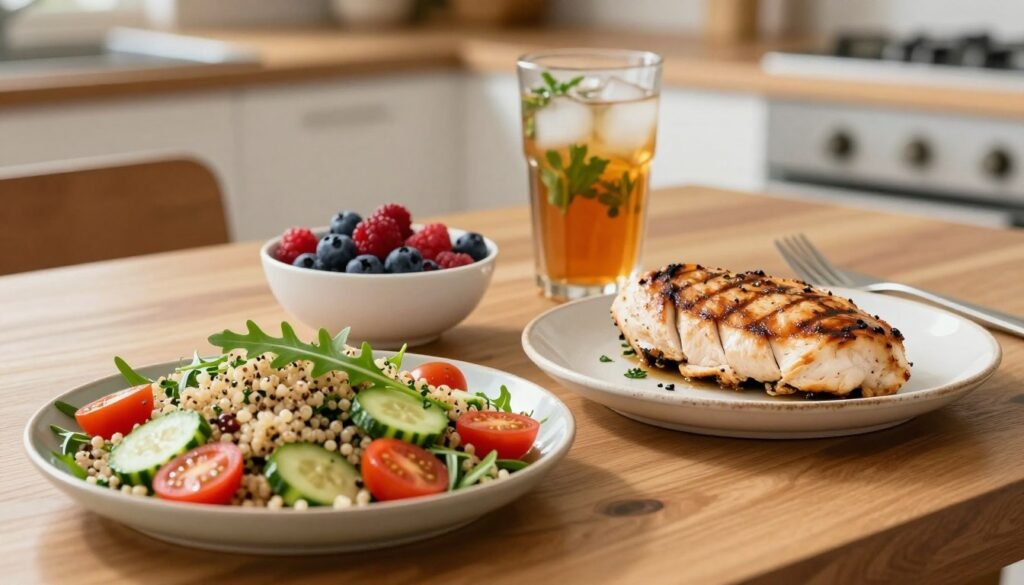
Thursday focuses on balanced combos that keep energy steady and hunger at bay.
The Role of Lean Proteins
For breakfast, scramble two eggs with a handful of spinach. This quick start adds protein and iron in one warm serving.
At lunch, try a chickpea salad with mixed greens, cucumbers, diced tomato, and a vinaigrette made from olive oil. The beans provide fiber and plant-based protein.
Your dinner can be turkey meatballs over whole wheat spaghetti with marinara. A modest cup of pasta plus lean turkey stretches your budget and calories while keeping satiety high.
A simple snack like carrot sticks with hummus or a small serving of yogurt and a sprinkle of cheese helps bridge meals without excess calories.
- Tip: Add a side cup of steamed vegetables or a small portion of brown rice if you need extra bulk.
- Balance protein, veg, and a bit of oil to stay focused and full.
| Meal | Example | Key benefit |
|---|---|---|
| Breakfast | Eggs + spinach | Protein & iron |
| Lunch | Chickpea salad | Fiber & plant protein |
| Dinner | Turkey meatballs + pasta | Satisfying, budget-friendly |
Friday Energy Management Strategies
Let Friday be a day of flavorful, prep-friendly meals that keep you fueled without excess calories. This approach helps you spread energy through the workday and avoid heavy evening cravings.
Start with whole grain toast topped with peanut butter and banana at breakfast. That combo adds healthy fats and protein to stabilize morning hunger.
For lunch, pack a quinoa bowl with black beans, corn, and tomatoes. This bowl delivers fiber and protein in one hearty serving that works well for meal prep.
Finish your day with grilled chicken fajitas tossed with bell peppers and onions for dinner. They reheat well and supply lean protein plus plenty of vegetables.
- Keep a small orange or yogurt as a mid-afternoon snack to add vitamin C and a fresh boost.
- Add a light salad or a sprinkle of cheese if you need more volume without many extra calories.
By managing portions and choosing protein-rich servings, you protect your energy and support steady weight progress. These choices make it easier to meet targets per day and finish the week strong.
Saturday Whole Food Preparation
Use Saturday to prep grains and vegetables so your week stays simple and satisfying. A short cooking session builds several ready servings you can reheat in minutes.
Cooking with Whole Grains
Breakfast idea: porridge made with oats and semi-skimmed milk topped with a sliced banana. This warm cup supplies slow carbs and keeps you full into midmorning.
Cook extra quinoa or brown rice to use as a base for lunch bowls or a quick dinner. Grain batches store well and save time.
Vegetable Preparation
Roast cauliflower and broccoli together with a drizzle of oil for a simple side. Steam a cup of mixed vegetables to add to salads or soups.
Make a tuna and sweetcorn pasta bake with steamed cauliflower and broccoli for hearty leftovers. It reheats well and gives you extra servings of vegetables and protein.
“Batch cooking on a weekend reduces weekday stress and keeps meals consistent.”
- Saturday lunch: Indian-spiced scrambled eggs on wholemeal slices.
- Snacks: a small handful of peanuts, an apple, and a pear to bridge servings.
- Prep saves time and supports balanced choices across the day.
| Item | Typical Serving | Benefit |
|---|---|---|
| Porridge (oats + milk) | 1 cup | Slow carbs, satiety |
| Quinoa / brown rice | 1 cup cooked | Versatile base, fiber |
| Tuna pasta bake with veg | 1 serving | Protein + vegetables, good leftovers |
Sunday Meal Planning for the Week Ahead
Take an hour on Sunday to lock in recipes and build a realistic grocery list. This small investment makes cooking simple and stops midweek scrambling.
Start your morning with a poached egg and chestnut mushrooms on wholemeal bread. It’s a filling breakfast that feels like a treat and gives steady energy.
For lunch, roast a chicken and vegetable traybake. Make enough to pack leftovers. This approach saves time and gives you ready proteins and veg to use through the week.
Your dinner can be a sandwich using leftover chicken, sliced cucumber, tomato, and a little cheese. It’s efficient, tasty, and avoids food waste.
- Sunday is ideal to finalize your weekly plan and confirm ingredients.
- Prep a batch of traybake to serve now and to reheat per day later.
- Keep snacks simple: peanuts and carrot sticks bridge meals without fuss.
- Review a few favorite recipes so shopping matches what you’ll actually cook.
“Planning ahead reduces stress and keeps your kitchen stocked with real, usable food.”
Wrap up by labeling any containers and noting meals in your calendar. You’ll save time, cut waste, and face the new week with clear choices.
Adjusting Portions for Individual Calorie Needs
Small portion tweaks let you match daily calories to your unique activity and goals. Your metabolism, age, and movement shape how many calories you need each day. Adjust portions, not rules, to stay flexible.
Listening to Your Body
Hunger and fullness are useful signals. Pause before extra servings and note whether you eat from habit, stress, or true need.
- Adjust calories per day because every person has unique metabolic needs tied to activity level.
- If progress stalls, slightly reduce calorie-dense servings like rice or extra oil.
- Add more vegetables and lean protein such as turkey or chicken to feel full with fewer calories.
- Use a food scale or measuring cup to learn what a standard serving looks like for rice, quinoa, or beans.
- Stay flexible: your calorie needs can change day to day, so prioritize how your body feels after eating.
| Strategy | Example Serving | Why it helps |
|---|---|---|
| Reduce calorie-dense items | Swap 1/2 cup rice for extra broccoli | Lower calories while adding volume |
| Increase lean protein | 3 oz chicken or turkey per serving | Boosts satiety and preserves muscle |
| Measure portions | Food scale or measuring cups | Improves accuracy and progress tracking |
Tips for Maintaining Long Term Healthy Habits
To maintain results, focus on routines that fit your life instead of strict rules you’ll abandon. Keep your plan simple and repeatable so it becomes part of your week.
Choose recipes you enjoy. When you like the foods you cook, you are far more likely to stick with a meal plan over time. Swap ingredients and use a small amount of olive oil for flavor rather than large portions of high-calorie dressings.
Surround yourself with supportive people who back your goals. Accountability from friends or family makes it easier to lose weight and to keep it off.
Allow occasional treats. One indulgent meal or snack will not undo steady progress. What matters is your daily pattern of whole food choices and regular activity.
Long-term success depends on consistency, not perfection. Pick sustainable swaps, keep a simple grocery list, and build habits that support better health for years.
Conclusion
A short set of clear actions makes it easier to stick with better food and feel more energetic. Use the menu ideas and simple swaps to build a weekly routine that works with your schedule.
By organizing your meals and planning ahead, you reduce stress and make progress toward your weight goals. Keep portions sensible and pick recipes you enjoy so the approach fits your life.
Consistency matters more than perfection. Try two small changes each week and track how you feel. Small wins add up into lasting loss and improved health.
Adapt this plan to match your tastes and needs. With steady effort, people see real results and more energy on a routine that lasts.