What if you could reset your metabolism and start burning fat for fuel in just one week?
Congratulations on taking this powerful step toward better health. Starting a new way of eating can feel overwhelming. This guide is designed to change that.
A clear roadmap is your key to success. Knowing exactly which foods to eat and which to avoid removes all the guesswork. It helps you stay in the fat-burning state of ketosis and makes switching to a low-carb lifestyle smooth and simple.
The benefits go far beyond the scale. Many people experience sharper mental focus, steady energy levels, and better blood sugar control. This isn’t about deprivation. It’s about fueling your body efficiently with satisfying meals.
This plan focuses on a balance of healthy fats, moderate protein, and low carbohydrates. It’s crafted for anyone new to this approach. Committing to the full week can show you tangible results and build fantastic momentum.
We’ll walk you through everything: choosing your path, understanding your macros, prepping your kitchen, and a detailed day-by-day guide. Let’s get started on transforming your health together.
Key Takeaways
- A structured plan eliminates confusion and helps you stay in ketosis consistently.
- This guide is specifically designed for those new to the low-carb lifestyle.
- The focus is on entering a fat-burning metabolic state for efficient weight loss.
- You’ll enjoy simple, satisfying meals that balance fats, protein, and carbs.
- Tangible results can be seen within the first week, building motivation.
- Benefits extend beyond weight loss to improved energy and mental clarity.
- You’ll get practical tips for meal prep and overcoming common challenges.
Welcome to Your Keto Journey
Embarking on this path is about more than changing your meals; it’s about upgrading your metabolic engine. You’ve taken a courageous step toward a healthier, more vibrant you. Let’s celebrate that decision.
The ketogenic diet is a simple but powerful eating strategy. It focuses on high-healthy fats, moderate protein, and very low carbs. This shift tells your body to stop relying on sugar for energy. Instead, it begins burning stored fat.
This fat-burning state is called ketosis. When you’re in it, your system becomes incredibly efficient. You may notice fewer cravings and much steadier energy throughout the day. No more afternoon crashes.
The benefits often go beyond the scale. Many people report sharper mental focus and reduced inflammation. Some even see improvements in their cholesterol profiles. Starting any new diet can feel daunting, we know. This guide breaks everything into manageable, bite-sized pieces.
Approach this with a positive mindset. View it as a sustainable lifestyle upgrade, not a temporary fix. Your success hinges on preparation. Getting your mind and kitchen ready is half the battle.
Set simple goals for your first week. Aim to follow your meal plan and drink plenty of water. Remember, everyone’s body adapts at its own pace. Be patient and kind to yourself during this transition.
This journey is truly about gaining health, confidence, and vitality. Before you dive into the foods, it’s wise to understand your macros. A resource like this comprehensive beginner’s guide can set you up for lasting success.
Finding Your Keto “Why” and Choosing Your Path
Before you pick a single food, take a moment to connect with your deepest reason for starting. Is it to feel more energetic in your daily life? To manage your blood sugar better? Or to finally reach a healthy weight?
Your personal “why” is your anchor. It will fuel your motivation when cravings hit or when your energy dips during the initial transition. This clarity turns a simple diet plan into a purposeful lifestyle change.
It’s also important to know that the keto diet isn’t one-size-fits-all. Several versions exist, each tailored to different goals and activity levels. Choosing the right path from the start sets you up for success.
The diet that works is the one you can stick to. Knowing your ‘why’ and picking the right approach makes consistency possible.
Standard Ketogenic Diet (SKD) for Fat Loss & Health
This is the classic and most recommended version, especially for your first week. The Standard Ketogenic Diet focuses on high healthy fats, moderate protein, and very low carbohydrates.
You’ll typically limit net carbs to 20-50 grams per day. This strict limit is designed to help your body enter ketosis quickly and reliably. It’s ideal for steady weight loss and improving overall health markers.
Most people find this approach straightforward. It forms the foundation of the beginner plan outlined later in this guide.
Targeted Ketogenic Diet (TKD) for Athletes
Are you highly active or an athlete? The Targeted Ketogenic Diet might be for you. It allows for a small amount of easily digestible carbs (25-50g) consumed around your workout time.
This strategy provides a quick energy boost for performance. The key is timing—eating these carb-based snacks 30 minutes to an hour before exercise. The goal is to support intense training while aiming to stay in ketosis.
Cyclical Ketogenic Diet (CKD) for Intense Training
Bodybuilders or those with extremely demanding training schedules often use this method. The Cyclical Ketogenic Diet involves cycling between strict keto days and higher-carb “refeed” days.
A common pattern is 5 days of very low carbs (20-50g), followed by 2 days of consuming over 100 grams of carbohydrates. This helps replenish muscle glycogen stores depleted by intense, frequent workouts.
High-Protein Ketogenic Diet (HPKD) for Frequent Lifters
If you lift weights regularly and prioritize muscle maintenance or growth, consider this path. The High-Protein Ketogenic Diet increases your protein intake to about 35% of your daily calories.
Fats make up around 60%, and net carbs stay at a very low 5%. This higher protein level can promote greater satiety and support muscle tissue. It’s excellent for those who enjoy meats, fish, and eggs.
| Diet Path | Primary Goal | Carb Intake | Protein Level | Best For |
|---|---|---|---|---|
| Standard (SKD) | Fat Loss & General Health | 20-50g net carbs/day | Moderate | Beginners, sustainable lifestyle |
| Targeted (TKD) | Athletic Performance | 25-50g carbs around workouts | Moderate | Active individuals, athletes |
| Cyclical (CKD) | Muscle Glycogen Replenishment | Cycles: 5 low-carb days, 2 high-carb days | Moderate | Bodybuilders, intense training schedules |
| High-Protein (HPKD) | Muscle Building & Satiety | ~5% of calories (very low) | High (~35% of calories) | Frequent weightlifters, those needing more protein |
So, how do you choose? Align your choice with your primary goal. For general weight and health benefits, start with SKD. If performance is key, look into TKD or CKD. For a focus on muscle, HPKD may be your match.
Remember, the keto diet plan in this guide uses the Standard (SKD) approach. It’s the simplest way to learn the ropes and experience the benefits of low-carb living.
If your needs are specific, we encourage you to research each type further. No matter which path you pick, the core principle remains: minimize sugar and starches, and fuel up on nutritious foods rich in healthy fats.
Keto Macros 101: Understanding Fat, Protein, and Carbs
Mastering the balance of three key nutrients is the secret to unlocking ketosis. Macronutrients, or “macros,” are the cornerstone of this eating strategy. They are fats, proteins, and carbohydrates.
On a standard diet, you likely get most of your energy from carbohydrates. This approach flips that script completely. You dramatically shift where your calories come from.
The goal is to enter a metabolic state called ketosis. Here, your body becomes a fat-burning machine. Understanding each macro’s role makes this process clear and manageable.
The Primary Fuel: Healthy Fats
Fat is your new best friend on this lifestyle. It becomes your primary energy source, making up 70-80% of your daily calories.
You’ll eat plenty of healthy fats like avocado oil, olive oil, and nuts. These foods fuel your cells and support hormone function. They also keep you feeling satisfied for hours.
Think of fat as high-quality diesel for your engine. It burns clean and steady, avoiding the energy spikes and crashes linked to sugar.
The Building Block: Moderate Protein
Protein is essential for maintaining muscle mass and repairing tissues. It also plays a huge role in keeping you full. On a keto diet, your intake should be moderate.
Aim for about 20-25% of your calories from protein. Good sources include meats, fish, and egg. It’s crucial not to overdo it.
Too much protein can be converted into glucose by your body. This can potentially slow your progress into ketosis. The key is balance.
The Limited Element: Low Carbohydrates
Carbohydrates are severely restricted on this plan. This is what forces the metabolic switch. You’ll limit them to just 5-10% of your daily calories.
The focus is on net carbs (total carbs minus fiber). Get these from low-carb vegetables like leafy greens and cauliflower. Avoid starchy foods, grains, and most fruits.
By depleting your glucose stores, you signal your body to tap into fat reserves. This is the heart of the weight loss mechanism.
Here’s a clear comparison of how your plate changes on this eating approach:
| Macronutrient | Standard Diet | Ketogenic Diet | Primary Role on Keto |
|---|---|---|---|
| Fats | 20-35% of calories | 70-80% of calories | Primary energy source, supports hormone health |
| Protein | 10-35% of calories | 20-25% of calories | Preserves muscle, promotes satiety, repairs tissue |
| Carbohydrates | 45-65% of calories | 5-10% of calories | Severely limited to trigger fat-burning state |
Remember, these numbers are percentages of calories, not grams. Your individual needs vary based on your weight, activity level, and health goals.
Why does this ratio work so well? Limiting carbs lowers insulin levels. This hormone is like a storage locker for fat.
When insulin is low, the locker opens. Your stored fat is released and burned for energy. This leads to efficient weight loss and steady energy.
Tracking your macros, especially at the start, ensures you stay within these ranges. It’s your roadmap to achieving and maintaining ketosis.
Think of it like switching your car from gasoline to diesel. Gasoline represents carbohydrates—quick but volatile fuel. Diesel represents healthy fats—a steady, long-lasting power source.
Your body adapts to burn fat efficiently. Many people find this leads to better blood sugar control and mental clarity. These are powerful benefits beyond the scale.
With this foundation, you’re ready to calculate your personal numbers. The next step makes your meal plan truly your own.
How to Calculate Your Personal Keto Macros

Think of calculating your macros as programming your body’s GPS for the most direct route to ketosis.
A generic meal plan offers a great starting point. But your personal macros make the diet truly yours. They are the specific numbers that align the keto diet with your unique body and goals.
This step is crucial for effective weight loss and health benefits. It ensures you eat the right amount of fuel to feel satisfied, preserve muscle, and enter that fat-burning state.
Several key factors determine your ideal numbers. Your current weight, height, age, and gender are the baseline. Your activity level and specific weight loss goals fine-tune the results.
The easiest way to get an accurate estimate is to use an online keto macro calculator. Tools from reputable sources ask for these details and do the math for you.
“Setting your calculator to ‘sedentary’ is a smart move for most beginners. It provides a solid foundation you can adjust later based on your actual energy output.”
Here’s a hypothetical example for someone aiming for 1,600 calories per day:
| Macronutrient | Grams per Day | Calories (approx.) |
|---|---|---|
| Fats | 125g | 1,125 |
| Protein | 100g | 400 |
| Net Carbs | 25g | 100 |
Weight loss still requires a calorie deficit. This means consuming fewer calories than you burn. The keto diet structure helps create this deficit naturally by controlling hunger.
You can convert percentage goals into gram targets yourself. Remember: fat has 9 calories per gram, while protein and carbohydrates each have 4.
For beginners, starting with standard ratios is perfect. A common split is 75% fat, 20% protein, 5% net carbs. After your first week, you can adjust based on how you feel.
Tracking your foods for a few days is incredibly helpful. Apps like Carb Manager or MyFitnessPal let you log your meals and see your macro totals in real-time.
This ensures you’re hitting your targets and minimizing sugar and starches. It’s a valuable learning tool.
Many people find that after some time, strict counting becomes less necessary. You’ll learn to compose plates intuitively. But at the start, it builds confidence and confirms you’re on the right path to ketosis.
This personalized plan turns theory into actionable daily meals. With your numbers in hand, you’re ready to shop and prep with total clarity.
Your Pre-Plan Checklist: Groceries and Kitchen Prep
Success in your new eating style begins long before you take your first bite. Proper preparation is your shield against temptation. It makes sticking to your meal plan simple, especially during your first week.
Think of this as setting the stage for a smooth performance. With everything ready, you won’t scramble when hunger strikes. Follow this step-by-step checklist to transform your kitchen into a success zone.
Step 1: Purge Your Pantry
Start by removing temptation. Go through your pantry and fridge. Take out high-carb items like bread, pasta, rice, and sugar.
Donate unopened packages or set them aside for other household members. Clear out processed snacks and sugary drinks. This creates physical space for your new foods.
It also sends a clear mental signal. You are committing to a new lifestyle. A clean slate makes it easier to focus on your health goals.
Step 2: Stock Your Keto Staples
Next, build your foundation with the right ingredients. A well-stocked kitchen prevents last-minute poor choices. Here is a core shopping list to get you started.
Healthy Fats & Oils: Avocado oil, olive oil, coconut oil, and grass-fed butter.
Quality Proteins: Chicken thighs, ground beef, steak, eggs, and fatty fish like salmon.
Low-Carb Vegetables: Leafy greens, broccoli, cauliflower, zucchini, and bell peppers.
Full-Fat Dairy: Cheddar cheese, cream cheese, heavy cream, and plain Greek yogurt.
Nuts & Seeds: Almonds, macadamia nuts, chia seeds, and pumpkin seeds.
Consider downloading a printable keto grocery list. Take it to the store to stay on track.
Step 3: Gather Your Kitchen Tools
The right tools make cooking enjoyable and efficient. You don’t need fancy gadgets. A few basics will help you prepare keto meals with ease.
Here’s a practical checklist of items that are incredibly useful:
| Tool | Why It’s Helpful |
|---|---|
| Food Scale | Ensures accurate portion control and macro tracking. |
| Quality Knives | Makes chopping vegetables and meats quick and safe. |
| Non-Stick Skillets | Perfect for cooking eggs, chicken, and steak without sticking. |
| Meal Prep Containers | Portions out meals and snacks for grab-and-go convenience. |
| Spiralizer | Turns zucchini or cauliflower into low-carb “noodles.” |
| Blender | Great for making smoothies, sauces, and salad dressings. |
Step 4: Master Meal Prep Day
Choose one day, like Sunday, as your prep day. Dedicate a couple of hours to cook and assemble. This investment pays off all week long.
Cook your proteins in bulk. Roast a tray of chicken thighs and bake some steak. Hard-boil a dozen eggs for quick breakfasts or snacks.
Wash and chop all your vegetables. Store them in airtight containers. Make a big batch of cauliflower rice to use as a base for meals.
Prepare a simple salad dressing with olive oil and vinegar. Portion out nuts and cheese into single-serving bags.
Step 5: Organize and Label
Place your prepped foods front and center in the fridge. Use clear containers so you can see what’s inside. This makes choosing a keto-friendly meal effortless.
If others in your home aren’t following the same diet plan, plan adaptable meals. Serve keto mains with a side everyone can enjoy, like a mixed green salad.
Always read food labels. Hidden sugars and carbs lurk in sauces, dressings, and packaged foods. Look for total carbohydrates and fiber to calculate net carbs.
A prepared kitchen is your greatest ally. It turns willpower into a simple habit of reaching for the right food.
Finally, make a batch of keto-friendly snacks like simple fat bombs or baked cheese crisps. Having these on hand stops cravings before they start.
You are now ready to dive into your first week with confidence. Your kitchen supports your goals. Let’s move on to your detailed day-by-day meal plan.
7-Day Keto Meal Plan for Beginners: Your First Week
Let’s turn theory into action with a full week of menus crafted to help you feel great and see results.
This is your practical, no-stress guide to eating. It’s designed to keep you full and satisfied while hitting your macro targets. The schedule assumes a daily target of around 1,600 calories.
You’ll aim for 20-25g net carbs, moderate protein, and high fats. Remember, you can adjust portions based on your personal macros. Drink plenty of water and use herbs and spices for flavor.
Day 1 Meals: Jumpstarting Ketosis
Day one focuses on very low-carb meals. This helps deplete your glycogen stores quickly. Your body will start looking for a new fuel source.
Start with Bulletproof coffee (coffee blended with butter and MCT oil). For breakfast, try a spinach and feta omelet cooked in olive oil.
Lunch can be a hearty Cobb salad with avocado, bacon, hard-boiled egg, and blue cheese. Dinner features baked salmon with a side of lemon-buttered asparagus.
These foods are rich in healthy fats and very low in carbohydrates. This combination is perfect for initiating the metabolic shift.
Day 2 Meals: Finding Your Rhythm
Introduce more variety and volume with healthy fats today. Your energy levels should begin to stabilize.
For breakfast, make a simple chia seed pudding with unsweetened almond milk and a few berries. Lunch is easy: use leftover salmon on a bed of leafy greens.
Dinner brings fun with a hearty taco bowl. Use ground beef, shredded cheese, salsa, sour cream, and lettuce. It’s a flavorful, satisfying meal that fits your plan perfectly.
Day 3 Meals: Embracing Healthy Fats
Today emphasizes incorporating different fat sources. This helps keep meals interesting and your hunger at bay.
Blend up a creamy avocado smoothie for a quick morning meal. For lunch, try tuna salad stuffed into avocado halves.
Dinner is simple and delicious: chicken thighs roasted with olive oil, garlic, and broccoli. The crispy skin and tender meat make this a favorite for many people.
Day 4 Meals: A Sample Day in Detail
Let’s look at a perfect day in detail. This shows how everything comes together to meet your macro goals.
Breakfast: Keto Avocado Egg Bowls. Scoop out an avocado, crack an egg inside, and bake. Macros: ~27g fat, 10.5g protein, 7g net carbs.
Lunch: Crispy Cheesy Chicken Salad. Bread chicken in crushed pork rinds and parmesan, then pan-fry. Serve over a large salad. Macros: ~36.5g fat, 55g protein, 8g net carbs.
Dinner: 4 oz grilled ribeye steak with a pat of herb butter and a side salad. Macros: ~62g fat, 20g protein, 1g net carb.
Dessert/Snack: A simple MCT Fat Bomb. Macros: ~8g fat, 1g protein, 2g net carbs.
| Meal | Fat (g) | Protein (g) | Net Carbs (g) |
|---|---|---|---|
| Breakfast | 27 | 10.5 | 7 |
| Lunch | 36.5 | 55 | 8 |
| Dinner | 62 | 20 | 1 |
| Dessert | 8 | 1 | 2 |
| Daily Totals | ~133.5 | ~86.5 | 18 |
This day aligns well with the example keto diet macros. It provides high fat, moderate protein, and low carbs.
Day 5 Meals: Mixing Textures and Flavors
Experiment with textures today. Combine crispy, creamy, and crunchy elements in your meals.
Cook a breakfast skillet with bacon, eggs, and bell peppers. For lunch, try zucchini noodles (zoodles) with pesto and shredded chicken.
Dinner can be a simple baked cod fillet with a lemon-butter sauce and roasted cauliflower. The variety prevents boredom and makes eating this way a pleasure.
Day 6 Meals: Simple and Satisfying
Keep it simple with easy-to-assemble foods for a busy day. This proves that a diet plan doesn’t need to be complicated.
Grab hard-boiled eggs and some cheese for a fast breakfast. Lunch is a quick burger patty topped with cheddar and a side salad.
For dinner, toss sausages and bell peppers on a sheet pan and roast. It’s minimal cleanup for a flavorful, filling meal.
Day 7 Meals: Finishing Strong
End your first week strong with satisfying, celebratory-style keto meals. You’ve earned it!
Try keto pancakes made with almond flour for a special breakfast. For lunch, build a large chef’s salad with plenty of toppings like ham, turkey, and cheese.
Celebrate with a steak dinner. Enjoy a juicy cut with a side of creamed spinach. This meal is rich in nutrients and perfect for supporting your health and weight loss goals.
Sticking to a structured plan for seven days can show you tangible benefits. Many experience reduced cravings and steadier energy, building fantastic momentum for the time ahead.
Remember, these are templates. You can swap chicken for fish or use different greens. The key is keeping net carbs low and fats high. You’re now ready to navigate your first week with confidence.
What to Drink (and What to Avoid) on Keto
Navigating your drink options is a key skill for keto success. What you sip can stealthily add carbs and sugar to your day. This can easily knock you out of that precious fat-burning state.
Your beverage choices are just as important as your foods. Many popular drinks are loaded with hidden carbohydrates. Staying informed helps you stay on track toward your health and weight loss goals.
Your Go-To Keto-Friendly Drinks
Stick with these simple, hydrating options. They have zero or very low net carbs and support your body.
- Water: Still or sparkling water is the ultimate hydrator. It should be your primary drink all day long.
- Unsweetened Coffee & Tea: Black coffee and plain tea (green, herbal, black) are excellent. Avoid adding sugar or sweetened creamers.
- Bone Broth: This savory drink is a powerhouse for replenishing electrolytes. It’s perfect for sipping when you feel low on energy.
Low-Carb Milk Alternatives
Regular milk contains lactose, a natural sugar. Instead, choose unsweetened versions of these plant-based options.
Almond milk, coconut milk, and flax milk are great choices. Always check the label for added sugar. The “unsweetened” variety is your best bet.
The Critical Role of Electrolytes
When you cut carbs, your body flushes out more water and minerals. This can lead to the “keto flu.” Symptoms include fatigue, headaches, and muscle cramps.
Prevent this by focusing on sodium, potassium, and magnesium. Add a pinch of salt to your water or drink sugar-free electrolyte mixes. Bone broth is a fantastic natural source.
For more detailed strategies on managing this transition, explore these expert keto tips for effective living.
Drinks to Strictly Avoid
Steer clear of these common culprits. They are packed with sugar and will hinder your progress into ketosis.
- Regular Soda & Fruit Juice: These are liquid sugar, causing rapid blood sugar spikes.
- Sweetened Tea & Coffee Drinks: Lattes and bottled teas often have shocking amounts of sugar.
- Milk: The lactose in cow’s milk counts as carbs.
- Most Beers & Sugary Cocktails: Beer is high in carbs. Cocktails with mixers like tonic or juice are too.
- Sports Drinks: Drinks like Gatorade are designed to replenish sugar, not support a low-carb diet.
Navigating Alcohol on Keto
If you choose to drink, do so in moderation. Your body will burn alcohol for energy before fat, which can pause weight loss.
Opt for dry wines (like Sauvignon Blanc or Pinot Noir) or pure spirits. Whiskey, vodka, and gin have zero carbs. Mix them with club soda or diet tonic water.
A Word of Caution on “Diet” Drinks
Zero-calorie sodas and artificially sweetened drinks are tricky. While they contain no net carbs, they can be problematic for some people.
Artificial sweeteners may trigger cravings for sweet foods in some individuals. They can also affect blood sugar responses for others.
It’s best to use them cautiously. Pay attention to how your body reacts over time.
Hydration Habits for Success
Make drinking water a consistent habit. A good goal is to drink at least half your body weight in ounces each day. This supports metabolism and fat burning.
If plain water bores you, add natural flavor. Try slices of cucumber, lemon, or fresh mint. This makes hydration more enjoyable without adding sugar.
Remember, thirst can often feel like hunger. Before reaching for snacks, drink a full glass of water. Wait a few minutes to see if the craving passes.
Choosing the right liquids protects your ketosis and amplifies the benefits of your diet. It’s a simple yet powerful part of your plan.
Your Ultimate Keto-Friendly Foods Cheat Sheet
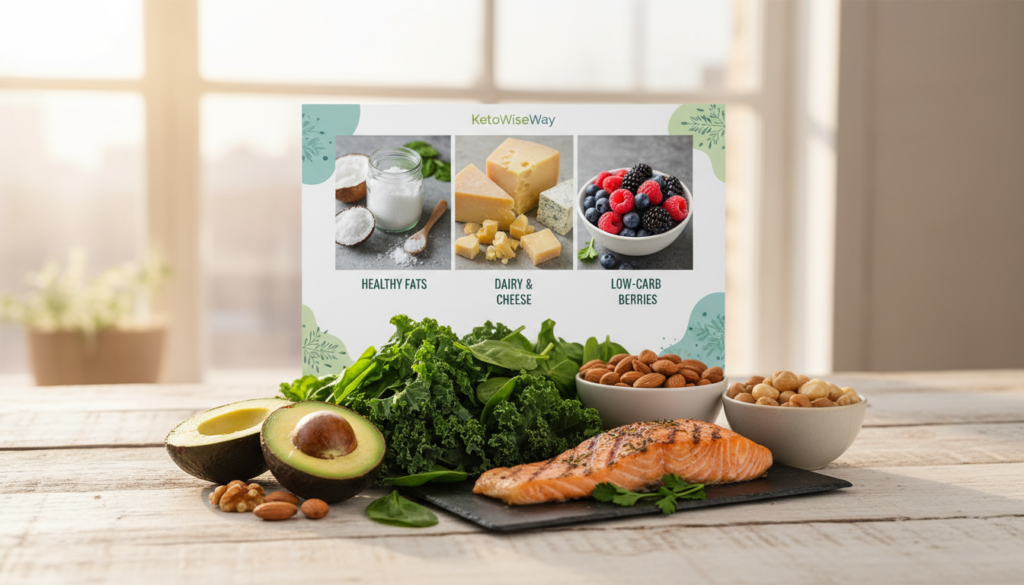
Eliminate guesswork and build confidence in your food choices with this comprehensive keto shopping cheat sheet.
Knowing exactly what to buy is half the battle. This guide turns confusion into clarity. Keep it on your fridge or saved on your phone for quick reference.
Focus on whole, single-ingredient foods. They are always the best choice over processed “keto” packaged items. This list helps you build endless meal combinations and avoid boredom.
Fats & Oils to Embrace
Healthy fats are the cornerstone of this diet. They provide steady energy and keep you full. Prioritize these sources.
Best Of: Avocado oil, olive oil, coconut oil, MCT oil, grass-fed butter or ghee, avocados, and the natural fat from fatty meats and egg yolks.
Avoid: Inflammatory seed oils like canola, soybean, corn, and grapeseed oil. These can undermine your health benefits.
Best Protein Sources
Choose high-quality, preferably grass-fed or pasture-raised options. Protein supports muscle and keeps you satisfied.
Best Of: Beef, lamb, pork (including bacon in moderation), chicken (especially thighs and wings), turkey, eggs, fatty fish like salmon and mackerel, and shellfish.
Avoid: Processed meats with added sugars or fillers. Always check labels on sausages and deli meats.
Low-Carb Vegetables
Non-starchy, above-ground veggies should make up the bulk of your carb intake. They are packed with fiber and nutrients.
Best Of: Spinach, kale, lettuce, broccoli, cauliflower, zucchini, bell peppers, asparagus, mushrooms, and cucumbers.
Avoid: Starchy root vegetables like carrots, potatoes, sweet potatoes, and parsnips. They are high in carbohydrates.
Acceptable Dairy Products
Stick to full-fat, low-lactose options. Dairy can add creaminess and flavor to your meals.
Best Of: Hard cheeses (cheddar, parmesan), soft cheeses (brie, cream cheese), heavy cream, sour cream, and full-fat Greek yogurt in moderation.
Avoid: Regular milk and flavored yogurts. They are higher in sugar (lactose) and can hinder ketosis.
Condiments, Herbs, and Sweeteners
Flavor your foods without adding hidden carbs. This category makes eating enjoyable.
Best Of: Mustard, mayo (check for added sugar), hot sauce, soy sauce or tamari, vinegar, and all fresh or dried herbs and spices. For sweeteners, use stevia, erythritol, or monk fruit.
Avoid: Sugar, honey, agave, and sugar alcohols like maltitol. They spike blood sugar and can stall weight loss.
Here’s a quick-reference table to summarize your go-to choices. Print it or save it for your next grocery trip.
| Food Category | Best Choices (Embrace) | Items to Avoid |
|---|---|---|
| Fats & Oils | Avocado oil, olive oil, coconut oil, butter, avocados | Canola oil, soybean oil, corn oil |
| Protein Sources | Beef, chicken, eggs, salmon, shellfish | Processed meats with added sugar |
| Vegetables | Spinach, broccoli, cauliflower, zucchini, peppers | Potatoes, carrots, sweet potatoes |
| Dairy Products | Cheddar cheese, cream cheese, heavy cream, sour cream | Milk, sweetened yogurt |
| Flavor Enhancers | Mustard, herbs, spices, stevia, erythritol | Sugar, honey, agave, maltitol |
Use this cheat sheet as your foundation. It empowers you to make smart choices effortlessly. Many people find that sticking to these foods accelerates their progress.
Remember, your goals for weight loss and better health are within reach. A well-stocked kitchen makes your meal plan simple and sustainable. You’ve got this!
Navigating Keto Snacks and Beating Cravings
Snacking doesn’t have to be the enemy of your new low-carb lifestyle. Cravings and hunger between meals are completely normal, especially during your initial adaptation phase. Having a smart plan turns these moments from pitfalls into opportunities for success.
The right choices keep your energy steady and support ketosis. They prevent you from reaching for high-sugar options that could disrupt your progress. Let’s build your toolkit for snacking smart.
Your Go-To Keto Snack List
Keep these simple, satisfying foods on hand. They are low in net carbs and high in healthy fats or protein. This balance helps you stay full.
Quick & Satisfying Bites:
- Cheese slices or cubes (cheddar, mozzarella)
- Hard-boiled eggs
- A small handful of nuts like macadamias or almonds
- Celery sticks with almond butter
- Olives or avocado with a sprinkle of salt
- Pepperoni slices or sugar-free jerky
- Simple keto fat bombs
More Substantial Mini-Meals:
Sometimes you need something closer to a small meal. These options are perfect for that.
- Tuna or chicken salad served in lettuce cups
- A small portion of leftovers from your main meals
- A smoothie made with unsweetened almond milk and protein powder
- Roll-ups made with roast turkey and cucumber slices
For more creative ideas that feel like treats, explore our collection of easy low-carb dishes for beginners. You’ll find recipes for cheese crisps and nut butter fat bombs that are simple to make.
Is It Hunger or Just a Craving?
Learning the difference is a powerful skill. True hunger comes on gradually. Emotional or habitual cravings are often sudden and specific for sugar or starchy foods.
Use this simple three-step strategy when a craving hits:
- Drink a full glass of water. Thirst is often mistaken for hunger.
- Wait 15 minutes. Distract yourself with a brief activity.
- Reassess. If you’re still hungry, choose a keto-friendly snack from your list.
This pause helps you respond intentionally, not react impulsively. It puts you back in control of your diet choices.
Why Cravings Fade Over Time
Here’s some encouraging news. Cravings for sugar and carbs often diminish significantly after the first week. Your body adjusts to burning fat for fuel.
Your blood sugar levels stabilize. You stop experiencing the sharp spikes and crashes that drive hunger. This is one of the major benefits of this lifestyle.
“The right snack stops a craving in its tracks. The wrong one can restart the cycle. Preparation is everything.”
As your body adapts, you may find you need fewer snacks overall. This is a sign your main meals are properly fueling you.
Smart Snacking Strategies
Your environment plays a huge role. Keep approved snacks readily available at home, work, and in your bag. This avoids temptation when you’re out and about.
Avoid snacking out of boredom. If you’re not truly hungry, find a non-food activity. Take a short walk, drink herbal tea, or do a quick task.
Also, practice mindful eating even with snacks. Sit down, enjoy the flavors, and avoid distracted eating in front of screens. This increases satisfaction.
| Snack Type | Examples | Approximate Net Carbs | Best For |
|---|---|---|---|
| Quick Fat/Protein Bites | Cheese cube, handful of nuts, olives | 0-2g | Instant satisfaction, curbing mild hunger |
| Mini Vegetable-Based | Celery with nut butter, cucumber roll-ups | 2-4g | Adding crunch and volume |
| Substantial Mini-Meal | Chicken salad in lettuce cup, protein smoothie | 4-7g | Replacing a missed meal or post-workout |
| Homemade Keto Treats | Cheese crisps, fat bombs, flax crackers | 1-3g | Satisfying a sweet or crunchy craving mindfully |
Adjusting Your Approach
If you’re frequently hungry between meals, review your main plates. Are you eating enough healthy fats and protein? These nutrients promote satiety.
You may need to slightly adjust your macros. Try increasing your fat intake at lunch or dinner. This can naturally reduce the need for snacks later.
Remember, this diet is not about starving. It’s about fueling your body efficiently. Proper nutrition supports your weight loss and overall health goals.
With these tools, you can navigate any craving. You’ll build confidence and make this way of eating sustainable for the long term.
Supplements to Support Your Keto Meal Plan
Your journey to better health is powered by food first, but certain targeted supplements can enhance the ride. A well-formulated low-carb diet provides most nutrients you need. Yet, specific products can ease your transition, fill small gaps, and help you reach your goals more comfortably.
Think of them as helpful tools, not magic pills. They work alongside your solid meal plan. For beginners, athletes, or those with specific concerns, they can be particularly valuable.
Always choose high-quality options from reputable brands. Look for products without added sugars or unnecessary fillers. It’s also wise to chat with your doctor before starting anything new, especially if you have existing health conditions.
Electrolytes: Your First-Week Essential
This is arguably the most crucial support during the initial adaptation. As your body sheds water weight, it flushes out minerals like sodium, potassium, and magnesium.
This loss can cause the “keto flu.” Symptoms include headaches, fatigue, and muscle cramps. Supplementing with these minerals prevents discomfort.
You can use an electrolyte powder mix or simply add more salt to your foods. Bone broth is another excellent natural source. Keeping electrolytes up supports steady energy and helps you feel great.
MCT Oil: Fast Fuel for Energy & Focus
MCT oil is a concentrated source of fat from coconut oil. Your liver converts it directly into ketones, providing quick fuel.
Benefits include a noticeable mental clarity boost and reduced appetite. It may also support your body‘s ability to burn fat.
Start with a small dose, like one teaspoon. This helps your digestive system adjust. You can blend it into coffee, smoothies, or salad dressings.
Exogenous Ketones: A Quick Boost
These are powdered or drinkable supplements that raise your blood ketone levels. They provide an immediate sense of energy and mental sharpness.
They are useful for fighting off keto flu symptoms or as a pre-workout boost. Remember, they are a supplement to a proper diet, not a replacement for it. They help you transition into ketosis but don’t do the long-term work for you.
Collagen Protein: Support for Joints & Skin
Collagen is the most abundant protein in your body. Supplementing it supports your joints, skin, hair, nails, and gut health.
It’s a fantastic way to add clean protein without any carbs. The powder is flavorless and dissolves easily. Mix it into your morning coffee, a post-workout smoothie, or even a glass of water.
Greens Powder: Phytonutrient Insurance
Even with plenty of veggies, your variety might be limited on this lifestyle. A high-quality greens powder offers a low-carb solution.
It packs phytonutrients and vitamins from a wide blend of vegetables and berries. This helps replace nutrients from missing fruits. Look for blends that also include digestive enzymes for better absorption.
Supplements are just that—a supplement. The real foundation of your success will always be the nutritious whole foods on your plate.
Here’s a quick guide to help you decide which supports might be right for you:
| Supplement | Primary Purpose | Key Note |
|---|---|---|
| Electrolytes | Prevent “keto flu” symptoms like fatigue and cramps. | Most critical in the first 1-2 weeks. |
| MCT Oil | Provide fast energy, support cognitive function & fat burning. | Start with small doses to avoid digestive upset. |
| Exogenous Ketones | Offer immediate energy/clarity; ease transition into ketosis. | A short-term boost, not a diet replacement. |
| Collagen Protein | Support joints, skin, gut health; add clean protein. | Flavorless, easy to mix into drinks and foods. |
| Greens Powder | Fill phytonutrient gaps from limited fruit/veg variety. | Choose a low-carb formula without added sugars. |
Listen to your body over time. If you feel fantastic without any extras, you may not need them. For many people, a simple electrolyte focus makes the biggest difference in those early days.
Your primary focus should remain on delicious, healthy fats and quality proteins. Let supplements play a smart supporting role in your overall wellness plan.
Overcoming Common Keto Challenges
Hitting a snag on your new eating plan is normal, and having solutions ready turns obstacles into stepping stones. Every lifestyle shift comes with a learning curve. The key is to anticipate these moments and have a simple plan to move past them.
This approach builds resilience and makes your success far more likely. You are not alone in facing these hurdles. Let’s tackle them one by one with practical, friendly advice.
Conquering the “Keto Flu”
Headaches, fatigue, and irritability in the first few days are common. This is often called the “keto flu.” It’s a sign your body is adapting to burning fat instead of sugar.
The cause is usually dehydration and electrolyte loss. Your body releases water as it uses up stored glycogen. This flushes out minerals like sodium, potassium, and magnesium.
Here’s your action plan to feel better fast:
- Drink plenty of water and add a pinch of salt to it.
- Sip on bone broth for a natural electrolyte boost.
- Consider a sugar-free electrolyte supplement.
- Be patient—symptoms often pass within 3 to 5 days.
Reducing intense exercise initially can also help. This gives your system time to adjust without extra stress.
Navigating Social Events & Restaurants
Dining out or attending parties doesn’t have to derail your diet. A little preparation goes a long way. Check the restaurant menu online before you go.
Focus on simple dishes built around protein and vegetables. Don’t be shy about asking for substitutions. Request extra greens instead of fries or a side salad instead of bread.
At a friend’s house, offer to bring a keto-friendly dish to share. This ensures you have a great option and introduces others to delicious low-carb foods.
Breaking Through a Weight Loss Plateau
After initial rapid weight loss, your progress might slow. This is a normal part of the process. Your body is adjusting to its new fuel source.
To restart momentum, try these steps:
- Double-check your macros and portion sizes. Hidden carbs can sneak in.
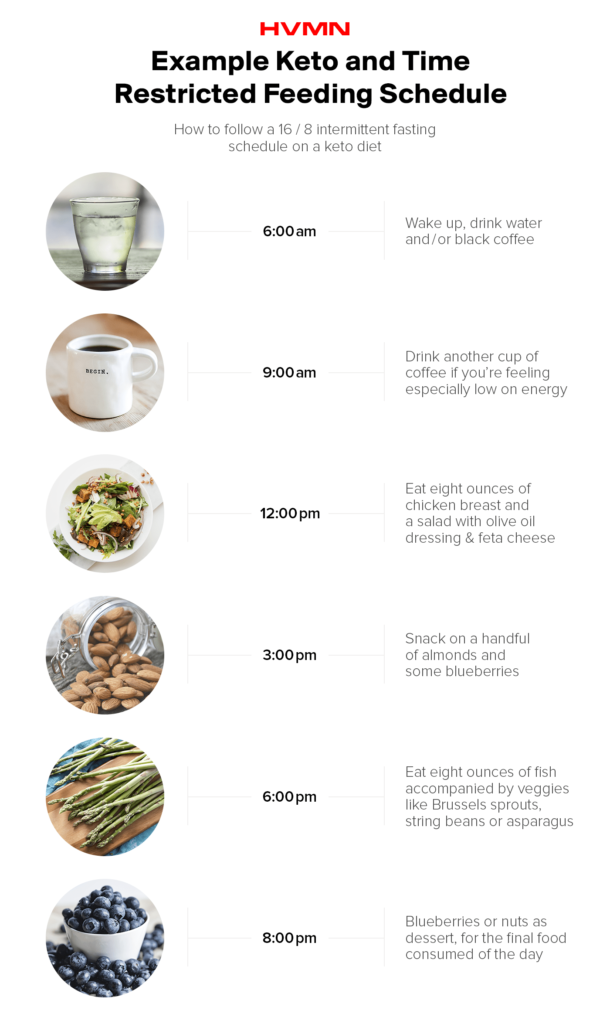
- Experiment with intermittent fasting, like a 16:8 schedule.
- Vary your workout routine to challenge your muscles.
- Consider a temporary carb cycle if you’ve been strict for months.
Remember, plateaus are temporary. Consistency is your greatest tool.
Managing Digestive Changes
A change in fiber intake can sometimes lead to constipation. This is easily managed. Increase your intake of low-carb vegetables like cauliflower and leafy greens.
Also, drink more water throughout the day. Adding a magnesium supplement at night can support regularity. Chia seeds or flax seeds mixed into a meal are excellent fiber sources.
Silencing Food Cravings
Cravings for old favorite foods are natural. They often fade as your blood sugar stabilizes. In the moment, reach for a satisfying keto snack like a handful of almonds or a slice of cheese.
Search for creative alternatives. Craving pizza? Try a “fathead” dough made with cheese and almond flour. Remind yourself of your personal “why” for starting this journey.
Maintaining Energy for Exercise
It’s common to feel a dip in workout performance at first. Your muscles are learning to use fat for energy. This adaptation phase, called becoming “fat-adapted,” can take a few weeks.
Support your body by ensuring electrolyte intake is solid. Some people find a pre-workout dose of MCT oil helpful. Exogenous ketones can also provide a quick energy boost for tough sessions.
Keeping Your Meals Exciting
Boredom with your meals is preventable. Explore new recipes and cuisines weekly. Use a variety of herbs and spices to transform simple ingredients.
Make Mexican fajita bowls with seasoned chicken and peppers. Try Italian-inspired zucchini noodles with a rich meat sauce. The internet is full of creative low-carb ideas.
Dealing with Social Pressure
Not everyone will understand your dietary choices. Arm yourself with knowledge about the health benefits you’re seeking. You can explain your choices simply without debate.
Lead by example with your results and positive energy. Find support in online communities where people share your goals. This external encouragement is powerful.
Staying on Track While Traveling
Travel poses unique challenges, but you can stay on plan. Pack non-perishable snacks like nuts, beef jerky, and cheese crisps. Book hotel rooms with a mini-fridge.
Upon arrival, visit a local grocery store for fresh foods like pre-cooked chicken, salad kits, and avocados. Opt for simple restaurant meals like a bunless burger or a steak with a side of vegetables.
Every challenge you face and overcome makes you more resilient. It solidifies your commitment to a healthier lifestyle.
Remember, these hurdles are common. They are not signs of failure. With the strategies above, you’re equipped to handle them and keep moving toward your weight loss and wellness goals.
Conclusion: You’re Ready to Begin!
You’ve just equipped yourself with a powerful toolkit for transforming your health. You know your “why,” understand your macros, and have a clear foods list and meal schedule. This knowledge is your foundation for success.
Commit to your start date and follow the full week guide. The potential benefits are real—steady energy, sharper focus, and progress toward your weight loss goals. Trust this new lifestyle.
The first few days require adjustment, but your body will adapt. Track your progress with photos or measurements. Revisit this guide whenever you need a refresher.
You have everything you need. Take that first step with confidence. Your journey to better health starts right now. We’re cheering for you!