What if you could skip the strict diet and get the benefits of ketosis from a bottle? This is the bold promise behind a booming category of supplements hitting the market.
The ketogenic diet surged in popularity largely for one reason: weight loss. By drastically cutting carbs, your body enters a fat-burning state called ketosis.
Now, companies sell exogenous ketones—synthetic versions you can drink. They claim to offer a shortcut to that same energy state without the dietary grind.
The science of ketosis isn’t new. In the 1920s, doctors found it reduced seizures in children with epilepsy. This medical use continues today.
This review cuts through the hype. We’ll explore if these ketone supplements live up to their claims and are a smart buy for your health and wallet.
Key Takeaways
- The ketogenic diet’s rise is closely tied to its weight loss effects.
- Exogenous ketones are synthetic supplements meant to mimic your body’s natural ketosis process.
- Ketosis has a long medical history, dating back to 1920s seizure treatment.
- Supplement companies are capitalizing on the keto trend with rapid market growth.
- This article provides a science-backed look at the benefits, drawbacks, and true cost of these products.
- We’ll help you decide if they align with goals like weight management or improved energy.
- You’ll get a clear roadmap to navigate the often-confusing world of keto supplements.
What Are Exogenous Ketones? A Beginner’s Guide
The concept is simple: consume a powder or drink to instantly flood your bloodstream with energy molecules. These are marketed as a direct path to the metabolic benefits of a low-carb lifestyle.
You don’t have to earn them through weeks of dietary change. This is the fundamental appeal of these products.
Let’s break down exactly what they are, how they differ from what your body makes, and how they end up on the shelf.
Endogenous vs. Exogenous Ketones: What’s the Difference?
Your liver is a natural factory. When you fast or eat very few carbs, it produces ketone bodies from fat.
This is an endogenous process. “Endo” means inside. These molecules become a crucial fuel source for your brain and cells when glucose is scarce.
Now, consider an outside source. “Exo” means external. Exogenous ketones are manufactured in a laboratory.
You ingest them as a supplement. They are identical, or very similar, to the molecules your liver makes. The key difference is their origin.
One is a survival mechanism honed by evolution. The other is a product of modern nutritional science.
How Exogenous Ketones Are Made and Sold
Not all ketone bodies are shelf-stable. Your body makes a few types, but only one works well in a bottle.
The primary ketone in supplements is beta-hydroxybutyrate (BHB). It’s chemically stable. Other types, like acetoacetate, break down too easily.
In a lab, scientists synthesize BHB molecules. They bind them to minerals like sodium, potassium, or calcium to form “ketone salts.”
This is the most common form you’ll find. A more potent, research-grade liquid called a “ketone ester” also exists.
These products are sold with a compelling premise. They offer a shortcut. The idea is to raise your blood ketone levels quickly, without the dietary grind.
This raises a big question. Is there a meaningful difference between naturally earned and artificially induced metabolic states? The debate is ongoing.
Understanding Ketosis: Your Body’s Natural Fat-Burning State
When you cut carbs, your metabolism undergoes a dramatic shift into a fat-burning state called ketosis. This is your body’s ingenious backup plan for when primary fuel runs low.
In a standard diet, 45-60% of calories come from carbohydrates. Your system breaks these down into glucose for immediate energy.
What happens when that supply is cut off? Your body doesn’t just shut down. It switches to a different energy source in a specific, step-by-step process.
First, it uses the glucose already circulating in your blood. Next, it taps into glycogen, which is stored glucose in your liver and muscles.
Once these stores are depleted—usually within 24 to 48 hours—your body turns to fat. It breaks down fatty acids and converts them into special molecules called ketone bodies.
This creation process is known as ketogenesis. The resulting state of elevated blood ketones is nutritional ketosis.
The Role of Ketone Bodies: Acetoacetate, Beta-Hydroxybutyrate, and Acetone
Three key players emerge from this fat breakdown. They are acetoacetate, beta-hydroxybutyrate (BHB), and acetone.
Think of them as different forms of the same clean-burning fuel. Each has a unique role in your metabolism.
Acetoacetate is the first ketone body produced. It’s a precursor that can be converted into the other two.
Beta-hydroxybutyrate (BHB) is the most abundant in your bloodstream. It’s a more stable, efficient energy carrier that your heart, muscles, and brain can use directly.
This is why BHB is the star of supplement formulas. Your cells prefer it for its steady energy release.
Acetone is formed from the spontaneous breakdown of acetoacetate. It’s less abundant and is mostly exhaled through your breath, which is why some people notice a distinct smell.
Together, these molecules provide an alternative fuel that keeps your brain sharp and your body powered when glucose is scarce.
How Low-Carb Diets and Fasting Trigger Ketosis
Strategic carbohydrate restriction is the natural trigger for this metabolic switch. The keto diet is designed to do exactly that.
By limiting net carbs to about 20-50 grams per day, you mimic the conditions of fasting. Your body exhausts its glucose and glycogen stores quickly.
This forces it to rely on fat breakdown. The resulting ketone production shifts your entire energy metabolism.
Fasting achieves the same effect by simply not providing any food, especially carbs. After a short period, your insulin levels drop, signaling your liver to start ketogenesis.
This physiological state is a survival mechanism. It’s the foundation for all the claimed benefits of low-carb living, from weight management to mental clarity.
Understanding this natural process is crucial. It sets the benchmark for comparing dietary ketosis to any supplement-induced effect.
Types of Exogenous Ketone Supplements: Salts vs. Esters
Not all ketone-boosting products are created equal; their formulation dictates their effect.
When you shop, you’ll mainly encounter two formats. Knowing the difference is your first step to a smart purchase.
Each type has a unique chemical structure. This affects how your body uses it, the cost, and even the taste.
Let’s break down the options so you can navigate the shelf with confidence.
Ketone Salts: The Most Common Form
This is the powder you mix into water or a shake. It’s the most affordable and widely available supplement.
Here, the beta-hydroxybutyrate (BHB) ketone is bound to a mineral salt. Common partners include sodium, potassium, calcium, or magnesium.
This binding makes the compound stable enough for packaging. It also adds electrolytes, which can be helpful.
Brands like Pruvit’s KETO OS NAT, Key Keto, and Perfect Keto Base use this form. They are designed for daily use.
A key point to remember: These products raise blood ketone levels, but the effect is often milder and shorter-lived than the next option.
Ketone Esters: The Research-Grade Option
Think of this as the high-octane version. It’s a liquid where BHB is combined with an ester molecule.
This structure allows it to be absorbed very efficiently. Your blood ketones can spike dramatically.
Because of this reliable effect, esters are the gold standard in scientific study. They allow for precise control in research settings.
An example is HVMN’s Ketone-IQ™. The trade-offs are significant cost and a notoriously bitter taste many find hard to swallow.
“Ketone esters produce a rapid and substantial elevation in blood ketone concentrations, mimicking levels seen in prolonged fasting,” notes a clinical trial summary.
For the average consumer focused on convenience and budget, salts are the typical choice.
Keto Pills: Are They Effective?
You might see capsules marketed for ease. In most cases, these are simply low-dose ketone salts in a pill.
The convenience is obvious—no mixing, no strong taste. However, the dose per capsule is usually much smaller than a serving of powder.
This raises a question about value. To get an equivalent amount of active bodies, you may need several pills, increasing the per-serving cost.
For a minor boost or occasional use, they might suffice. For a pronounced effect, a powder or liquid is generally more effective.
Your choice hinges on your goals. Are you seeking a quick energy lift, help with keto adaptation, or a tool for athletic performance?
Understanding these differences—between salts, esters, and pills—empowers you to match the supplement to your need without overspending.
Claim 1: Do Exogenous Ketones Induce Ketosis Faster?

The race to ketosis is on: do these products offer a legitimate shortcut or just a fleeting taste? This is the first major claim we’re putting to the test.
Can a supplement truly fast-track your body into that fat-burning state quicker than weeks of strict dieting? Let’s look at the evidence.
Research provides a clear, yet nuanced, answer. The short version is yes, but with a significant asterisk.
What the Science Says About Blood Ketone Levels
Multiple clinical studies confirm a straightforward fact. Consuming these supplements causes a rapid and significant spike in your blood ketone concentration.
Your body absorbs the synthetic BHB quickly. This leads to a measurable increase in blood levels within 30 to 60 minutes.
One pivotal study highlights the power of this acute effect. Researchers gave participants an 11-gram dose of BHB salts.
The result? Blood BHB levels soared by more than 300%. This demonstrates the formula’s ability to mimic a key marker of ketosis.
It’s a powerful biochemical response. For a moment, your metabolic profile looks like someone who has been fasting for days.
This is the core truth behind the marketing. Exogenous ketones do induce a state of elevated blood ketones—and they do it fast.
How Long Do the Effects Last?
Here’s the critical catch. That impressive spike is typically short-lived. The elevation often fades back to baseline within just a few hours.
Think of it like a sugar rush for your ketone metabolism. It comes on strong but doesn’t sustain itself.
Your liver doesn’t get the signal to keep producing its own ketones. Once the external supply is used up, levels drop.
This leads to a practical reality. To maintain a desired threshold throughout your day, you’d likely need multiple doses.
“The transient rise necessitates frequent ingestion to sustain hyperketonemia, which may not be practical or cost-effective for long-term use,” summarizes a research review.
What does this mean for your routine and budget? A “fast” entry into ketosis requires constant reinforcement.
You might dose in the morning, at lunch, and again in the afternoon. This questions the sustainability of relying solely on supplements.
You leave with a nuanced understanding. The claim of faster induction is technically true.
However, the transient nature of the effects greatly limits its long-term practicality for achieving nutritional ketosis.
Claim 2: Can Exogenous Ketones Boost Fat Burning?
You might think a ketone supplement would supercharge your weight loss, but the reality is more complex. This claim presents a fascinating paradox. We need to look past the marketing and examine the actual effect on your metabolism.
Can these products truly help you burn more fat? The scientific answer might surprise you. It involves a smart feedback loop within your own body.
The Fat Breakdown Inhibition Effect
Your liver is a finely tuned engine. When you provide an external fuel source, it adjusts its own production. This is key to understanding the inhibition effect.
Ingesting these supplements floods your bloodstream with ketones. Your body senses this high level. It then slows down its natural process of ketogenesis, which is fat breakdown.
Think of it as a smart thermostat. When the room is already warm, the heater turns off. Similarly, supplemental ketones signal your fat cells to pause the release of fatty acids.
This acts as a feedback mechanism. It prevents an overproduction of ketone bodies. The immediate energy from the drink may actually put your natural fat-burning furnace on temporary hold.
Why Supplements Might Hinder Weight Loss
Clinical research supports this counterintuitive idea. One pivotal six-week study compared two groups.
Both followed a keto diet. One group added ketone supplements. The other did not. The result? The supplement group saw no additional fat loss benefit.
The data showed that exogenous ketone salts, when added to a ketogenic diet, did not enhance body fat reduction over a six-week period.
There’s another factor often overlooked: calories. These powders contain about 4 calories per gram. This adds to your daily intake without making you feel fuller.
For weight loss, a calorie deficit is fundamental. Unaccounted calories from a supplement can subtly work against your goals over time.
This creates a clear picture. The very product touted for “igniting” fat burning may temporarily hinder the process it promises to enhance. Reconciling this science with dramatic ads is crucial for making an informed choice.
Claim 3: Do Exogenous Ketones Enhance Athletic Performance?
When it comes to athletic performance, the scientific findings on these supplements paint a complex and inconsistent picture.
If you’re an athlete, you want a legal edge. The idea of a super-fuel is compelling. The reality from labs and trials is far from clear-cut.
Results range from making exercise feel harder to showing a tiny boost. Your individual response depends on many factors.
Mixed Research Results: From Impairment to Improvement
One notable study focused on cyclists. They consumed a ketone supplement before a time trial.
The outcome was negative. Riders reported significant gut discomfort. They also felt their perceived effort was much higher.
Performance was impaired. This highlights a potential downside for some people.
Other research has found no impact at all. The supplements didn’t help, but they didn’t hurt performance either.
Then there’s the promising data. A different experiment used a drink mixing carbs and ketones.
Cyclists in this study saw a small but measurable 2% improvement. In endurance sports, that margin is significant.
The table below summarizes this conflicting landscape:
| Study Focus | Supplement Protocol | Reported Effects | Performance Outcome |
|---|---|---|---|
| Cyclists (Time Trial) | Ketone salts before exercise | Gut discomfort, higher perceived effort | Impaired |
| Various Athletic Tests | Single dose of ketone salts | No notable side effects | No significant change |
| Cyclists (Endurance) | Carbohydrate + ketone ester drink | Stable energy levels | ~2% Improvement |
This shows the benefits are not guaranteed. Context is everything.
Optimal Use for Endurance Activities
The theory behind potential benefits is sound. Ketone bodies are a very efficient source of fuel.
They might spare muscle glycogen. This is your stored carbs. For long workouts, preserving glycogen is key.
Therefore, these supplements could be more useful for endurance. Think long runs, bike rides, or hikes.
Your underlying metabolic state plays a huge role. If you are already keto-adapted, your body is primed to use this fuel source.
For someone on a standard diet, the effects might be less pronounced. It’s an unfamiliar fuel way.
The takeaway is to temper expectations. Performance gains are highly context-dependent. They rely on the activity, the formula, and your own metabolism.
Claim 4: Do Exogenous Ketones Manage Cravings and Appetite?
Feeling those afternoon hunger pangs or a constant urge to snack can derail even the best dietary intentions. Can a powder or drink really help quiet those nagging cravings?
This is one of the more compelling promises from the market. Let’s examine if the science supports using these supplements for better appetite control.
Appetite-Suppressing Effects and Ghrelin Reduction
A 2018 randomized controlled trial provides strong evidence. Participants consumed a ketone beverage after an overnight fast.
The results were striking. They reported a 50% reduction in their “perception of hunger” and “desire to eat.” This effect lasted for up to four hours.
The data showed the ketone drink decreased the perception of hunger and the desire to eat by 50% for up to four hours after an overnight fast.
The mechanism involves your hunger hormones. The study found that ghrelin, your body’s primary hunger signal, declined.
It remained lower for longer with the ketone drink. This suggests a direct hormonal effect promoting satiety.
However, context is crucial. This benefit was most pronounced in a fasted state. Eating carbohydrates beforehand may blunt the effects.
Limitations: Short-Term Benefits and Caloric Content
The appetite suppression is real but temporary. You might get a few hours of relief, not all-day control.
Sustained management would likely require multiple doses. This raises practical and financial questions immediately.
There’s another catch. These supplements contain calories—about 4 per gram of ketone salts. A standard serving adds energy to your day.
For weight management, every calorie counts. Unaccounted calories from a supplement could subtly offset your goals.
You must weigh the cost. Is an expensive serving worth a few hours of reduced hunger?
Other strategies, like eating more protein or fiber, might offer more sustainable satiety. This area shows promise but has clear limits.
It provides a balanced look at a potential benefit. The effects on appetite are notable yet short-lived and context-dependent.
The Science Behind Exogenous Ketones: What Research Reveals
Navigating the world of ketone supplements requires separating solid evidence from hopeful speculation. Let’s step back and look at the overall body of scientific literature.
Patterns and truths emerge when you review dozens of clinical trials. This summary empowers you with a critical eye.
Key Studies on Ketone Supplementation
The strongest finding is remarkably consistent. Multiple studies confirm these supplements effectively and safely elevate blood ketone concentrations.
Your body absorbs the synthetic BHB quickly. This creates a measurable state of hyperketonemia, often within an hour.
However, research on other major claims becomes murky. Outcomes for long-term weight management and athletic gains are inconclusive. The table below summarizes key findings across different health goals.
| Research Focus | Consistent Finding | Inconclusive or Mixed Evidence |
|---|---|---|
| Blood Ketone Elevation | Rapid, significant increase confirmed. | N/A – This effect is well-established. |
| Weight & Body Composition | No extra fat loss vs. diet alone in trials. | Long-term effects on sustainable weight management. |
| Athletic Performance | Potential for glycogen sparing in endurance. | Results vary from impairment to minor (~2%) improvement. |
| Appetite Control | Short-term reduction in hunger hormones. | Long-term practicality and cost-effectiveness. |
This clear snapshot helps you see where the science is firm and where it falters. The way these products are marketed often focuses on the first column while downplaying the second.
Gaps in Current Evidence
Significant holes exist in the research landscape. Most concerning is the lack of long-term safety data.
Clinical trials typically last weeks, not months or years. The impact of daily ketone supplements over a long period is simply unknown.
You must also consider the regulatory environment. The FDA does not regulate dietary supplements as rigorously as pharmaceuticals.
Companies can make structure/function claims without proving them with the same strong evidence required for drugs. This is crucial for your interpretation of any marketing message.
By understanding the state of the science, you make decisions informed by evidence. You can distinguish between facts and areas where more study is desperately needed.
Potential Benefits of Exogenous Ketones
Let’s shift focus to the positive, evidence-backed ways these products could enhance your wellness journey. Moving past the hype, we find realistic benefits that many users genuinely experience.
These supplements are not a cure-all. Yet, they can offer meaningful support in specific situations. Your individual results will vary based on your metabolism and goals.
Reducing Keto Flu Symptoms
Starting a keto diet can be rough. The “keto flu” brings fatigue, headaches, and brain fog as your body switches fuel source.
This is where ketone supplements may help. They provide an immediate alternative fuel for your brain. This can soften the transition while your liver ramps up its own production.
Many formulas, especially ketone salts, include electrolytes like magnesium and sodium. These minerals combat cramps and headaches common during adaptation.
It’s a supportive tool, not a replacement for a well-formulated diet. But it can make the initial process much more manageable.
Boosting Energy Levels and Mental Clarity
A quick surge in energy and sharpened focus is a common report. For those already in ketosis, an extra dose can amplify this state.
Your cells get a clean-burning fuel source without the crash of sugar. This is why many feel a sustained mental lift after consuming them.
“Users frequently note improved concentration and reduced mental fatigue, particularly when taken mid-afternoon or before demanding tasks,” observes a nutrition coach familiar with the products.
The benefits for energy are most pronounced if you’re keto-adapted. Your body is already efficient at using this way of fueling itself.
Supporting Cognitive Function
Emerging science looks beyond short-term clarity. Some research suggests ketones might have neuroprotective qualities.
They are a preferred fuel for a brain under metabolic stress. Early studies hint at potential for supporting cognitive health over time.
This area needs more robust human trials. Still, the theoretical basis is compelling for long-term brain health strategies.
Remember, these are potential advantages. Your response depends on the supplement quality and your overall diet.
Weigh these positives against the cost and side effects discussed next. This gives you a complete picture for your decision.
Drawbacks and Side Effects of Exogenous Ketones
Let’s turn our attention to the less glamorous side of the story: the drawbacks and physical reactions. It’s only fair to examine potential downsides that often don’t make the product label.
This honest overview ensures you go in with your eyes wide open. You’ll be aware of the potential physical and financial costs beyond the price tag.
Understanding these drawbacks is essential for a balanced risk-assessment before you decide to try these products.
Common Issues: Nausea, Diarrhea, and Stomach Discomfort
The most frequent complaints are gastrointestinal. Users often report nausea, diarrhea, and general stomach discomfort.
These side effects are especially common with the popular ketone salts form. They can be a significant barrier when you first start supplementation.
While typically mild and temporary, the discomfort can be quite unpleasant. Your body may need time to adjust to the sudden influx of foreign molecules.
Headaches and a feeling of fatigue are also noted by some. These effects usually subside as your system adapts.
Starting with a half dose may help you gauge your tolerance. This is a smart strategy to minimize initial discomfort.
Mineral Overload from Ketone Salts
Here’s a hidden factor many overlook. Ketone salts deliver their payload bound to essential minerals.
A single serving can pack a hefty dose. One example provides about 680mg of sodium, 320mg of magnesium, and 590mg of calcium.
This adds valuable electrolytes, which can be helpful. However, taking multiple servings daily changes the math dramatically.
You could easily exceed the recommended daily limits for these minerals. This health concern is known as mineral overload.
Consistently high sodium intake, for instance, is linked to issues like high blood pressure. It’s a crucial point to consider for your long-term wellness.
Always check the label and factor this into your total daily nutrient intake. It’s a key part of using these supplements responsibly.
Long-Term Safety Concerns
Perhaps the biggest unknown is long-term safety. The current research landscape has a significant gap.
Most clinical trials last only a few weeks. The impact of daily exogenous ketones over months or years is simply not studied.
Regularly flooding your system with synthetic ketone bodies is a modern experiment. The long-term effects on metabolism and organ health remain unclear.
“The lack of long-term safety data means consumers are essentially participating in an uncontrolled trial,” a nutrition researcher cautioned in a recent review.
This doesn’t mean they are inherently dangerous. It does mean a degree of caution is warranted, especially for continuous, long-term use.
On a practical note, many users report a notoriously bitter or chemical aftertaste. This can make consistent use a chore rather than a pleasure.
When evaluating ketone supplements, weigh these potential downsides against any perceived benefits. For a broader look at supporting your keto journey, explore our guide on keto supplements.
A balanced view helps you make a choice that aligns with both your goals and your overall well-being.
Cost Analysis: How Expensive Are Exogenous Ketones?
The promise of a metabolic shortcut comes with a price tag that demands careful scrutiny.
Let’s move beyond the hype and look at the real numbers. Understanding the per-serving and daily cost is crucial before you invest.
We’ll break down the typical price per drink. Then, we’ll compare different product types to find value.
Price per Serving: Is $5 Worth It?
Get ready for sticker shock. A single serving of a popular ketone supplement can cost up to five dollars.
High-potency esters, like HVMN’s Ketone-IQ, run about four dollars per serving. This is for research-grade potency.
Remember, the benefits are often short-lived. Ketone levels typically spike and fall within a few hours.
To maintain elevated ketones throughout your day, you might need two or even three servings.
Do the math. At three servings, your daily cost jumps to twelve or fifteen dollars. That adds up fast over a week or month.
Is a temporary energy lift or reduced hunger worth that ongoing expense? You must decide what value you’re getting.
Comparing Brands and Value for Money
Not all products share the same price structure. Your choice between esters, salts, and pills greatly affects cost.
Ketone esters command a premium. You pay for proven, rapid absorption and high blood concentration.
Ketone salts are the common, affordable powders. They are cheaper per container but often require a larger scoop for effect.
Keto pills appear budget-friendly on the surface. However, they usually contain a much lower dose of active ketone bodies.
You might need several capsules to match one powder serving. This can erase the perceived savings.
The table below compares the cost landscape across different supplement forms:
| Product Type | Avg. Cost per Serving | Key Consideration | Best For |
|---|---|---|---|
| Ketone Ester (Liquid) | $3.50 – $5.00 | Highest potency, rapid spike, bitter taste. | Precise research scenarios, acute performance needs. |
| Ketone Salt (Powder) | $2.00 – $4.00 | Includes electrolytes, milder effect, better taste. | Daily use, keto-adaptation support, general energy. |
| Keto Pills/Capsules | $1.00 – $2.50 | Convenient, low dose per capsule. | Minor boosts, occasional use, travel. |
Think about opportunity cost. The money spent on daily exogenous ketone supplements could fund other health investments.
You might buy higher-quality whole foods, a gym membership, or other evidence-based supplements. For a complete look at supporting your regimen, see our broader guide to keto supplements.
Value isn’t just about the lowest price. It’s about the results you get for your specific goals, like weight loss or sustained energy.
Consider the cost per meaningful effect. This honest analysis helps you spend your health budget wisely.
Exogenous Ketones vs. Keto Diet: Which Path to Ketosis is Better?
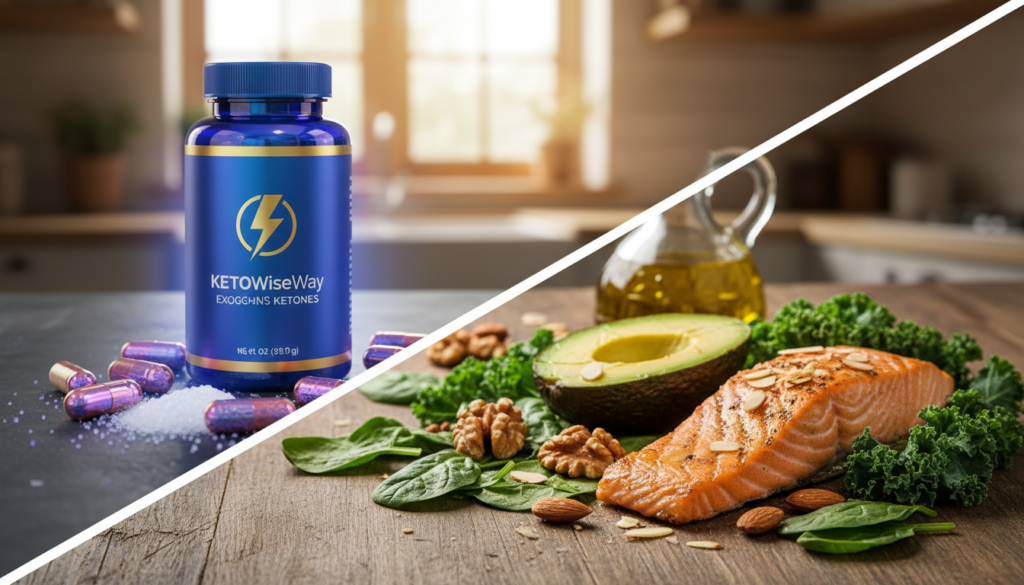
Two roads lead to elevated ketone levels: one paved with dietary discipline, the other with a powdered shortcut. This is the ultimate showdown in the low-carb world.
Your choice shapes your entire experience and results. Do you commit to a nutritional lifestyle or opt for a supplemental boost?
Let’s compare these approaches head-to-head. You’ll see the profound differences in how your body responds.
Physiological Differences: Artificial vs. Nutritional Ketosis
Your metabolism reacts very differently to each path. One rewires your system for the long haul.
The other offers a temporary rental of a metabolic state.
Nutritional ketosis from a strict keto diet involves deep adaptation. Your liver becomes efficient at breaking down fat.
Your cells learn to use ketones as a primary fuel source. This process takes weeks but creates lasting change.
Artificial ketosis from supplements provides an external supply. It mimics the blood marker without the underlying shift.
Your body senses the high ketone levels and may slow its own fat breakdown. This is a key distinction.
The table below highlights the core contrasts:
| Aspect | Nutritional Ketosis (Keto Diet) | Artificial Ketosis (Supplement) |
|---|---|---|
| Source | Internal production from body fat. | External, synthetic ingestion. |
| Adaptation | Teaches cells to utilize fat and ketones efficiently. | Bypasses metabolic training; provides fuel directly. |
| Fat Burning | Sustained, endogenous fat breakdown is promoted. | May temporarily inhibit natural fat release. |
| Duration | Persistent state maintained by diet. | Transient spike lasting a few hours. |
| Metabolic Shift | Fundamental rewiring of energy pathways. | Surface-level mimicry of a blood marker. |
Think of it as building fitness versus taking a stimulant. The diet creates a durable metabolic foundation.
The supplement offers a short-lived effect. Your body doesn’t learn to sustain itself.
Why Diet Might Be More Sustainable for Weight Loss
For managing your weight, the food-based approach often wins. It addresses the root causes of calorie intake.
A well-formulated keto diet teaches sustainable eating habits. You learn about whole foods, portion control, and satiety.
It directly creates a calorie deficit through food choices. This is the engine of weight loss.
Supplemental ketones can work against your fat-loss goals. As noted earlier, they signal your body to stop burning its own fat.
They also add calories to your day without filling you up. This can subtly hinder your progress over time.
The diet encourages a lifestyle change. You develop skills for long-term success.
The supplement is a tool with narrow applications. It doesn’t teach you how to eat.
This comparison isn’t about declaring one right or wrong. It’s about understanding the distinct commitments.
Your long-term health vision should guide your choice. Do you want a quick boost or a transformed metabolism?
By clarifying these outcomes, you can pick the strategy that fits your life. The keto path is a journey, not a shortcut.
Who Should Consider Exogenous Ketones?
With so many claims floating around, it’s time to pinpoint exactly who can gain real value from these products. This section helps you perform a personal inventory.
Your situation and goals must match the realistic use cases. Let’s see if you fit the profile.
Ideal Users: Athletes, Keto Beginners, and Specific Cases
Endurance athletes are a primary group. If you’re curious about fuel efficiency for long runs or rides, these ketone supplements might help.
Some research suggests they can spare muscle glycogen. This is a potential benefit for sustained performance.
Keto beginners are another ideal user. Starting a strict diet can bring on the “keto flu.”
A supplement can ease this transition. It provides an immediate fuel source while your body adapts.
This support makes the initial time much more manageable. You might avoid headaches and brain fog.
There are also niche therapeutic contexts. A healthcare provider might recommend exogenous ketones for specific neurological conditions.
This use is under strict medical supervision. The potential benefits for brain health are being studied.
Who Should Avoid Them: Precautions and Contraindications
Individuals with kidney problems should steer clear. The high mineral content in ketone salts could be harmful.
Your kidneys manage electrolyte balance. A heavy load from a daily supplement may strain them.
People on a tight budget might want to avoid these products. The ongoing cost is significant for a temporary effect.
Your money could fund other health investments. Think about whole foods or a gym membership instead.
Anyone expecting a magic pill for weight loss should get a reality check. These drinks are not it.
They do not create loss without dietary changes. In fact, they might work against your fat-burning goals.
Always consult with a doctor first. This is crucial if you have underlying conditions or take medications.
A professional can assess potential interactions. They will guide you based on your personal health history.
This honest look helps you see the clear way forward. Match your goals to what these products truly offer.
Conclusion: Are Exogenous Ketones Worth the Money?
Our comprehensive review concludes with a decisive answer to the central question.
These ketone supplements do raise blood levels quickly. Yet the effects are fleeting and come with notable costs.
They are not a magic bullet for weight loss. Science shows they may even pause your body‘s natural fat-burning process.
Athletic benefits are mixed, and side effects can disrupt your routine.
For lasting results, a committed keto diet is a more sustainable path to ketosis. It teaches your metabolism a new way to use energy.
Given the cost and limited research, saving your money is wise. Invest instead in whole, nutritious foods for long-term health.