When you dine out, how confident are you that the meal on your plate is safe to eat?
Behind the scenes, a dedicated public safety agency works tirelessly to ensure it is. Often called the Food Inspection Division, this regulatory body is your community’s unseen guardian.
Its core mission is consumer protection. The division aims to prevent foodborne illness by ensuring all service operations comply with strict sanitary codes.
This authority extends from restaurants and food trucks to school cafeterias and temporary event vendors. Inspections and permits are based on established state and federal regulations.
The team also provides vital information and guidance. They help businesses understand safe handling practices.
A key proactive service is the plan review. This process ensures new or renovated facilities are designed for safety before they open their doors.
This work is fundamental to maintaining public trust. It helps prevent outbreaks and safeguards our collective well-being.
Key Takeaways
- The Food Inspection Division is a critical public health agency.
- Its primary goal is to protect consumers from foodborne illnesses.
- Its authority covers a wide range of food service establishments.
- All inspections are based on state and federal sanitary codes.
- The division serves as an educational resource for businesses and the public.
- Proactive plan reviews help ensure safety from the very beginning.
- This work is essential for maintaining a safe local food supply.
How the Food Health Department Protects Your Community
Behind every safe dining experience lies a network of enforcement, education, and investigation working to protect residents and visitors alike. This regulatory body translates complex legal requirements into practical standards that safeguard your well-being. Its mission focuses on improving quality of life through systematic oversight and proactive measures.
Enforcing State and Federal Food Safety Codes
Your local agency serves as the critical enforcement arm for intricate safety regulations. It interprets both state and federal codes into clear, actionable rules for all service operations.
Inspectors verify compliance with these established standards during regular visits. They check everything from equipment sanitation to employee hygiene practices.
This work ensures uniform application of the law across different types of establishments. The same rigorous standards apply to permanent restaurants and temporary event vendors.
Preventing Foodborne Illnesses Through Vigilance
Direct enforcement of codes directly prevents outbreaks in your neighborhood. Inspectors identify and mitigate risks like cross-contamination and improper temperature control.
The division also plays a key investigative role when potential issues arise. It tracks and responds to illness reports from community members.
This rapid response capability is crucial for containing potential outbreaks. Early intervention protects vulnerable populations and maintains public trust.
A safer dining environment benefits everyone in your area. It supports local business growth and encourages tourism by building consumer confidence.
| Common Risk Area | Potential Hazard | Standard Prevention Measure |
|---|---|---|
| Temperature Control | Bacterial growth in danger zone (41°F-135°F) | Proper refrigeration and hot holding equipment |
| Cross-Contamination | Spread of pathogens from raw to ready-to-eat items | Separate cutting boards and utensils |
| Personal Hygiene | Illness transmission from workers to consumers | Handwashing stations and illness policies |
| Equipment Sanitation | Biofilm buildup and pest attraction | Regular cleaning schedules and validation |
| Water Quality | Contamination affecting preparation and cleaning | Regular testing and backflow prevention |
Promoting Public Health Education and Awareness
Beyond enforcement, the agency provides valuable educational resources. These include workshops for food handlers and materials for the general public.
Online portals offer accessible information about safe practices. This empowers both businesses and consumers to make informed decisions.
The regulatory body’s mission extends beyond traditional restaurant settings. It also oversees retail food operations and monitors water quality throughout the community.
This comprehensive approach contributes to overall wellness where you live. Protection becomes a shared responsibility between regulators, businesses, and the public.
The division provides the necessary tools and oversight for this collaborative effort. Together, these elements create a robust system for community safety.
Essential Services Offered for Food Safety

Essential services form a multi-layered approach to protecting the public from potential hazards in food service operations. Your local regulatory body provides these core functions to ensure consistent safety standards. They work proactively and reactively to maintain a secure environment for every meal.
Plan Reviews for New and Renovated Food Establishments
Before any new eatery opens or an existing one undergoes changes, a mandatory plan review is required. This evaluation examines architectural blueprints and equipment layouts. It ensures the proposed setup meets all code requirements for workflow, sanitation, and safety.
The service is handled by specialized units within the division, such as the Food Protection team. They check everything from kitchen flow to proper plumbing installations. This step prevents costly mistakes and builds a foundation for safe operations from day one.
Reviews are required for new constructions, major renovations, or changes in ownership. Submitting complete applications and detailed drawings is the first step. This proactive measure is a key part of the health department’s mission to prevent problems before they start.
Regular and Temporary Food Establishment Inspections
Ongoing oversight comes through a scheduled program of inspections. Routine visits are unannounced and cover all permitted locations. The goal is to verify daily practices align with established safety codes.
Inspectors also conduct follow-up inspections to check that violations have been corrected. Temporary events, like festivals or markets, require separate permits and checks. The division manages a calendar covering hundreds of permanent and mobile vendors.
This consistent oversight applies to retail food stores, restaurants, and mobile carts alike. Information about schedules and protocols is often posted on the agency’s public page. Transparency helps build community trust in the system.
Compliance Monitoring and Follow-up Actions
When issues are found, a structured compliance monitoring process begins. Inspectors document violations and provide clear correction deadlines. They guide operators on how to fix problems and prevent recurrence.
This approach is designed to help improve business operations, not just punish. Inspectors often act as consultants, offering best practice advice. Progressive enforcement, like fines or permit suspension, is used only for repeated or serious non-compliance.
These core services directly support the ultimate goal. Every meal served to the public should come from a safe and compliant food establishment. Through reviews, checks, and monitoring, the agency works to make this a daily reality.
Navigating Food Establishment Permits and Licenses
The journey from concept to a legally operating food business begins with understanding and obtaining the correct permits. This authorization is your official license to operate, ensuring your setup meets all public safety codes.
Your local regulatory division manages this critical process. They categorize operations to apply the right standards.
Types of Permits: Permanent, Temporary, and Mobile
Three primary categories exist. An annual permit is for permanent locations like a restaurant or retail store.
A short-term temporary permit covers events like festivals. Cities issue dozens of these yearly.
Specific authorizations are needed for mobile food units, trucks, or a cart. These often fall under a Food Protection permit type.
Even a residential kitchen used for a food business, often called “cottage food,” requires a specific license. Knowing your category is the first step.
Step-by-Step Application Process for Permits
Start by determining the exact permit your establishment needs. Check your local agency’s website for the correct form.
Gather required documents. These often include a detailed floor plan and proof of food safety certification.
For a mobile food operation, you may need a route list or commissary agreement. A residential kitchen operation has unique rules about allowable products.
Submit your complete application package. Remember, a submitted application is not approval to operate.
Explicit permit issuance is required. Beginning work without it can result in penalties.
Always find the most current information, fee schedules, and instructions on official city or state websites.
Using Online Portals for Account Management and Payments
The most efficient path is using the agency’s online permit portal. You must create an account to start.
This digital service lets you fill out forms, upload documents, and pay fees securely. You can also track your application status in real time.
There is a strong financial incentive to file online. A $50 administrative fee is typically added to paper or mailed applications.
Payments through the portal can be made via credit card or ACH. This streamlined process saves time and money.
Use your online account to manage renewals and update your establishment details. It’s the central hub for your compliance needs.
Final approval and license issuance come directly from the division. Wait for this confirmation before any planned opening.
The Food Inspection Process: What You Need to Know
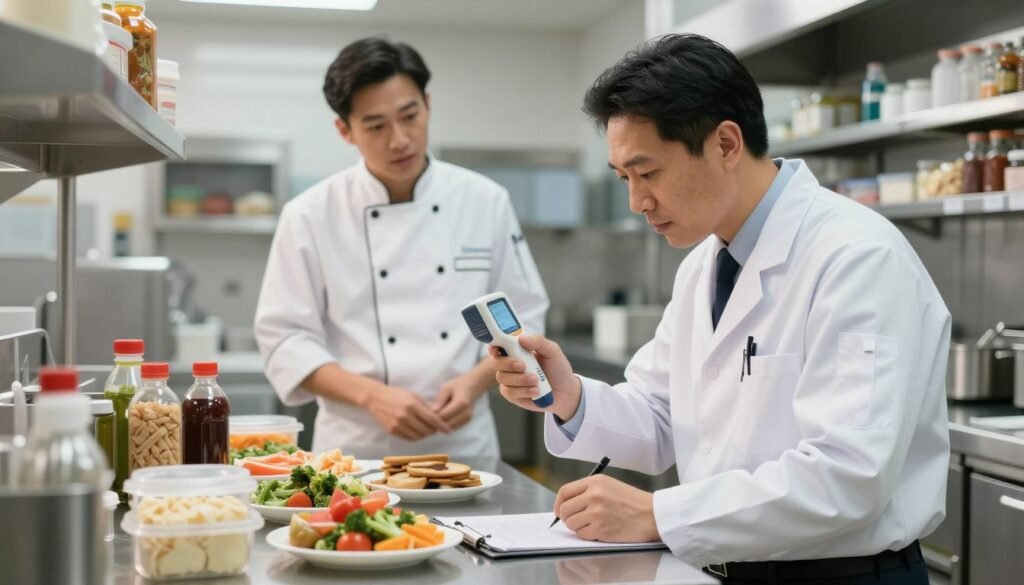
A routine inspection is a collaborative checkpoint designed to ensure ongoing safety for every customer. This systematic evaluation verifies that daily operations align with the State Sanitary Food Code.
These regulations cover management, personnel, and equipment standards. The process is a core service of your local public safety agency.
Its goal is protection through verification and guidance. Understanding this process empowers both operators and the public.
What Inspectors Look For During Visits
Inspectors evaluate specific risk areas during a visit. Their checks are based on established code requirements.
They assess food source integrity and temperature control. Proper cooling and heating prevents bacterial growth.
Employee hygiene and health policies are reviewed. Handwashing stations and illness reporting are key.
Prevention of cross-contamination is critical. This includes separate utensils for raw and ready-to-eat items.
Cleanliness of all equipment and facilities is verified. This includes surfaces, storage, and pest control measures.
Proper waste disposal and water quality are also checked. All aspects aim to minimize public risk.
| Evaluation Area | Key Checkpoints | Common Code Violations |
|---|---|---|
| Food Source & Temperature | Supplier verification, cold/hot holding temps | Food held in danger zone (41°F-135°F) |
| Employee Hygiene | Handwashing, clean attire, illness policy | Lack of accessible handwashing station |
| Cross-Contamination Prevention | Separate equipment, proper storage | Raw meat stored above ready-to-eat items |
| Equipment & Facility Cleanliness | Sanitation schedule, no pest evidence | Accumulated grease on surfaces |
| Waste & Water Management | Proper disposal, backflow prevention | Garbage area attracting pests |
Frequency and Types of Inspections Conducted
Inspection frequency is often risk-based. A restaurant serving high-risk items may be visited more than a retail store.
Routine checks are typically unannounced. Inspectors are usually in the field from 9:30 a.m. to 4 p.m. on weekdays.
Managers should be prepared for a visit at any time during operating hours. Other triggers include consumer complaints.
Follow-up inspections occur after violations are cited. A pre-opening inspection is required for a new establishment.
This ensures the plan meets code before service begins. Each type has a specific focus for compliance.
Corrective Actions and Achieving Compliance
When a violation is found, it is documented on an official report. The inspector provides a clear timeline for correction.
They often offer guidance on how to fix the issue. This approach is designed to help improve operations.
Consequences for non-compliance escalate. Initial minor issues require simple corrections.
Repeated or serious violations can lead to re-inspection fees. Administrative hearings or permit suspension may follow.
The inspection report is a tool for continuous improvement. A business that would like to improve its score can request a consultation.
Educational materials are provided by the health department. Many municipalities promote transparency.
They provide public access to results via online databases or a mobile app. This information helps consumers make informed choices.
Staying in compliance protects your establishment’s reputation. It also fulfills your role in community food protection.
Engaging with the Food Health Department: Complaints and Feedback
Knowing how to communicate with your local oversight agency empowers you to contribute to a safer environment. Your active participation is a vital component of the public safety system. This engagement creates a two-way street for feedback and action.
Whether you need to report a concern or share your perspective on a new rule, clear channels exist. Understanding these processes ensures your voice is heard effectively.
How to File a Food Safety Complaint
If you witness a potential violation, filing a complaint triggers an official review. You have several convenient options to submit your concern.
Many cities operate a dedicated 311 phone system for non-emergency service requests. You can also call a direct hotline listed on the agency’s website.
Submitting an online form is often the fastest method. Some jurisdictions also offer a mobile app for this purpose.
Email is another accepted channel for detailed information. Always use the official address published for public contact.
To help investigators respond, include specific details. Note the date, time, and exact location of the establishment.
Describe your observations clearly. This might involve employee hygiene, unclean conditions, or suspected illness.
Your report provides the starting point for a professional inquiry. It is a direct way to help improve standards in your community.
Participating in Public Hearings and Community Input
Public hearings are formal opportunities to influence local regulations. The division holds these sessions to gather feedback on proposed changes.
New rules might affect retail tobacco sales, bodywork services, or water and septic systems. Your input ensures rules are practical and effective.
You can participate by attending the hearing in person. Draft regulations are usually posted online in advance for review.
If you cannot attend, written comments are accepted. Submit them via email or mail before the published deadline.
This process allows both residents and business owners to be heard. Your perspective helps shape policies that impact daily life.
It is a core part of transparent governance. The agency would like to incorporate community views into its final decisions.
Contact Information and Office Hours
For general inquiries, use the standard contact information. Staff are available to assist you during published office hours.
Administrative offices are typically open Monday through Friday, from 8:30 a.m. to 5 p.m. You can visit in person, call, or send correspondence.
The physical address and email are listed on the official page. Check multiple websites for the most current details.
To speak directly with an inspector, timing matters. They are often in the field during core business hours.
Try calling early in the morning or later in the afternoon. This increases your chance of a direct conversation.
For specific issues like applications for a mobile cart or a new restaurant, contact the relevant program. The table below summarizes key methods.
| Contact Method | Best For | Typical Details | Response Time |
|---|---|---|---|
| 311 System Phone Call | General complaint or service request | Available in many cities; non-emergency line | Varies by jurisdiction |
| Online Complaint Form | Filing a detailed complaint with attachments | Found on the state or local health department site | Often within 1-2 business days |
| Public Hearing Email | Submitting written comments on proposed rules | Email address and deadline posted with hearing notice | Acknowledged, then considered in official record |
| Main Office Phone | General questions about permits or public health codes | Listed phone number; M-F, 8:30 a.m.-5 p.m. | During business hours |
| Inspector Direct Line | Follow-up on a specific case or establishment | Best to call before 9 a.m. or after 4 p.m. | May require leaving a message for callback |
Using the correct channel streamlines your contact and gets you the help you need. Keep this contact information handy for future reference.
Your proactive engagement strengthens the entire safety network. It is a partnership that benefits everyone.
Conclusion: Your Partnership in Ensuring Food Safety
The foundation of public trust in every meal served is a robust partnership between regulators, operators, and consumers. This collective effort transforms rules into a living culture of safety.
Your local agency acts as regulator, educator, and inspector. Its work ensures standards from permit review to daily compliance.
If you run a business, engage early. Use online portals for applications and manage your license. Stay informed on inspection protocols.
As a community member, be vigilant. Know how to report concerns. Your voice strengthens public trust and protection.
The goal is a resilient and trustworthy local supply for everyone. The division commits to adapting and improving its service.
For current forms, regulations, and contact information, visit your official website. Your active role completes this essential partnership.