What if the very snacks you trust to keep you in ketosis are secretly working against you?
You grab a bag of chips or a bar with a bold “Keto” banner, feeling confident in your choice. But that confidence can shatter when the scale won’t budge or your energy crashes. The frustrating truth is that many packaged items marketed for a low-carb lifestyle are filled with hidden carbohydrates.
These misleading labels trick even the most diligent followers. They can cause unintended blood sugar spikes, knocking you out of the precious fat-burning state of ketosis. Your health and weight loss goals are too important to be derailed by clever packaging.
This is why label literacy is your most powerful tool. The promise of convenient foods often clashes with food manufacturing and marketing reality. You must become skeptical of front-of-package claims. Always verify with the nutrition facts and the ingredient list.
We will dissect five common label lies that sabotage diet efforts. This knowledge will empower you to shop with confidence and protect your metabolic state. Becoming an informed consumer is the key to unlocking the true benefits of your eating plan.
Key Takeaways
- Many items labeled “keto” can contain hidden carbohydrates that stall progress.
- Front-of-package claims are often marketing tactics, not nutritional facts.
- Always check the detailed nutrition facts panel and full ingredient list.
- Hidden sugars and carbs can unexpectedly knock your body out of ketosis.
- Developing a label literacy framework is essential for maintaining your diet.
- Your wellness journey deserves products with transparent and honest information.
- Informed shopping is your best defense against deceptive packaging.
Why Your “Keto” Snack Might Be Sabotaging Your Goals
Imagine reaching for a quick, low-carb bite, only to have it disrupt your metabolic state hours later. The items you rely on for convenience can sometimes work against your deepest health objectives. This conflict between promise and reality is a major hurdle in your diet journey.
The ketogenic eating plan is built on a simple but strict formula. It is high in fat, moderate in protein, and extremely low in carbohydrates. This balance triggers a metabolic state called ketosis.
To stay in ketosis, most people must limit their total daily carbohydrate intake to between 20 and 50 grams. That’s a very small budget. For perspective, a single teaspoon of regular sugar contains 4 grams of carbs.
The Promise vs. The Reality of Keto Labeling
Walk down any grocery aisle and you’ll see bold claims. Words like “Keto-Friendly,” “Net Carbs,” and “Low Impact” scream from packaging. These terms are designed to create instant trust and a sense of security.
This is the shiny promise. The reality often hides in the fine print of the ingredient list. That “keto” bar might use modified food starches. That “sugar-free” candy could contain maltitol, a sweetener known to spike blood sugar.
The front of the package is for marketing. The nutrition panel and ingredient list are for your health. Learning to spot the difference is your first line of defense.
How Hidden Carbs Can Knock You Out of Ketosis
Ketosis is when your body efficiently burns stored fat for fuel instead of glucose from carbs. It’s a powerful state for fat loss, but it’s also delicate. It can be so easily disrupted by excess carbohydrates.
Hidden carbs in packaged foods are the main disruptors. They add up silently throughout your day. A few “keto” snacks can push you past your limit without you even realizing it.
| Sample “Keto” Snack | Claimed Net Carbs | Possible Hidden Carbs (from additives) | Total Carb Impact (Estimate) |
|---|---|---|---|
| Protein Bar | 3g | 4g (from tapioca syrup solids) | 7g |
| Bag of “Keto” Chips | 2g | 5g (from modified potato starch) | 7g |
| “Sugar-Free” Candy | 1g | 6g (from maltitol syrup) | 7g |
As the table shows, just two or three items could use your entire daily carb allowance. The effects of being knocked out of ketosis are immediate and frustrating.
Your body will release stored water, causing the scale to jump up. Your energy may crash as your fuel source switches back to glucose. Intense cravings for more sugary foods often follow.
This is why vigilance with packaged products is non-negotiable. Protecting your metabolic state is key to reaping the full benefits of your plan, from steady energy to sustained weight management. For truly safe options, explore our guide to guilt-free keto desserts that align with your goals.
The “Sugar-Free” or “No Sugar Added” Deception
In the world of low-carb eating, few claims are as trusted—and as frequently misleading—as ‘sugar-free.’ This label promises a sweet experience without the metabolic cost. It feels like a safe choice for your health and weight loss goals.
The harsh truth is different. ‘Sugar-free’ does not automatically mean ‘carb-free’ or ‘keto-friendly.’ Many products use this term while packing in other ingredients that spike blood sugar. Your diet success depends on looking past this bold claim.
Sweeteners That Act Like Sugar in Your Body
Some compounds are technically free of table sugar. Yet, your body processes them almost identically. They can provoke a significant insulin response or be metabolized as carbohydrates.
This defeats the entire purpose of choosing a sugar-free item. The effects on your blood sugar can be similar to eating regular sweets. You might be knocked out of ketosis without understanding why.
Understanding this science is key. It transforms you from a trusting shopper into an informed expert.
Hidden Carb Culprits: Maltodextrin and Dextrose
Two of the biggest offenders are maltodextrin and dextrose. They are common in protein bars, syrups, and baked goods labeled sugar-free.
Maltodextrin is a powder made from starch. It has a very high glycemic index. This means it causes a rapid rise in blood sugar. Dextrose is a simple sugar derived from corn.
Manufacturers use them as cheap bulking agents and fillers. They add texture and sweetness. A product can claim ‘No Sugar Added’ while its first ingredient is maltodextrin. This practice hides substantial carbs.
| Sweetener Type | Commonly Found In | Impact on Blood Sugar | Keto-Friendly? |
|---|---|---|---|
| Maltodextrin | Packaged baking mixes, ‘sugar-free’ sauces, drink powders | Very High (Rapid spike) | No |
| Dextrose | Processed snacks, some protein powders, ‘sugar-free’ candies | High (Similar to glucose) | No |
| Corn Syrup Solids | Low-carb bars, instant puddings | High | No |
| Modified Food Starch | Gluten-free & ‘keto’ breads, gravies | Moderate to High | No |
How to Spot Truly Keto-Friendly Sweeteners
Not all sweeteners will sabotage you. The key is knowing which ones have minimal impact. You must scrutinize the ingredients list on every package.
Look for these specific names. They have little to no effect on blood sugar for most people.
Stevia and Monk Fruit are natural, zero-calorie options. They contain 0g net carbs. Erythritol is a sugar alcohol that also has 0g net carbs. It’s well-tolerated by many.
Allulose is a newer option. It has about 0.4g net carbs per teaspoon. It behaves like sugar in recipes but doesn’t metabolize fully.
Enjoying sweetness without compromise is possible. It requires choosing the right tool for your health goals. Your vigilance turns the deceptive ‘sugar-free’ aisle into a source of safe, enjoyable snacks.
The “Net Carbs” Manipulation Game
The term ‘net carbs’ has become a beacon for low-carb dieters, yet its calculation is often a minefield of manipulation. This figure is prominently displayed on packaging to attract your attention. It promises a simple way to track your daily intake.
However, the number you see might be overly optimistic. Food manufacturers have many ways to make this count appear smaller. Your trust in this single metric could derail your diet progress.
Understanding the standard formula is your first step. Net carbs are typically calculated as total carbohydrates minus dietary fiber and certain sugar alcohols. The idea is that these subtracted components don’t significantly raise blood sugar.
This is where the game begins. Not all fibers and sugar alcohols are equal in their effects. Some can still impact your metabolic state. Others may cause digestive upset that makes a product unsuitable.
When Fiber Claims Are Too Good to Be True
Many keto products boast high fiber content to slash the net carbs number. They often use isolated fibers like chicory root fiber (inulin) or tapioca fiber. These are extracted and added back into processed snacks.
While they are technically fiber, their effects on your body can be problematic. Isolated fibers may cause significant bloating, gas, or discomfort for many people. This is a major red flag for your digestive health.
More importantly, a high fiber claim shouldn’t give a free pass to other questionable ingredients. A bar might have 15g of total carbs and 10g of added fiber, yielding 5g net carbs per serving. Yet, those remaining 5g could come from maltodextrin or other high-glycemic fillers.
Added fiber is a tool for manipulation. It artificially lowers the net carb count while the product’s overall quality may be poor. Always ask what makes up the total carbohydrate number.
The Problem with Sugar Alcohols: Not All Are Created Equal
Sugar alcohols are a common subtraction in the net carbs equation. Their impact on blood sugar varies wildly. Relying on the blanket subtraction can be a serious mistake for your health.
Erythritol is a keto-friendly favorite. It has nearly zero glycemic index and is mostly excreted unchanged. Most people subtract its full grams from total carbs.
Maltitol is the common deceiver. It has a glycemic index almost half that of table sugar. It can spike glucose levels in many individuals. Yet, manufacturers still subtract it fully to report a low net carb figure.
This table highlights the critical differences you must know:
| Sugar Alcohol | Glycemic Index (GI) | Commonly Found In | Recommended Keto Subtraction* |
|---|---|---|---|
| Erythritol | 0-1 | Natural sweetener blends, keto chocolates | Subtract 100% |
| Maltitol | 35-52 | “Sugar-free” candies, ice cream, baked goods | Subtract 50% or less |
| Sorbitol | 9 | Dietetic jams, chewing gum | Subtract 50% |
| Xylitol | 13 | Peanut butters, mints, toothpaste | Subtract 50% |
*These are general guidelines. Your personal tolerance may vary. The key is to never blindly trust the manufacturer’s subtraction.
If a product uses maltitol but claims 2g of net carbs, your body might process it as 5g or more. This hidden impact can quietly push you over your daily limit.
Doing Your Own Net Carb Math
Empowerment comes from becoming your own accountant. Don’t rely on the big number printed on the front. Always verify using the nutrition facts panel and the ingredient list.
Follow this step-by-step guide for accurate counting:
- Find “Total Carbohydrates”: Look at the official panel, not the front claim.
- Identify Dietary Fiber: Note the grams. If it’s an isolated fiber like inulin, be cautious.
- Locate Sugar Alcohols: Check the ingredients list for specific types (e.g., erythritol, maltitol).
- Apply Your Own Subtraction: Based on the table above, decide what percentage to subtract for each sugar alcohol.
- Check the Serving Size: This is a classic sleight of hand. A “serving” might be unrealistically small, like 5 chips. The carbs per serving seem low, but you’ll likely eat multiple servings.
Let’s practice with an example. A bar has 20g total carbs, 5g fiber, and 10g sugar alcohols (from maltitol).
The front label might claim: “Only 5g Net Carbs!” (20 – 5 – 10 = 5). But you know maltitol’s impact is high. You decide to subtract only 50% of it (5g).
Your personal calculation: 20 – 5 – 5 = 10g net carbs. That’s double the advertised amount! This difference is crucial for maintaining weight loss and ketosis.
Your body’s response is unique. Some people tolerate certain fibers and sweeteners better than others. The only way to know is through careful tracking and observation.
Becoming the authority on what you eat is the ultimate benefits of label literacy. Take control of the math. Your health journey deserves no less than full transparency.
The “Made with Real Vegetables” or “Real Fruit” Illusion

The phrase “made with real vegetables” on packaging instantly creates a halo of healthfulness. You see pictures of ripe tomatoes and leafy greens. It feels like a smart, nutritious choice for your eating plan.
This claim is a powerful marketing illusion. It makes processed snacks appear wholesome. The truth often hides in the fine print of the ingredient list.
Companies use tiny amounts of produce in powdered or paste form. This lets them make the “made real” claim legally. Your health goals deserve more than a token gesture.
Powders and Pastes vs. Whole Foods
Whole vegetables and fruit are packed with fiber, vitamins, and water. Processed forms like spinach powder or fruit puree concentrate lack this full profile. They are often stripped of the very benefits you seek.
These powders are used as coloring or flavoring agents. They are listed far down the ingredients. A product like Simply Lay’s Veggie Poppables states “made with real veggies.” The only vegetables are spinach and tomato powders listed 10th and 11th.
The primary foods here are still starches and oils. You miss out on the satiating fiber of whole produce. This can impact your body‘s feeling of fullness.
These processed carriers can also have unwanted effects. They may be combined with maltodextrin or other high-glycemic fillers. This adds hidden carbs to your diet.
How Sugar Can Still Be the #1 Ingredient
Even when fruit is the first item named, sugar can dominate. Welch’s Fruit Snacks proudly state “fruit is our 1st ingredient.” The second and third are corn syrup and sugar.
This means the total weight of added sugars outweighs the actual fruit content. The product becomes a high-sugar food, not a healthy one. It’s a classic label lie.
Your nutrition strategy requires looking at the complete order. Ingredients are listed by weight from most to least. If any form of sugar is in the top three, it’s a red flag.
These unexpected sugars can derail weight loss. They spike blood glucose, creating cravings. This makes sticking to a low carb lifestyle much harder.
| Product Claim | Key Ingredients (in order) | Reality Check |
|---|---|---|
| “Made with Real Veggies” | Potato Starch, Sunflower Oil, Spinach Powder (10th) | Veggies are a trace ingredient for marketing. |
| “Real Fruit is 1st Ingredient” | Fruit Puree, Corn Syrup, Sugar | Added sugars are the dominant components. |
Identifying Truly Veggie-Packed Keto Options
Genuine keto-friendly products prioritize low-carb vegetables as main ingredients. Look for items where zucchini, cauliflower, or broccoli appear first on the list. These provide bulk and nutrition without the carbs.
Follow this simple checklist when shopping:
- Ignore the front imagery. Go straight to the ingredient list.
- Check the order. The first 2-3 items tell the real story.
- Look for whole food forms. “Cauliflower florets” is better than “cauliflower powder.”
- Beware of added sweeteners. Even in savory foods, sugar can sneak in.
Consider making your own vegetable-based snacks. Kale chips or baked zucchini fries are simple. You control exactly what goes into your food.
When you find a product where vegetables lead, you’ve found a winner. This supports your diet with fiber and nutrients. It aligns with your health and wellness journey.
Recognizing this illusion protects your progress. It turns a deceptive claim into a moment of smart consumer power. Your eating choices become truly informed.
The “Gluten-Free” Equals “Keto” Fallacy
The gluten-free market has exploded, but for keto dieters, this label can be a misleading distraction. You see it on bread, cookies, and crackers. It’s easy to assume these items are safe for your low carb lifestyle.
This assumption is a common trap. Gluten-free is a necessity for those with celiac disease or sensitivity. For your keto diet, the primary concern is total carbohydrate content.
Removing gluten does not remove carbs. In fact, many alternatives used are packed with refined starches. These can spike your blood sugar just as much as regular wheat.
Gluten-Free Flours That Are Still High-Carb
To replace wheat, manufacturers use a variety of alternative flours. These are often even higher in carbohydrates per serving. Your health goals require knowing this list.
Common culprits include rice flour, tapioca starch, potato starch, and cornstarch. They are refined carbohydrates with minimal fiber. This means they digest quickly into glucose.
Let’s compare them to a standard wheat flour. You might be surprised by the numbers.
Rice flour has about 82 grams of total carbs per 100-gram serving. Tapioca starch has around 86 grams. These numbers are similar to or exceed all-purpose wheat flour.
Using these in foods like breads or cookies creates a high-carb product. The “free from gluten” claim shines a health halo. The nutrition reality is different.
Rice Flour, Tapioca Starch, and Other Sneaky Starches
These refined carbohydrates are not just in baking mixes. They act as binders and thickeners in many processed foods. You’ll find them in sauces, gravies, and even some snacks.
Their job is to improve texture and shelf life. For you, they add hidden carbs that quietly accumulate. A gluten-free gravy might use potato starch. A “healthy” cracker could rely on tapioca.
This table shows how these ingredients stack up:
| Ingredient | Common Use | Carbs per 1/4 Cup (approx.) | Glycemic Impact |
|---|---|---|---|
| Rice Flour | Breads, baking mixes, coatings | 28g | High |
| Tapioca Starch | Puddings, gluten-free pasta, thickeners | 26g | Very High |
| Potato Starch | Gluten-free baked goods, soups | 24g | High |
| Cornstarch | Sauces, fried food coatings | 28g | High |
The effects on your body are significant. These simple carbs cause rapid glucose spikes. This can disrupt ketosis and hinder weight loss.
Regular pasta is a high carb food to avoid. Gluten-free pasta often uses these same starchy bases. The carb count remains sky-high.
Why “Gluten-Free” Doesn’t Mean “Carb-Free”
The labels are telling two different stories. One is about a protein (gluten) removal. The other is about your macronutrient intake for keto.
You must separate these concepts. A product can be perfect for someone with gluten intolerance. Yet, it could be disastrous for your low carb eating plan.
Many gluten-free breads, cookies, and crackers are major sources of simple carbs. They offer little fiber to offset the impact. This is why checking the nutrition facts is non-negotiable.
What should you look for instead? Seek out products that are both gluten-free and use truly low-carb flours. Almond flour, coconut flour, and seed flours are excellent bases.
These alternatives provide healthy fats and fiber. They have a minimal effect on your blood sugar. This aligns with the benefits you want from your diet.
Your shopping checklist gets an upgrade:
- Ignore the “gluten-free” banner as a sole approval.
- Scan the ingredients list for high-carb flours and starches.
- Prioritize items where almond or coconut flour is the first ingredient.
- Always verify the total carbohydrates and fiber per serving.
Double vigilance is your new habit. The health halo can distract from the high-carb reality. Your informed choices protect your metabolic state and overall health.
The “Lightly Sweetened” or “Low-Sugar” Ambiguity
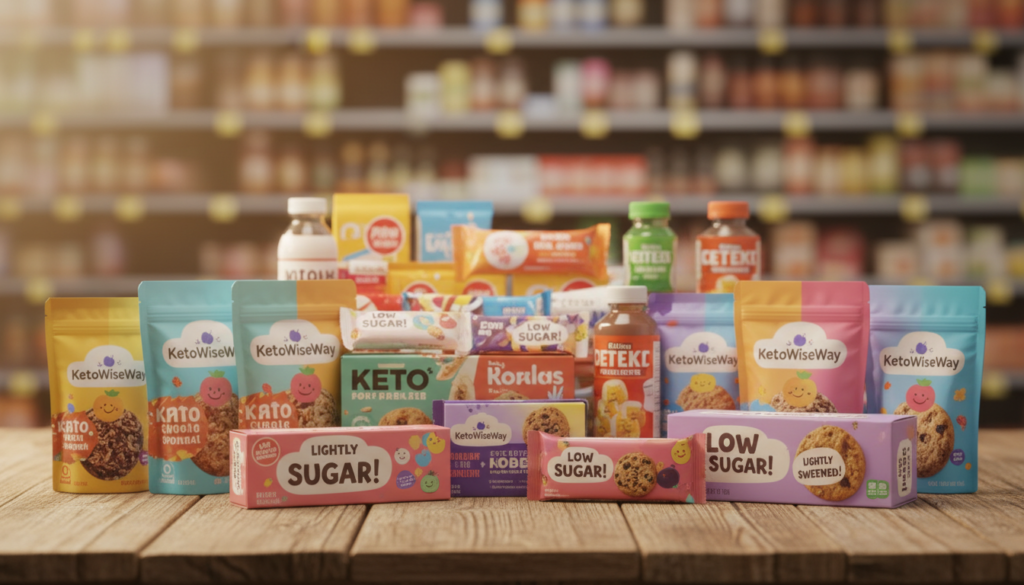
Have you ever picked up a ‘lightly sweetened’ yogurt, believing it’s a smart choice, only to wonder what that phrase really means? These terms sound reassuring on packaging. They suggest a product is better for your diet.
The truth is less clear. Words like “lightly sweetened” and “low-sugar” are not strictly defined by the FDA. A manufacturer’s idea of “light” sweetness could be another brand’s sugar bomb. This ambiguity hides significant carbohydrate counts.
Your health goals require precise information. Vague claims allow companies to use substantial amounts of sugar or sweeteners. They still present the item as a better option. This section will help you cut through the fog.
Unmeasured Terms That Hide Carb Counts
Without a standard definition, “lightly sweetened” is a subjective marketing term. It is not a nutritional guarantee. One brand’s yogurt might have 5 grams of added sugars. Another could have 12 grams and use the same label.
This is especially problematic in sauces and condiments. Tomato-based pasta sauce often contains natural sugar from tomatoes. Many brands then add more sugar or syrup. A “low-sugar” version might still pack 10 grams per serving.
These hidden sugars can derail your eating plan. They spike your blood sugar quietly. The effects on your body can knock you out of ketosis.
Always treat these phrases with skepticism. They are descriptors, not data. Your best defense is the nutrition facts panel.
Comparing “Lightly Sweetened” to Full-Sugar Versions
A practical exercise reveals the truth. Compare the food labels of a “lightly sweetened” product with its regular version. The carb savings might be minimal or misleading.
Let’s look at a popular cereal. The regular version has 20g of total sugar per serving. The “lightly sweetened” box boasts only 8g. That seems like a win.
But for a strict keto plan, 8g could be a large portion of your daily allowance. It might still be too high. This is why context matters.
| Product Type | Regular Version (Sugar per Serving) | “Lightly Sweetened” Version (Sugar per Serving) | Meaningful for Keto? |
|---|---|---|---|
| Flavored Yogurt | 18g | 10g | Likely No |
| Tomato Pasta Sauce | 12g | 6g | Possibly, but check total carbs |
| Granola Bar | 15g | 7g | No |
The table shows that “low-sugar” might still mean 10-15 grams per serving. This could use half your daily carb budget. You must decide if it fits your keto macro tracking.
This comparison is a powerful tip. It moves you from trusting claims to analyzing numbers.
The Quest for Quantifiable Sweetness
Your goal is clarity. Look for products that specify the grams of sugar or sweetener used per serving. Quantifiable data beats vague promises every time.
Here are actionable tips for navigating this aisle:
- Ignore the front-of-package adjectives. Go straight to the “Total Sugars” and “Added Sugars” lines on the nutrition panel.
- Set a personal threshold. For example, any snack with more than 3g of added sugars might be off-limits.
- Scrutinize ingredients. Even in savory foods, look for honey, agave, cane syrup, or fruit juice concentrate.
- Prefer products with no sweetness claims. Plain versions let you control what you add.
This approach turns ambiguity into action. You become the judge of what “light” means for your health. The benefits are real: steady energy, sustained weight loss, and peace of mind.
Train yourself to seek precision. Your diet deserves nothing less than transparent labels. This is how you take back control from clever marketing.
How to Become a Keto Label-Reading Pro
What if you could walk into any store and instantly know which products support your low-carb goals? This skill is within your reach. Transforming into a label-reading expert turns every shopping trip into a confident mission.
You will graduate from a wary shopper to a keto-savvy pro. This systematic approach evaluates any packaged food. It empowers you to support your health and weight loss journey without guesswork.
We provide a deep dive into three core areas. First, mastering the nutrition facts panel. Second, conducting an ingredient list scavenger hunt. Third, applying a practical checklist for truly keto-friendly purchases.
This knowledge is your ultimate shield. It lets you cross-reference bold claims with hard data. You take back control of your diet with clear, actionable information.
Mastering the Nutrition Facts Panel: Beyond the Bold Claims
The nutrition facts panel is your primary source of truth. It holds the data marketers often obscure. Learning to read it correctly is your first major step.
Start with the serving size. This is a classic trick. A bag of “keto” chips might list a serving as 10 chips, but the bag contains 50.
You might casually eat 30 chips. That’s three servings, tripling the carb count instantly. Always check this number first.
Next, look at “Total Carbohydrates.” This is the most critical line for your low carb lifestyle. Do not be distracted by the “Total Fat” or protein numbers yet.
Beneath total carbs, you’ll find dietary fiber and sugars. Fiber is your friend. It can be subtracted to calculate net carbs, but be cautious with isolated fibers.
The “% Daily Value” column is based on a 2,000-calorie diet. For keto, these percentages are often irrelevant. Your carb limit is much lower than the standard 275g DV.
Instead, focus on the raw gram counts. Your personal daily budget is the only metric that matters.
Accurately calculating net carbs is key. Use this simple formula: Total Carbs – Dietary Fiber – Sugar Alcohols (adjusted) = Net Carbs.
Remember, not all sugar alcohols are equal. Subtract 100% for erythritol, but only 50% for maltitol. Doing your own math prevents nasty surprises.
Finally, scan for “added sugars.” This new line on labels is a gift. It reveals sweeteners added during processing, separate from natural sugar.
Even a savory sauce can have 3g of added sugars. This can quietly push you over your limit.
The Ingredient List Scavenger Hunt: Spotting Red Flags
The ingredient list tells the real story of your food. Ingredients are listed by weight, from most to least. The first three items define the product’s quality.
Your mission is to hunt for red flags. These are ingredients that spike blood sugar or cause inflammation. Spotting them quickly saves your diet.
Here are major red flags to avoid immediately:
- Maltodextrin: A high-glycemic starch that acts like sugar in your body.
- Dextrose: Pure glucose, often used in “sugar free” items.
- Rice Syrup or Brown Rice Syrup: A concentrated sweetener with high carbs.
- Tapioca Starch / Potato Starch: Refined carbohydrates with minimal fiber.
- Corn Syrup Solids: A dry form of high-fructose corn syrup.
- Maltitol: A sugar free sweetener with a high glycemic impact.
- Vegetable Oils (soybean, corn, canola): Highly processed oils that can promote inflammation.
Now, seek out green-flag ingredients. These support your health and align with keto principles.
Prioritize products featuring these:
- Avocado Oil, Coconut Oil, Olive Oil: High-quality fat source.
- Almond Flour, Coconut Flour: Low-carb, high-fiber flour alternatives.
- Stevia, Monk Fruit, Erythritol: Sweeteners with minimal blood sugar effects.
- Grass-Fed Butter or Ghee: Excellent sources of healthy fats.
- Chia Seeds, Flaxseeds: For added fiber and omega-3s.
This scavenger hunt becomes second nature. You’ll quickly scan past the marketing and see the true composition. Your eating choices become powerfully informed.
Your Checklist for Truly Keto-Friendly Purchases
Combine your knowledge into a simple, actionable checklist. Use this every time you consider a new packaged snack or meal. It ensures every purchase supports your goals.
1. Net Carbs Per Serving: Does it fit your daily budget? For most, aim for under 5g net carbs per serving of a snack.
2. Quality of Fat Source: Are the fats from healthy sources like avocado, coconut, or olive? Avoid “vegetable oil” blends.
3. Protein Source: Is the protein from clean sources (e.g., whey isolate, collagen, grass-fed meat)? Avoid soy protein isolates with fillers.
4. Absence of Inflammatory Oils: The ingredient list must be free of soybean, corn, canola, and “hydrogenated” oils.
5. No Red-Flag Sweeteners or Starches: Confirm no maltodextrin, dextrose, or high-glycemic sugar alcohols.
6. Realistic Serving Size: Is the listed serving size something you’d actually eat? If not, recalculate the carbs.
7. Fiber Content: Does it have meaningful fiber from whole-food sources (e.g., chia, flax) rather than just isolated fibers?
Keep this checklist on your phone. It turns complex decisions into a quick yes-or-no process.
Planning and preparing your own meals is the ultimate strategy. Making your own keto desserts gives you complete control. You know every ingredient that goes into your food.
Explore reliable source for recipes and tips. Registering with trusted platforms like Atkins can provide a stream of low-carb recipes and resources. This continues your education.
Navigating different grocery store aisles becomes easier. Stick to the perimeter for whole foods like meat, cheese, and vegetables. Venture into the inner aisles with your checklist in hand.
Use apps or tools to help. Some apps can scan barcodes and give a quick keto-friendliness score. Others help you track your daily macros to see how a new food fits.
Stay updated on new products and marketing trends. Follow reputable keto bloggers or nutritionists. They often review new items and dissect their food labels for you.
The culmination is you feeling in complete control. You transform confusion into confidence. Every shopping trip supports your health without compromise.
You now have the framework. You understand the nutrition facts, can hunt for red flags, and have a proven checklist. This is the power of being a keto label-reading pro.
The benefits extend beyond the store. You enjoy steady energy, sustained progress, and peace of mind. Your diet is built on transparency, not tricks.
Conclusion: Taking Back Control of Your Keto Journey
Armed with knowledge, you can confidently navigate the grocery aisles, ensuring every choice aligns with your wellness goals. You now hold the key to unlocking lasting success on your diet. By seeing past marketing hype, you make choices based on verified facts.
This label-reading skill is a lifelong asset for your health. It protects your metabolic state and overall well-being. The long-term benefits include steady weight loss and stable blood sugar levels.
Your body thrives on transparency. Remember, whole, unprocessed foods are your most reliable foundation. For more foundational information, explore our keto for beginners guide.
Always consult your healthcare provider before making significant changes. This blog is for informational purposes only.
Move forward with confidence. Your journey toward better health is now in your hands.