What if everything you’re doing right on your keto diet is actually what’s keeping you stuck? That moment when the scale refuses to budge, despite your unwavering dedication, is incredibly frustrating.
You are not alone. Hitting a stall is a normal part of the journey. Research, like a one-year study on low-carb diets, shows people often experience months of rapid weight loss followed by periods of stability, even while following the same plan.
This article cuts through the confusion. We provide a clear, actionable three-step plan to restart your fat-burning engine. The goal isn’t just to break the stall but to understand why it happens, empowering you with knowledge.
The solution often involves fine-tuning your carb, protein, and fat intake. We’ll explore that in detail. With a few simple adjustments, you can get back on track.
We’ll also cover essential lifestyle factors and advanced techniques for stubborn plateaus. See this plateau as a temporary hurdle, not a permanent roadblock. Your path forward starts here.
Key Takeaways
- Weight loss plateaus on a ketogenic diet are a common and normal experience.
- Understanding the reason behind a stall is crucial for long-term success.
- A clear, three-step plan can help restart your body’s fat-burning process.
- Fine-tuning your intake of carbs, fats, and protein is often the key.
- Lifestyle factors like sleep and stress play a significant role.
- With targeted adjustments, you can overcome this temporary challenge.
What Is a Keto Weight Loss Plateau?
Understanding what a true stall is can transform frustration into focused action. It’s more than just a stubborn scale. A keto weight loss plateau is a specific period where your progress halts.
This happens despite you sticking faithfully to your low-carb plan. Distinguishing this from normal weight stability is your first step forward.
Understanding Weight Stability vs. True Plateaus
Your body’s weight is not a fixed number. It naturally fluctuates day to day. Changes in hydration, sodium intake, hormones, and even digestion can cause shifts of several pounds.
What you eat is just one factor. Medications, exercise, and body composition also play big roles. A single weigh-in doesn’t tell the whole story.
A true weight loss plateau is different. It’s a stretch of several weeks or even months where the scale doesn’t move. This occurs even with consistent dieting and effort.
After a phase of rapid loss, your body often needs time to adjust. Research on low-carb diets shows people can experience about three months of stability after initial success. This is a normal reset, not a failure.
Why Plateaus Are a Normal Part of Weight Loss
Your body is smart. It adapts to protect itself. When you consistently consume fewer calories, your metabolism can adjust to defend its current weight.
This is a common physiological response. It’s your body’s way of seeking balance. Think of a plateau as a sign your system has reached a temporary equilibrium.
On a ketogenic diet, the first big drop on the scale is often water weight. As your glycogen stores deplete, they release water. Ketones pulling water out during excretion adds to this effect.
This initial surge can create a false sense of rapid progress. When this water loss slows, it might feel like a stall. Real, sustained fat loss from your fat stores then takes center stage.
Knowing this difference is powerful. It prevents discouragement. It helps you focus on long-term fat loss instead of daily scale numbers.
Look at your weight trend over months, not days. This is the only way to accurately assess if you’re in a true stall.
This phase indicates it might be time for a strategic tweak. It’s not a roadblock. It’s a checkpoint on your journey.
How to Know If You’re in a True Weight Loss Plateau
Before you change your entire plan, you need to confirm whether you’ve actually hit a true weight loss plateau. Jumping to conclusions can waste your time and energy.
Smart diagnosis is your first step. It separates normal fluctuations from a real stall that needs action.
Assessing Weight Fluctuations Day-to-Day
Your weight can swing several pounds from one day to the next. This is normal. Water retention, sodium intake, and hormones are common causes.
A single number doesn’t tell the full story. You must look at the trend over weeks.
Analyze your data over a solid 4 to 6 week period. This reveals the real pattern. A true plateau shows a flat trend line for over a month.
Use a weight-tracking app or a simple chart. The overall line is what matters, not the daily ups and downs.
Signs That You’ve Hit a Stall
Look for these concrete signals of a genuine halt in progress:
- The scale hasn’t budged for more than four weeks, despite strict diet adherence.
- Your body measurements—like waist, hips, and arms—show no change.
- You feel mentally and physically stuck, even though you’re doing everything “right.”
If all these signs are present, you’re likely in a stall. This is your cue for a strategic tweak, not a panic.
Using Non-Scale Measures of Progress
The scale is just one tool. Non-scale victories (NSVs) are powerful success indicators.
Your clothes fitting looser is a major win. Improved energy levels, better sleep, and sharper mental clarity are huge. These show your body is benefiting, even if the weight number is static.
Track your waist circumference properly. Use a tape measure at your navel. Record it weekly.
Fat loss can happen without scale movement, and this measurement proves it.
Your favorite jeans don’t lie. If they’re getting looser, you’re making progress, regardless of what the scale says.
Also, consider life factors. High stress, poor sleep, or your menstrual cycle can cause temporary water retention. This can mask real fat loss for days or a week.
Take monthly progress photos. Visual changes can be incredibly motivating when the numbers aren’t moving.
Confirming a true weight loss plateau is empowering. It stops you from making unnecessary changes to a routine that might still be working underneath the surface. Once confirmed, you can move to targeted action, like fine-tuning your macro tracking.
The Science Behind Weight Loss Plateaus on Keto
Your body’s response to dieting is not a sign of failure, but a complex, adaptive process. Understanding the science behind a weight loss stall demystifies it. This knowledge turns frustration into a clear plan for action.
When you know why your progress has paused, you can strategically nudge your system forward. Let’s explore the core mechanisms at play.
How Weight Loss Works: Calories and Metabolism
All weight loss, including on a ketogenic diet, starts with a simple principle. You must consume fewer calories than your body expends for energy.
This creates a calorie deficit. Your system must then meet its energy needs by burning stored fuel, primarily from your fat stores.
A common rule states that a 3,500-calorie deficit leads to about one pound of fat loss. It’s a useful guideline, but the scale tells a broader story.
The number you see includes water weight, glycogen, and even muscle mass. This is why non-scale measurements are so valuable.
Metabolic Adaptations to Calorie Restriction
Your body is designed for survival. When you consistently eat less, it adapts to conserve energy. This is called metabolic adaptation or adaptive thermogenesis.
Your metabolic rate can slow down. The same calorie intake that once created a deficit now maintains your new, lower weight.
Think of it as your body’s internal thermostat defending a set point. Hormonal changes often support this. Levels of leptin (the “satiety hormone”) may drop.
Hunger signals can increase. This biological pushback is a primary driver behind hitting a plateau.
Furthermore, as you lose weight, your smaller body simply needs fewer calories. The deficit you started with naturally shrinks over time.
This shrinking deficit is a key concept. The table below illustrates how your maintenance needs change.
| Body Weight | Estimated Daily Calories to Maintain Weight | Your Consistent Daily Intake | Resulting Daily Calorie Deficit |
|---|---|---|---|
| 200 lbs | 2,400 calories | 1,900 calories | 500 calories |
| 180 lbs (After Loss) | 2,160 calories | 1,900 calories | 260 calories |
As shown, eating the same amount of food yields a much smaller deficit at a lower weight. Progress slows, creating a stall. This is a normal, expected part of the journey.
The Role of Water Weight in Initial Loss
The keto diet often produces a dramatic initial drop on the scale. This is largely due to water shifts, not just fat loss.
Your body stores carbohydrates as glycogen in your liver and muscle stores. Glycogen holds a lot of water.
When you drastically reduce carbs, you deplete these glycogen stores. The attached water is released and excreted.
Additionally, ketones themselves have a mild diuretic effect. This leads to more water loss, especially in the first few weeks.
This rapid water weight loss can feel amazing. However, it’s temporary. Once your body adjusts, this source of scale movement dries up.
The slower, steadier process of burning fat stores becomes the main event. The transition from rapid water loss to sustained fat loss can feel like a sudden halt.
Understanding that your body is fighting to keep you alive—not to keep you from your goals—changes everything. It’s biology, not willpower.
This science explains why plateaus happen. It reassures you that you haven’t done anything wrong. Your body is simply doing what it’s programmed to do.
With this foundation, you can now identify the specific factors in your own routine that may need a tweak.
Common Causes of Keto Weight Loss Stalls
Pinpointing the exact reason your progress has stalled is like finding the right key to unlock a stubborn door. Often, a stall is simply a sign of a small macronutrient imbalance.
Your keto diet hasn’t stopped working. You just need a minor tune-up. Let’s explore the most frequent dietary missteps that halt weight loss.
Too Many Carbs: Obvious and Hidden Sources
Carb creep is the number one culprit. Even a slight overage can block ketosis and pause fat burning.
Obvious sources like bread, pasta, and sugary desserts are easy to spot. The real challenge lies in hidden carbs.
These sneak into your diet through sauces, dressings, and condiments. “Keto-friendly” snacks and low-carb tortillas can also add up quickly.
Even healthy vegetables like onions, tomatoes, and nuts have carbs. Eating large amounts can push you over your personal limit.
Being a food detective is crucial. The table below shows common hidden sources to watch.
| Food Category | Common Examples | Typical Net Carbs per Serving |
|---|---|---|
| Sauces & Condiments | Ketchup, BBQ sauce, marinades | 3-10 grams |
| Dairy Products | Flavored yogurt, milk, some cheeses | 4-12 grams |
| Low-Carb Alternatives | Protein bars, breads, tortillas | 2-8 grams |
| Nuts & Seeds | Cashews, pistachios, pumpkin seeds | 4-8 grams |
| Beverages | Latte, diet soda with maltodextrin, alcohol mixers | Varies widely |
Tracking every bite for a week can reveal surprising gaps in your carb intake.
Too Much Protein: Impact on Ketosis
Protein is essential for preserving muscle mass. However, overconsumption can hinder your goals.
When you eat far more protein than your body needs, a process called gluconeogenesis can kick in. Your liver converts excess protein into glucose.
This can raise your blood sugar and ketone levels may drop. Your system might shift out of optimal fat-burning mode.
A good rule is 1 to 1.2 grams per pound of lean mass. Going significantly above this regularly can slow your weight loss rate.
Large steaks, multiple protein shakes in a day, or oversized chicken breasts are common sources of overage.
Too Much Fat: Calories and Satiety Balance
Here’s a key paradox of the keto diet. Fat is your primary fuel, but too much can halt progress.
Your body will always burn dietary fat for energy first. It’s easier than tapping into your fat stores.
Adding excessive fat from oils, butter, or fat bombs provides a surplus of calories. This eliminates your calorie deficit.
While fat promotes satiety, there’s a balance. Use it to feel satisfied, not as a free pass to overconsume.
If you’re not losing weight, scrutinize added fat in cooking, coffee, and snacks. These calories count.
Other Dietary Factors: Alcohol and Processed Foods
Alcohol presents a double challenge for weight loss. Your liver prioritizes detoxifying it, which pauses fat metabolism.
Many drinks also contain hidden carbs and sugars. They can lower inhibitions, leading to poor food choices later.
Processed keto foods like bars and shakes are convenient. Yet, they can be a trap.
Some contain artificial sweeteners that spike cravings in sensitive people. This can lead to overeating during subsequent meals.
Relying on these products often means missing out on the nutrients in whole foods. They can disrupt your natural hunger signals over time.
Your stall is a signal, not a sentence. It’s your body asking for a small adjustment to get back on the fat-burning highway.
Emotional eating and habit-driven snacking are other lifestyle factors. They add calories without nutritional benefit.
Take a forensic look at your food log. Which of these common causes might be your culprit? Identifying it is the first step to getting your loss back on track.
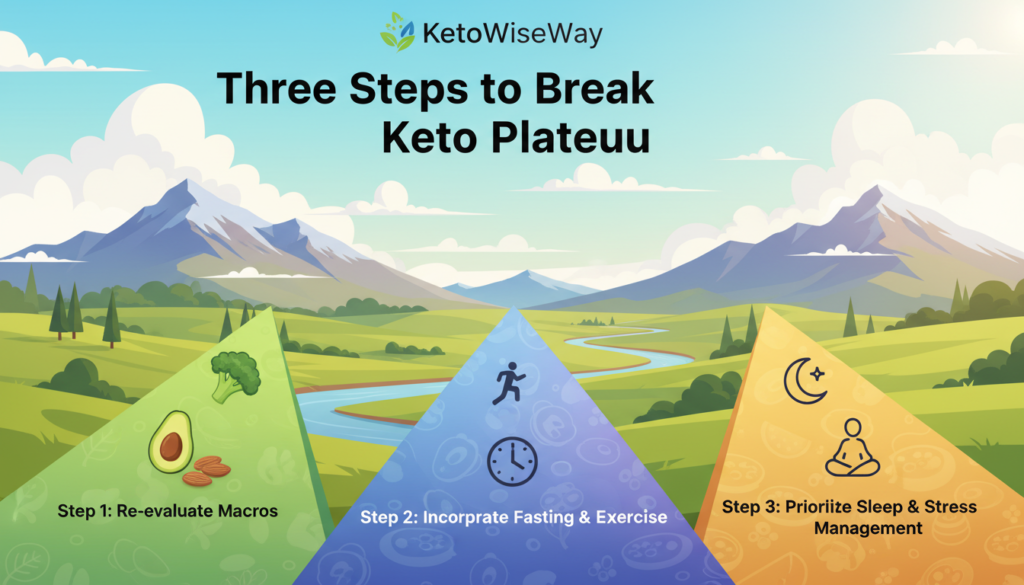
How to Break a Keto Weight Loss Plateau in 3 Simple Steps
Getting unstuck doesn’t require a complete overhaul, just smart tweaks. You’ve identified the stall. Now, it’s time for a clear, systematic fix.
This three-step plan targets the core dietary levers: carbs, protein, and fat. Think of it as a tune-up for your keto diet. Small, precise adjustments often restart weight loss.
We’ll walk through each step. The goal is to remove guesswork and find what needs a change.
Step 1: Reevaluate and Adjust Your Carb Intake
Start with a carb audit. Your personal tolerance may have shifted since you began.
Hidden carbs in sauces, dressings, or even healthy snacks can add up. They might be nudging you out of optimal fat-burning mode.
Track everything you eat for a solid week. Verify you’re still below your threshold. This simple check is often the key to unlocking progress.
Step 2: Optimize Your Protein Consumption
Protein is vital for muscle preservation. But more is not always better.
Consuming far more than your body needs can prompt your liver to convert the excess into glucose. This might lower your ketone levels.
Aim for your goal range. Use a tracker to ensure you’re hitting the sweet spot—enough to protect muscle, but not so much it hinders ketosis.
Step 3: Balance Your Fat Intake for Satiety
Fat is your primary fuel on this diet. Yet, it’s also dense in calories.
Your body will burn dietary fat before it taps into your fat stores. If you’re adding too much oil, butter, or fat bombs, you might erase your calorie deficit.
Use fat for fullness, not as a free pass. Assess added fats in your meals and drinks. A small reduction here can make a big difference.
These steps are not a drastic change, but a refinement. They help you listen to what your body is telling you.
This methodical approach lets you isolate the variable causing your stall. You make one adjustment at a time and observe the result.
Countless people have used this exact framework to restart their journey. The following sections will dive deep into each step with actionable strategies.
Remember, this is about fine-tuning. With these three focused steps, you can move past this plateau and continue your path to better health.
Step 1: Fine-Tune Your Carb Intake
The first and most powerful lever to pull when you hit a wall is your carbohydrate consumption. This step is not about drastic deprivation. It’s a precise audit to ensure your carbs are truly supporting your weight loss goals.
Over time, your body’s tolerance can change. What worked during your first months on the keto diet might not work now. A small, unnoticed increase can be the difference between burning fat and a full stall.
Knowing Your Personal Carb Tolerance
Your unique carb limit is like a fingerprint. Many people start with a standard 20-30 grams of net carbs per day. As you lose weight, this number may need to drop.
To find your current sweet spot, consider testing. Using a blood glucose or ketone monitor provides concrete data. It shows how specific foods affect your body.
If your ketone levels are consistently low, it’s a signal. Your carb intake might be too high for your current metabolism. This knowledge turns guesswork into strategy.
Tracking Carbs to Avoid Creep
“Carb creep” is the silent saboteur of weight loss. Small additions over weeks add up. A splash of sauce here, a handful of nuts there—it all counts.
Commit to strict tracking for one week. Use a detailed app like Cronometer. Log every single item, including cooking oils and condiments. You might discover hidden sources pushing you over your limit.
For a powerful reset, try a temporary reduction. Aim for 20 grams of total carbs daily for two weeks. This can forcefully reignite ketosis and break the plateau.
Pay special attention to portions. Nuts, seeds, and low-carb flours are dense. A heaping tablespoon instead of a level one can add several extra grams. Measuring is your friend.
Reading Labels and Avoiding Hidden Sugars
Becoming a label detective is a crucial skill. Look at “Total Carbohydrates,” not just “Net Carbs.” Scan the ingredient list for hidden sugars and starches.
Watch for words ending in “-ose” (like dextrose, sucrose) and ingredients like maltodextrin, corn syrup, or modified food starch. These can spike your blood sugar.
Common culprits hide in plain sight. The table below highlights everyday items that can derail your progress.
| Category | Surprising Carb Sources | Why It’s Tricky |
|---|---|---|
| Condiments | Ketchup, BBQ sauce, teriyaki, salad dressings | Often loaded with sugar and high-fructose corn syrup. |
| Beverages | Flavored coffees, diet sodas with certain sweeteners, protein shakes | Sweeteners and fillers can impact insulin for some people. |
| Processed Meats | Some sausages, deli meats, and bacon | May contain sugar, dextrose, or starchy fillers as preservatives. |
| “Keto” Snacks | Bars, cookies, and chips | Net carb math can be misleading; sugar alcohols affect individuals differently. |
Dining out requires a plan. Always ask for sauces and dressings on the side. Choose simple preparations—grilled meats and steamed vegetables are safe bets. For more tips on navigating social situations, explore these expert keto tips.
This step is about precision, not perpetual restriction. Once you break through, you can carefully reintroduce a wider variety of foods.
Fine-tuning your carb intake is often the simplest fix. It removes the fog and gives your body the clear signal it needs to resume burning fat. Master this, and you’ve solved the most common puzzle.
Step 2: Optimize Your Protein Consumption
Think of protein as the Goldilocks macronutrient on keto—too little or too much can stall your engine. This step is about precision, not guesswork. Getting your protein intake just right protects your hard-earned progress and keeps your metabolism firing.
It’s a common misconception that more protein is always better. In reality, balance is key for sustained weight loss. Let’s find your personal sweet spot.
Determining Your Daily Protein Needs
Your ideal protein target isn’t a random number. It’s based on your lean body mass and activity level. This personalized approach ensures you get enough without overdoing it.
Use this clear formula as your starting guide. If you engage in regular exercise, aim for 0.8 to 1.0 grams of protein per pound of lean mass. For a more sedentary lifestyle, 0.6 to 0.8 grams per pound is sufficient.
A reliable keto calculator can help you figure out your lean mass. Simply input your stats. The tool does the math, giving you a precise daily range to target.
Overeating protein can decrease ketone production. Your liver may convert the excess into glucose through gluconeogenesis. This can subtly impact your fat-burning state.
| Activity Level | Protein Guideline (per lb of lean mass) | Purpose |
|---|---|---|
| Regular Exercise | 0.8g – 1.0g | Supports muscle repair and growth. |
| Mostly Sedentary | 0.6g – 0.8g | Preserves muscle during calorie restriction. |
If you’re in a stall and your ketone levels are consistently low, try a simple tweak. Move to the lower end of your goal range for a few weeks. This small adjustment can help restart progress.
Measuring Portions to Prevent Overeating
Eyeballing portions often leads to unintentional overconsumption. Your hand is a handy, portable measuring tool. A serving of meat, fish, or poultry should be about the size of your palm or a deck of cards.
For a true reality check, use a digital food scale for one solid week. Weigh your common protein sources like chicken breast or ground beef. This recalibrates your visual estimates and builds better habits.
Be mindful of protein sources that come with extra fat. Fatty cuts of meat or cheese-based meals add significant calories. This can erase your calorie deficit without you realizing it.
Track your consumption diligently. Ensure you’re within your goal range every day. Consistency here is more powerful than perfection.
The Role of Protein in Muscle Preservation
Protein has a vital, dual role during weight loss. It is essential for preserving metabolically active muscle mass. At the same time, excess can be converted into fuel that might hinder ketosis.
Protecting your muscle is non-negotiable for long-term health. Muscle tissue burns more calories at rest than fat. Sparing it helps maintain your metabolic rate as you lose weight.
Protein also has a high thermic effect. Your body uses more energy to digest it compared to carbs or fat. This gives your metabolism a slight, natural boost.
Optimal intake supports satiety and reduces cravings. It helps you feel full and satisfied after meals. This makes dietary restriction much more manageable over time.
View protein as a precise tool for your goals, not a free pass. The right amount protects your engine; too much can flood it.
If your progress has halted, reassess your protein. Are you consistently hitting the high end of your range? Could a slight reduction for a couple of weeks be the nudge your body needs? This strategic fine-tuning is the core of this three-step plan.
Step 3: Balance Your Fat Intake
Fat is your fuel on keto, but using too much can put the brakes on your progress. This step is about finding the sweet spot where fat supports satiety without sabotaging your calorie deficit.
It’s a delicate balance. Your body will always burn the fat you eat before it taps into your fat stores. Fine-tuning this can restart your weight loss.
Assessing Added Fats in Meals and Beverages
Start with a simple fat audit. For one week, log every tablespoon of oil, butter, cream, or mayo you add to foods and drinks.
This includes cooking oils, salad dressings, and the heavy cream in your coffee. These added fats are dense in calories and often go unnoticed.
Common sources of accidental excess can quickly add up. Being aware helps you make smarter choices.
| Common Source | Typical Serving | Approximate Calories |
|---|---|---|
| Olive Oil (for cooking) | 1 tablespoon | 120 calories |
| Heavy Cream (in coffee) | 2 tablespoons | 100 calories |
| Butter (on vegetables) | 1 pat | 70 calories |
| Mayonnaise (in salad) | 2 tablespoons | 180 calories |
| Avocado (as a topping) | Half a medium | 160 calories |
Seeing the numbers makes it clear. Small additions throughout the day can create a significant calorie surplus.
Fat for Satiety vs. Fat for Energy Burning
Understand this critical distinction. Dietary fat should be eaten to achieve comfortable fullness between meals. It is not a target you must hit.
If you provide too much dietary fat, your system will burn that for energy first. It has no reason to access your stored body fat.
This mechanism is why a stall happens. You’re still in ketosis, but you’re not creating the necessary deficit for loss.
Let your hunger be your guide, not a recipe. Eat fat until you feel satisfied, not stuffed.
This approach is different for everyone. Your personal needs depend on your activity level and current weight.
Cutting Back on Excess Fat Sources
Try a simple experiment. Reduce your added fats by about one-third for one week. Monitor your hunger and see if the scale moves.
Temporarily eliminate high-calorie items like “fat bombs,” bulletproof coffee, and excessive nut butters. These are often the culprits.
Also, look at cheese toppings, creamy sauces, and keto desserts. These can sneak in extra calories without much volume.
This does not mean eating a low-fat diet. It means being strategic. You are creating a slight calorie deficit while staying satisfied.
Once the plateau is broken, you can gradually add fats back. Find the amount that maintains satiety without stalling your weight loss again.
This step completes the three-part tune-up. By balancing your fat intake, you ensure your body efficiently burns its own stores for fuel.
Sometimes, the secret to breaking a stall lies not in your macros, but in the type of foods you choose. Your relationship with food and drink matters just as much as the numbers on your tracker.
These other dietary adjustments address the quality of your intake and the habits surrounding it. They can provide the final nudge your body needs to resume weight loss.
Beyond Macros: Other Dietary Adjustments
Perfect macros are a great start. Yet, real, lasting progress often depends on what’s around those numbers. The sources of your calories and your eating mindset play huge roles.
Alcohol, processed products, and emotional triggers can quietly sabotage your efforts. Tackling these areas creates a more solid foundation for your ketogenic diet.
Managing Alcohol Consumption on Keto
Alcohol presents a unique challenge for losing weight. Your liver must process it immediately, which pauses the metabolism of fat from your stores.
Even low-carb options like dry wine or spirits contain empty calories. They can also lower your inhibitions, leading to poorer food choices later in the day.
For a clear assessment, try a “dry” period of two to four weeks. Eliminate all alcohol and observe its impact on your plateau. Many people find this simple change restarts their progress.
Think of alcohol as a pause button for fat burning. Giving your liver a break can help it refocus on your goals.
If you choose to drink later, track it just like food. Be mindful of mixers, which are often loaded with hidden sugars.
Choosing Whole Foods Over Processed Keto Products
A whole-foods-first approach is a powerful strategy. Base your diet on meat, fish, eggs, non-starchy vegetables, and natural fats.
These foods are packed with nutrients. They support satiety and stable blood sugar levels far better than packaged alternatives.
Processed “keto-friendly” products can be pitfalls. They may contain inflammatory oils, artificial sweeteners, and fillers. For some people, these ingredients can spike insulin or increase cravings.
Relying on bars, shakes, and snacks often leads to overeating. It’s easy to consume more calories without feeling truly nourished.
For a solid foundation, focus on shopping the perimeter of the grocery store. This is where you find fresh, whole ingredients. Our comprehensive beginner’s guide offers excellent tips for building this lifestyle.
Addressing Emotional Eating and Habits
Weight loss isn’t just metabolic. The psychological side of eating is a major factor. Stress, boredom, and emotional triggers can lead to unconscious snacking.
You might reach for food even when you’re not physically hungry. Recognizing these patterns is the first step to changing them.
Introduce mindful eating techniques. Pause before a meal or snack. Ask yourself, “Am I truly hungry, or am I eating out of habit?”
Try eating without distractions like TV or your phone. This helps you tune into your body’s natural satiety signals.
Keeping a simple journal can reveal your triggers. Note your mood and circumstances when cravings hit. You might find a pattern linked to certain times of day or emotions.
Sustainable health comes from aligning your diet with both your metabolic needs and your emotional well-being.
This holistic view is key for long-term success. It moves you beyond simple restriction to a healthier relationship with food.
Lifestyle Factors That Affect Weight Loss

Often, the missing piece for breaking through a stall isn’t found on your plate, but in how you sleep, manage stress, and relate to food. Your daily habits form the foundation of your health journey.
Optimizing these areas can be as powerful as any dietary tweak. They influence your hormones, cravings, and even your metabolic rate. View them as non-negotiable pillars for success.
The Impact of Sleep on Diet Compliance
Chronic sleep deprivation directly battles your weight loss goals. Getting less than seven hours per night disrupts key hormones.
Your body produces more ghrelin, the hormone that signals hunger. At the same time, it makes less leptin, which tells you you’re full. This imbalance increases cravings for high-calorie foods.
You’re also more likely to reach for quick energy from sugary or carb-heavy snacks when tired. This undermines your diet compliance without you even realizing it.
Implementing good sleep hygiene can reset this system. Try these practical tips:
- Consistent Schedule: Go to bed and wake up at the same time every day, even on weekends.
- Optimize Your Environment: Keep your bedroom cool, dark, and quiet. Consider blackout curtains and a white noise machine.
- Limit Blue Light: Avoid screens from phones, tablets, and TVs for at least an hour before bedtime.
- Watch Evening Intake: Avoid caffeine after mid-afternoon and heavy meals close to bedtime.
Prioritizing sleep is not a luxury. It’s a critical tool for regulating appetite and supporting your weight management.
Managing Stress and Cortisol Levels
High stress triggers the release of cortisol, your body’s primary stress hormone. Elevated cortisol levels promote fat storage, particularly around the abdomen.
This hormone can also increase your blood sugar. For someone on a keto plan, this can hinder the state of ketosis and slow fat burning.
Managing your stress is not about eliminating it completely. It’s about building resilience and daily habits to lower your baseline.
Incorporate these accessible tools into your routine:
- Focused Breathing: Practice five minutes of deep, slow breathing. Inhale for a count of four, hold for four, exhale for six.
- Movement in Nature: A daily 20-minute walk outside can significantly lower cortisol.
- Gratitude Journaling: Write down three things you’re grateful for each day. This shifts focus from anxiety to appreciation.
Your nervous system needs daily care, not just crisis management. Small, consistent practices defuse chronic stress before it derails your progress.
These strategies help protect your metabolic health. They create a calmer internal environment conducive to losing weight.
Mindful Eating to Combat Boredom and Cravings
Mindful eating connects your lifestyle directly to your food choices. It teaches you to eat with intention and attention, slowing down the process.
This practice helps you recognize your body’s true satiety signals. You learn to stop eating when comfortably full, not stuffed. It’s a powerful antidote to overeating driven by emotion or habit.
Start with these simple steps at your next meal:
- Eliminate distractions like TV or your phone.
- Take smaller bites and chew thoroughly.
- Pause halfway through to check in with your hunger levels.
Boredom with your keto meals can also lead to “food seeking” behavior. You might snack not from hunger, but from a desire for novelty.
Combat this by rotating recipes regularly. Explore new herbs, spices, and cooking methods. A simple change, like adding fresh rosemary to chicken or trying zucchini noodles, can renew your interest.
This approach transforms eating from a passive act into an engaged one. It strengthens your relationship with food and supports sustainable weight management.
Together, sleep, stress management, and mindfulness form a complete lifestyle strategy. They work alongside your dietary plan to help you move past any plateau.
Exercise Strategies to Break Through Plateaus
Movement is medicine for your metabolism, but the dosage must be just right to reignite fat burning. When you’re in a stall, your exercise routine needs the same strategic fine-tuning as your diet.
The goal is to support your body, not add more stress. A smart, balanced approach can be the final nudge your system needs.
Finding the Right Exercise Balance: Not Too Little, Not Too Much
Think of this as the Goldilocks principle for exercise. Too little movement fails to build metabolism-boosting muscle. Your metabolic rate can slow, making losing weight harder.
On the other hand, too much exercise creates a different problem. Doing over an hour of intense cardio daily can elevate cortisol levels.
This stress hormone can promote fat storage. Research shows it may drop your metabolic rate by up to 15% through adaptation.
Your aim is the sweet spot in the middle. This balance preserves energy, protects muscle, and keeps hormones supportive of weight loss.
Incorporating Weight Training and Cardio
Resistance training is the cornerstone for breaking a plateau. Building lean muscle increases your basal metabolic rate.
This means you burn more calories at rest, even on days you don’t work out. It’s a long-term investment in your health.
A practical routine involves 2-3 full-body weightlifting sessions per week. Focus on compound movements like squats, presses, and rows.
Cardio should play a supporting role. Choose low to moderate-intensity exercise like brisk walking or cycling.
Aim for 20-30 minutes most days of the week. This enhances calorie burn without excessive strain.
Be cautious with chronic cardio or too many high-intensity intervals. On a calorie deficit, this can lead to burnout and injury.
It can also stall progress by over-stressing your system. The table below shows a balanced weekly plan.
| Day | Activity Type | Duration/Intensity | Primary Goal |
|---|---|---|---|
| Monday | Full-Body Strength Training | 45-60 minutes | Build muscle, boost metabolism |
| Tuesday | Brisk Walking or Light Cycling | 30 minutes, moderate | Active recovery, calorie burn |
| Wednesday | Rest or Gentle Stretching/Yoga | – | Recovery, stress reduction |
| Thursday | Full-Body Strength Training | 45-60 minutes | Build muscle, boost metabolism |
| Friday | Brisk Walking or Light Cycling | 30 minutes, moderate | Active recovery, calorie burn |
| Saturday | Rest or Fun Activity (hiking, etc.) | – | Recovery, lifestyle adherence |
| Sunday | Rest | – | Full recovery |
Avoiding Overtraining and Supporting Recovery
Recovery is not optional; it’s when your body adapts and gets stronger. Skipping rest days keeps cortisol high and progress slow.
Prioritize sleep, proper hydration, and maybe gentle stretching or yoga. These practices actively lower stress hormones.
Some people find that timing their workouts can aid recovery. Pairing exercise with an eating window, as explored in guides on keto intermittent fasting, helps manage energy and nutrient timing.
Also, understand that exercise can cause temporary water retention. Your muscles retain water to repair micro-tears from weight training.
This inflammation can mask real fat loss on the scale for a few days. Don’t let a post-workout scale bump discourage you.
View movement as a tool for health and body composition, not just a calorie burner. Listen to your body and adjust based on your energy levels.
This balanced approach turns exercise from a potential stressor into a powerful ally. It helps you access your fat stores more efficiently and builds a body that burns more fuel at rest.
Tracking Your Progress for Success
Data is your new best friend when the scale stops moving. Moving past a weight loss plateau requires shifting from guesswork to a clear, numbers-driven approach.
This systematic tracking confirms your dietary tweaks are working. It also spots hidden issues you might otherwise miss.
Monitoring Ketone Levels to Ensure Ketosis
Knowing you’re in nutritional ketosis provides concrete proof your diet is on track. Several tools can measure your ketone levels, each with pros and cons.
Blood ketone meters are the gold standard for accuracy. They measure beta-hydroxybutyrate (BHB) in your blood, giving a precise snapshot of your metabolic state.
Breath analyzers are convenient and reusable. They detect acetone, a ketone byproduct, in your breath.
Urine strips are affordable and good for beginners. However, they become less reliable as your body adapts and excretes fewer ketones.
| Method | What It Measures | Best For | Key Consideration |
|---|---|---|---|
| Blood Meter | Beta-hydroxybutyrate (BHB) in blood | Accuracy, confirming nutritional ketosis (0.5-3.0 mM) | Most accurate; requires test strips and finger pricks. |
| Breath Analyzer | Acetone in breath | Convenience, long-term trend tracking | Less precise than blood; reusable after purchase. |
| Urine Strips | Acetoacetate in urine | Beginners, initial confirmation | Can become inaccurate after a few weeks. |
For breaking a stall, test your ketones for a few weeks. This verifies your adjusted carb and protein intake is keeping you in the fat-burning zone.
Tracking Calories and Macros with Apps
Your memory is a poor food log. A dedicated app turns estimation into exact science. Popular choices like Cronometer or MyFitnessPal simplify the process.
These tools let you scan barcodes and build custom recipes. They instantly calculate net carbs, fat, protein, and total calories.
The real power comes from logging everything for a short diagnostic period. This means every splash of oil, spoonful of dressing, and casual bite.
Hidden calories and carbs often lurk here. A week of strict logging can reveal the sneaky source of your weight loss halt.
Think of tracking as a short-term investigation, not a life sentence. It builds incredible awareness of what you’re actually consuming.
Recalculating Your Macros Regularly
Your macro needs are not static. As you lose weight, your smaller body requires fewer calories to function.
The calorie deficit that drove your initial loss naturally shrinks. If your macros stay the same, progress can stall completely.
Recalculating adjusts your targets for your new size. It ensures you maintain an effective deficit for continued fat burning.
Follow a simple rule: recalculate your macros every 10-15 pounds lost, or every 4-6 weeks. Use a trusted ketogenic diet calculator for this update.
This regular check-in keeps your plan aligned with your current metabolism. It prevents you from eating at maintenance when your goal is still losing weight.
Consistent tracking builds accountability and turns your health journey into a data-driven project. You learn how different foods affect your energy and satiety.
This approach isn’t about forever logging every meal. It’s a powerful temporary tool. It helps you break the plateau and understand your body’s unique responses for long-term success.
Advanced Techniques to Overcome Stubborn Plateaus
When the foundational strategies aren’t enough, it’s time to explore advanced metabolic tools. These methods go beyond simple macro adjustments. They target your hormones, energy systems, and deep-seated adaptations.
Use these techniques only after you’ve perfected the basics. They are for the most persistent stalls. Always implement one change at a time to see what truly works for your body.
Intermittent Fasting for Boosted Fat Burning
Intermittent fasting (IF) extends your daily fasting window. This can powerfully boost ketone production and improve insulin sensitivity. It supports weight loss and helps control inflammation.
Your body gets a longer, uninterrupted period to tap into fat stores. Popular protocols are easy to fit into a keto lifestyle.
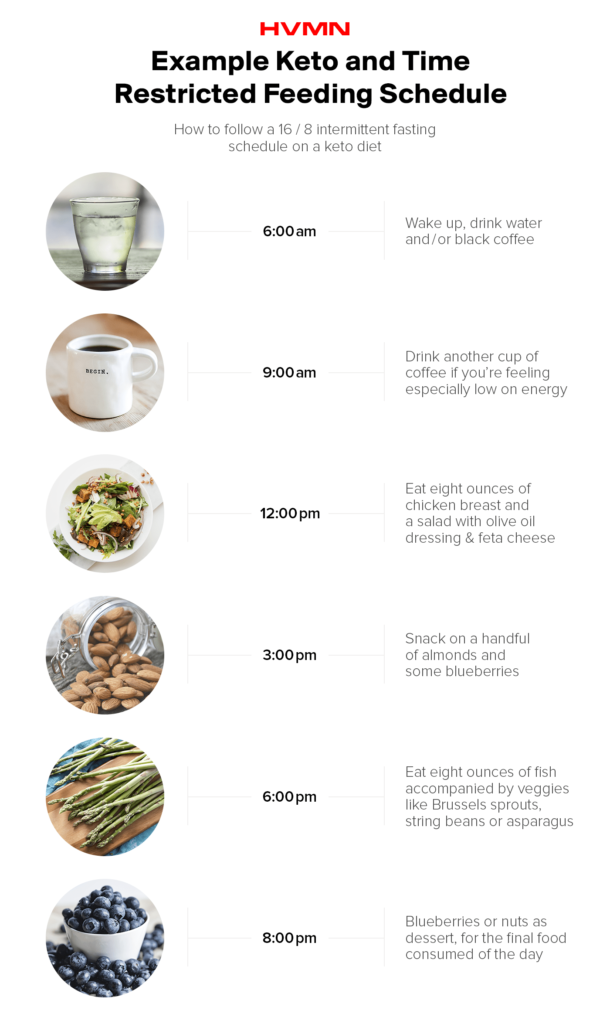
The 16:8 method is a great starting point. You fast for 16 hours and eat all your meals within an 8-hour window. For example, you might eat between noon and 8 PM.
To implement IF safely on keto, ensure your eating window contains nutrient-dense foods. Drink plenty of water and electrolytes during your fast. Listen to your body and don’t push into excessive stress.
| Protocol | Fasting Window | Eating Window | Best For |
|---|---|---|---|
| 16:8 | 16 hours | 8 hours | Daily routine, sustainable practice |
| 18:6 | 18 hours | 6 hours | Deeper metabolic reset |
| One Meal A Day (OMAD) | 23 hours | 1 hour | Advanced users, breaking severe stalls |
Taking Diet Breaks to Reset Metabolism
A planned “diet break” can be the reset your metabolism needs. This means eating at your maintenance calories for one to two weeks. It helps reset leptin and other hormones reduced by long-term restriction.
This strategy reduces metabolic adaptation. It can improve your mood and diet adherence. Surprisingly, it may lead to more fat loss over time.
Research shows a protocol of two weeks in a deficit followed by two weeks at maintenance can cause more weight loss than a continuous deficit. It gives your body and mind a necessary pause.
During a break, keep your food quality high. Stay low in carbs to remain in ketosis. Simply increase your fat and protein intake to reach maintenance calories.
Adjusting Calorie Deficits Based on Fat Stores
Your fat stores are not just inert tissue. They are an active energy reserve. You can calculate how much energy they can safely supply each day.
Use this formula: multiply your body fat in pounds by 31.4. The result is the number of calories your fat stores can release daily.
For example, someone with 50 pounds of body fat has a daily supply of about 1,570 calories (50 x 31.4). This info helps you set a realistic deficit that your body can support without excessive stress.
Strategic calorie cycling is another smart tool. Match your energy intake to your needs. Have higher-calorie days on intense workout days. Plan lower-calorie days on rest days.
This approach keeps your metabolism guessing. It can prevent the slowdown associated with a constant, static deficit.
An extreme short-term tactic is a fat fast. This involves eating only 1,000-1,200 calories per day, with 80-90% from fat, for up to five days.
It’s a drastic jumpstart, not a long-term strategy. Use it very cautiously and only if other methods fail.
Remember, these advanced techniques are powerful. They are best used one at a time after your basic plan is flawless. Your long-term health and sustainable loss are the ultimate goals.
Putting It All Together: A Practical Action Plan
A structured approach transforms theory into consistent, daily progress. You now have the strategies. The final step is building a clear, week-by-week system.
This plan removes the guesswork. It turns knowledge into actionable steps you can follow. Your goal is steady momentum, not perfection.
Creating a Weekly Checklist for Plateaus
Think of this as your personal playbook. A simple checklist keeps you focused and accountable. It breaks a big goal into manageable tasks.
Follow this four-week framework. Tackle one phase at a time. This methodical pace prevents overwhelm and lets you see what works.
The table below outlines a sample plan. It integrates the core steps and key lifestyle tweaks.
| Week | Primary Focus | Key Actions | Goal |
|---|---|---|---|
| Week 1 | Diagnosis & Reset | Track all macros and ketones. Adjust carbs to 20g total. Measure protein portions precisely. | Confirm ketosis and identify hidden issues. |
| Week 2 | Fine-Tune Fuel | Reduce added fat sources by 25%. Implement a 16:8 intermittent fasting window. | Create a sustainable calorie deficit. |
| Week 3 | Lifestyle Foundation | Prioritize 7-8 hours of sleep nightly. Practice daily stress-reduction (e.g., walking, breathing). | Support hormonal balance and diet compliance. |
| Week 4 | Assessment & Adjust | Reassess progress using measurements and scale trend. Recalculate your macros for your new weight. | Plan the next phase of your weight loss journey. |
Stick with each adjustment for the full week to gauge its effect. Patience here is powerful.
Common Mistakes to Avoid When Breaking Plateaus
Knowing what not to do saves time and frustration. These common errors can prolong a stall.
- Changing too many variables at once: You won’t know which tweak actually worked.
- Being overly restrictive: Extreme calorie cuts or cutting out entire food groups is unsustainable and stressful.
- Giving up too soon: Your body may need 2-3 weeks to respond to a new routine.
- Ignoring non-scale victories: Looser clothes and better energy are real progress.
- Obsessing over daily weigh-ins: Daily fluctuations are normal. Trust the weekly trend.
Also, remember that one high-carb meal won’t ruin your progress. A pattern of them will. Stay consistent with your ketogenic diet.
Cheat days can knock you out of ketosis for days and cause water weight regain. Consistency, not perfection, drives long-term loss.
Staying Consistent with Your Keto Lifestyle
Long-term success is about integration, not isolation. Your keto lifestyle should fit your real life.
Plan ahead for social events and travel. Scan restaurant menus online. Pack your own snacks like nuts or cheese. These small tips prevent panic choices.
Build a support system. Connect with online communities, find a keto-friendly friend, or consider a coach. Sharing the journey makes challenging plateaus easier to navigate.
View this as a marathon, not a sprint. Weight loss plateaus are natural intervals for learning and adjustment. They teach you how your body responds.
Your commitment to the process matters more than any single day. Celebrate every small win. They add up to massive change.
Your call to action is simple. Pick one step from this article—like tracking your macros for three days or adding a 10-minute walk—and implement it today. Start now, and trust the plan.
Conclusion: Celebrating Wins and Moving Forward
Your journey is about more than just numbers on a scale; it’s a transformation of your entire well-being. Celebrate non-scale victories like soaring energy, sharper focus, and clothes fitting better.
A weight loss plateau is a normal signal from your body to reassess, not a sign of failure. Sustainable health management is about a lifestyle, not just a short-term diet.
The three-step framework—fine-tuning carbs, optimizing protein, balancing fat—is your lifelong tool for metabolic health. Trust the process and be patient.
Reflect on how far you’ve come. You have the knowledge and resilience to navigate your keto journey with confidence. Keep moving forward.