What if your path to weight management is secretly sabotaging your locks? You committed to a high-fat, low-carb lifestyle with fantastic expectations. Now, you find more strands on your pillow and in the drain.
This experience is alarming, but you are not alone. Hair loss can be an unexpected side effect of rapid weight loss plans. The good news is this issue is often temporary. With the right knowledge, you can manage it effectively.
This metabolic shift can temporarily disrupt your body’s normal cycles. When you change your fuel source dramatically, your system prioritizes vital functions. Sometimes, hair follicle maintenance gets deprioritized.
We will explore the direct link between this metabolic state and your hair’s growth cycle. You will learn to spot the difference between normal adjustment and genuine nutritional warning signs.
The core solution involves smart nutritional balance. Ensuring adequate protein and critical vitamins within your framework is key. You can achieve your physique goals without sacrificing your mane’s health.
Key Takeaways
- Hair shedding on a ketogenic plan is often a temporary condition.
- Rapid weight reduction can trigger a resting phase for hair follicles, known as telogen effluvium.
- Nutrient deficiencies, not ketosis itself, are typically the root cause of the problem.
- Maintaining sufficient high-quality protein intake is critical for hair follicle health.
- Specific vitamins like biotin and minerals like iron are essential for supporting hair growth.
- Adjusting your macronutrient balance can help resolve shedding while preserving your dietary results.
- Implementing supportive hair care strategies during this transition provides extra protection for your scalp and strands.
Introduction: The Unexpected Side Effect of Keto
You embraced a low-carb lifestyle for its benefits, yet now you’re facing an unexpected concern: thinning hair.
This experience can feel confusing and even discouraging. You made a choice for your well-being, and this seems like a step backward.
Please know you are not alone. Many people encounter this temporary phase when adjusting their metabolism.
The ketogenic diet involves a dramatic shift. You severely limit carbohydrates, often below 50 grams daily.
This forces your system into a ketosis state. Your primary fuel source changes from glucose to stored fat.
While effective for managing weight, this overhaul is a significant physical stressor. Your entire body must adapt to a new energy paradigm.
Furthermore, cutting out entire food groups can limit nutrients. Fruits and whole grains are common sources of vitamins vital for healthy hair.
Your follicles are sensitive to these changes. They may temporarily slow their growth cycle in response to stress or shortage.
Let’s frame this clearly. The hair loss you notice is often a recognized side effect of rapid metabolic change.
It is typically not a sign of permanent damage. Instead, it’s a signal from your body asking for a more balanced approach.
This introduction aims to normalize your experience. We shift the perspective from worry to proactive problem-solving.
With the right knowledge, you can enjoy the benefits of this plan. Think about improved energy and weight loss.
You can achieve these goals while supporting your scalp and strands. It’s about working with your body’s needs.
Consider this section a reassuring starting point. We validate your concern and promise a clear path forward.
The following information blends the science of fat adaptation with practical health strategies. You will learn how to adjust your intake for optimal results.
Understanding the Link Between Keto and Hair Loss
Your recent dietary change might be prompting your hair follicles to take an unplanned break. This shedding is not a direct attack from ketosis. Instead, it’s a side effect of the significant physical adjustment your body undergoes.
Think of your system as a smart manager. When you switch its primary fuel from carbs to fat, it must reallocate resources. Processes deemed non-essential, like building new hair, can get temporarily paused.
This phenomenon has a name: telogen effluvium. It’s a common condition triggered by major stress. A new, strict eating plan qualifies as a major stressor for your physiology.
The good news is this type of hair loss is typically reversible. Once your body adapts and nutrient intake is optimized, the growth cycle should normalize.
How Ketosis Can Trigger a Shedding Phase
Ketosis is a metabolic state where your liver produces ketones from fat for energy. Achieving this state is the goal of the keto diet.
The sudden shift into this fat-burning mode can be a shock. Your body goes into a sort of triage mode. It focuses energy on keeping your heart, brain, and lungs running perfectly.
Functions like hair growth are not immediately vital for survival. So, they get deprioritized. This can push a larger number of follicles from the active growth phase (anagen) into the resting phase (telogen).
After a few months in this resting phase, those hairs shed. This explains why you might notice increased loss weeks after starting your plan. The effects are delayed.
When Rapid Weight Loss Affects Hair Follicles
Many people experience quick weight loss on this plan. While exciting, a steep drop on the scale can signal “famine” to your system.
Your body’s ancient survival instincts kick in. It begins to conserve resources. Since producing new hair requires protein and calories, it slows down this costly process.
The speed of your weight reduction matters greatly. Faster loss often correlates with more noticeable shedding. A more gradual approach is far gentler on your follicles.
This conservation strategy is the core reason rapid transformation can cause hair loss. It’s a logical, temporary response, not permanent damage. Ensuring adequate calorie and nutrient intake helps counter this signal.
By understanding these mechanisms, you see the shedding as a physiological response. It’s a sign your body is adapting. With smart adjustments, you can support both your hair health and your diet goals.
Is Keto Hair Loss Permanent or Temporary?
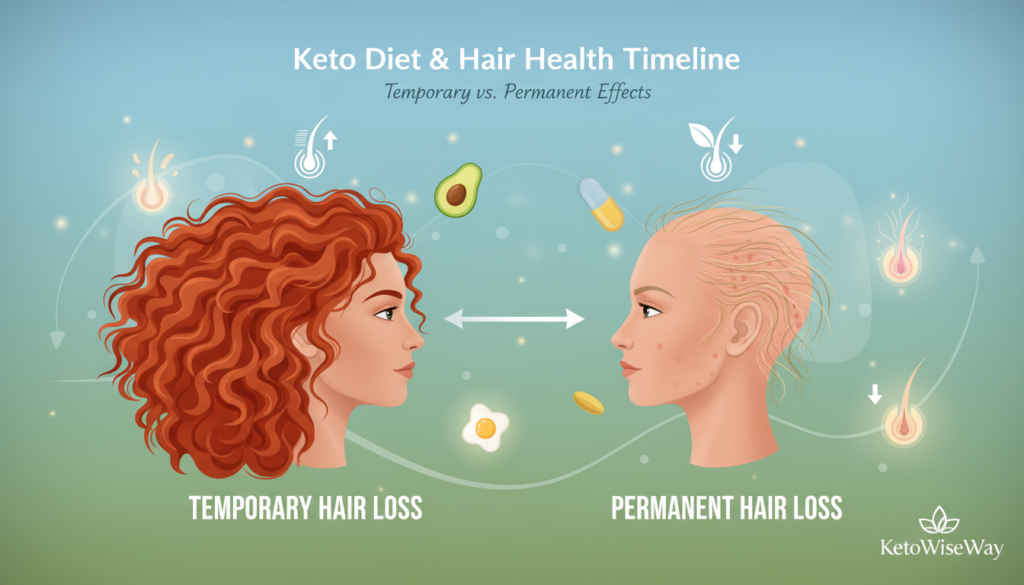
Let’s tackle the pressing concern head-on: will your locks grow back after this phase? The short, reassuring answer is yes. For most individuals, this type of shedding is a temporary situation.
It often lasts between two and three months. This period aligns with your system’s full adaptation to ketosis.
New hair growth typically resumes once the underlying triggers are addressed. Your follicles are not permanently damaged by the diet change itself.
Think of this shedding as a pause, not a stop. The body temporarily shifts resources during a major metabolic overhaul.
Once it recognizes the new diet as a stable state, priorities can be rebalanced. Vital nutrients can then be directed back to your scalp.
However, “temporary” does not mean you should just wait passively. Proactive steps can significantly shorten this phase.
Ignoring key nutritional gaps might allow the loss to drag on. Your actions directly influence how quickly you see results.
Several factors can prolong the shedding period. Extreme calorie restriction is a common culprit.
If your plan is too severe, it signals a famine state. This pushes your system to conserve energy aggressively.
Significant vitamin and mineral shortages also play a role. Low levels of iron or B vitamins can stall the growth cycle.
High stress levels, from the diet change or life events, add another layer. This combination can extend the timeline beyond a few months.
Permanent hair loss from a keto plan is exceedingly rare. It is usually linked to unaddressed deficiencies.
It can also coincide with underlying genetic conditions. Differentiating between the two is important for peace of mind.
The table below clarifies the key differences between typical and prolonged shedding scenarios.
| Scenario | Primary Triggers | Typical Timeline | Recommended Actions |
|---|---|---|---|
| Temporary Shedding | Initial metabolic adaptation, mild calorie deficit. | Peaks at 2-3 months, subsides within 6 months. | Ensure adequate protein & calories; consider a multivitamin; manage stress. |
| Prolonged Shedding | Severe calorie restriction, major nutrient gaps (e.g., iron, zinc), high stress. | Lasts beyond 6 months without improvement. | Review and adjust macronutrient balance; get blood work to check for deficiencies; consult a healthcare provider. |
Understanding this distinction empowers you. You can move from worry to a practical plan.
Focus on providing your body with the building blocks it needs. Support your overall health, and your strands will likely follow.
The fear of permanent damage is often worse than the reality. With informed adjustments, you can guide your hair back to its normal cycle.
Key Reasons Why You Might Be Losing Hair on Keto
The root of your hair concerns often lies in two key dietary areas: insufficient fuel and missing micronutrients. Understanding these specific reasons moves you from confusion to a clear, actionable plan.
Let’s diagnose the common gaps in a low-carb plan that directly impact your strands.
Inadequate Protein and Calorie Intake
Your hair is over 90% protein, specifically a fiber called keratin. Building strong strands requires a steady supply of this raw material.
A general guideline is at least 0.8 grams of protein per kilogram of your body weight daily. If your meals lack high-quality sources like eggs, fish, and meat, your follicles literally run out of building blocks.
Another major pitfall is excessive calorie restriction. Very low-calorie versions of this plan can trigger a “survival mode” response.
Your system perceives a shortage and begins conserving energy. It prioritizes functions essential for life, like heart and brain activity.
Non-essential processes, including hair growth, are deprioritized or paused. This conservation strategy is a primary reason rapid weight loss can cause hair loss.
Critical Vitamin and Mineral Deficiencies
Beyond protein and calories, your locks need a full spectrum of vitamins and minerals to thrive. The restrictive nature of a strict plan can make you prone to specific deficiencies.
Commonly restricted food groups are often the very sources of these vital nutrients. Use this list to audit your current diet:
- Biotin & B-Complex Vitamins: Essential for keratin production and follicle health. Whole grains and legumes are rich sources, but they are often limited on keto.
- Iron: Carries oxygen to your hair follicles. A shortage can starve them, leading to shedding. Spinach and lentils are excellent sources.
- Zinc: Plays a key role in hair tissue growth and repair. It’s abundant in foods like shellfish and pumpkin seeds.
- Vitamins D, A, and C: Support the hair growth cycle and scalp health. Fatty fish and colorful vegetables are great options.
When these vitamins and minerals are scarce, your strands can become brittle, thin, and more prone to loss.
Identifying which of these key reasons applies to your situation is a powerful diagnostic step. It turns a vague worry into a targeted solution.
How to Tell If Your Hair Loss Is Due to Keto
Feeling alarmed by extra strands in your brush could be your first clue that your dietary shift needs attention. Observing specific changes helps you move from worry to understanding. This knowledge lets you pinpoint the real cause behind your concerns.
Not every strand you lose is a problem. Your scalp naturally sheds between 50 and 100 hairs every day. The issue begins when you consistently notice far more than that.
Signs of Excessive Shedding and Thinning
True excessive loss has clear, tangible signs. It often looks like pulling out small clumps during washing or brushing.
You might suddenly see more of your scalp when you pull your hair back into a ponytail. Your part may appear wider than it did just a few months ago.
Monitor these everyday spots for a reality check:
- Your Brush or Comb: Is it filling up much faster than usual?
- The Shower Drain: Does it clog with hair after every wash?
- Your Pillowcase: Are there noticeable amounts of hair when you wake up?
This pattern, called telogen effluvium, is a common effects of metabolic stress. It signals that many follicles have entered a resting phase at once.
Changes in Hair Texture and Growth
Sometimes, texture changes appear before major shedding. Nutritional gaps can cause hair to become dry, straw-like, and brittle.
You might experience more split ends and breakage. Your mane could lose its natural shine and feel rough to the touch.
A slowdown in new hair growth is another major red flag. Check your hairline for fine, new strands.
If you see very few baby hairs, your follicles might not be getting the fuel they need. This stall in the growth cycle is a direct sign of deficiencies.
Key vitamins and minerals like iron and zinc are vital for strong strands. Without them, your hair health can decline rapidly.
Becoming your own detective gives you power. You can identify these symptoms early and take effective action.
The Role of Stress in Keto-Related Hair Loss

Beyond calories and carbs, your body’s stress response plays a starring role in hair follicle activity. When we talk about stress here, we mean more than daily worries.
We’re discussing the significant physical stress a major diet overhaul places on your entire system. This internal strain can be a primary driver behind temporary shedding.
Understanding this link is crucial. It helps you see why managing stress is as important as managing your macros for optimal hair health.
Dietary Change as a Physical Stressor
Your body perceives a sudden, drastic drop in carbohydrates as a shock. This triggers a release of stress hormones, primarily cortisol.
Elevated cortisol levels can directly disrupt the normal hair growth cycle. It can push more follicles into the resting phase prematurely.
Rapid weight loss itself is another major stressor. A steep calorie deficit signals a “famine” state to your physiology.
Your system goes into conservation mode. It redirects energy and nutrients away from non-essential processes like building new hair.
The “all-or-nothing” approach to starting a keto plan often amplifies this stress. A more gradual reduction in carbs over several weeks is far gentler.
This slower transition allows your metabolism to adapt without the same intense hormonal alarm bells. It can help prevent or lessen the effects on your scalp.
Strategies to Mitigate Stress on Keto
You can take direct action to lower this physical stress. Creating a calmer internal environment supports your overall health and your hair’s resilience.
Consider these practical strategies for a smoother journey:
- Transition Gradually: Don’t slash carbs overnight. Reduce your intake slowly over two to three weeks to ease into ketosis.
- Avoid Extreme Deficits: Ensure your calorie intake is adequate for your body‘s needs. A moderate deficit supports fat loss without triggering severe conservation mode.
- Prioritize Sleep and Relaxation: Quality sleep is foundational for hormone balance. Incorporate mindfulness or meditation into your day to lower cortisol.
- Incorporate Gentle Movement: Activities like walking or yoga can manage stress hormones. They promote circulation without overtaxing your system.
- Ensure Nutrient Density: Fill your plate with foods rich in key vitamins and minerals like iron. This provides the building blocks your follicles need, even under stress.
These treatments for your nervous system are non-negotiable for a hair-friendly plan. They help support hair follicles during metabolic adaptation.
By soothing your body’s stress response, you create better conditions for growth. This proactive approach can lead to more positive results for your mane.
Managing stress isn’t an extra step—it’s a core part of the solution to cause hair loss from dietary change. It allows you to pursue your goals while protecting your hair from unnecessary loss.
How to Fix Keto Hair Loss: Balancing Your Macros
Mastering the art of macro balance turns your diet from a cause of stress into a source of strength for your scalp. This is your foundational fix. Getting your proportions right fuels both ketosis and robust hair growth.
Think of it as fine-tuning your engine. You provide the exact energy and building blocks your body needs. This stops the conservation mode that triggers shedding.
The goal is a refined, sustainable approach. You don’t need to abandon your plan. Instead, you’ll learn to support your hair health within it.
Prioritizing High-Quality Protein Sources
Your strands are primarily made of protein, specifically keratin. A steady supply is non-negotiable for building new hair.
Aim for at least 0.8 grams of protein per kilogram of your body weight each day. For a person weighing 150 pounds (68 kg), that’s about 55 grams daily.
Hit this target with excellent keto-friendly sources. These foods deliver the raw materials your follicles crave.
- Fatty Fish: Salmon and mackerel provide protein and anti-inflammatory omega-3 fats.
- Pasture-Raised Eggs: A complete protein packed with biotin and other B vitamins.
- Collagen Peptides: Stir into coffee or smoothies; collagen is a key component of hair structure.
- Nuts, Seeds, and Low-Carb Dairy: Almonds, pumpkin seeds, and Greek yogurt are versatile options.
Incorporate these into every meal. Have eggs for breakfast, a salmon salad for lunch, and a handful of nuts as a snack.
Ensuring Sufficient Healthy Fats and Calories
A common mistake is slashing calories too aggressively. This signals “famine” and stresses your system.
A modest 20-30% reduction from your maintenance needs is better for hair. It allows for weight management without severe conservation mode.
Also, don’t fear fat. Adequate healthy fats are crucial on this plan. They provide dense energy and support hormone production for growth.
Include calorie-dense options from plants and oils. They help you meet your calorie intake goals without adding carbohydrates.
Practical tips make this easy. Drizzle olive oil over roasted vegetables. Add half an avocado to your salad.
Snack on a small handful of macadamia nuts. Cook with coconut oil. These simple actions add nutrient-rich calories.
This balance reduces overall bodily stress. It tells your physiology that resources are plentiful. Your follicles then get the green light to resume active growth.
Balancing macros refines your approach. It transforms a restrictive plan into a hair-friendly lifestyle. You can achieve your goals without compromising your mane.
Essential Supplements for Hair Health on Keto
Think of targeted supplements as your hair’s direct line of support when your food choices are limited. Even the most carefully planned low-carb meals can miss key nutrients vital for strong strands.
This doesn’t mean your plan is flawed. It means being smart about filling common gaps. A sensible supplement strategy gives your follicles the specific building blocks they crave.
These tools work alongside a nutrient-dense eating approach. They help ensure your body has the resources for optimal hair growth, even during metabolic adaptation.
Biotin, Iron, and B-Complex Vitamins
Biotin is a superstar B vitamin for keratin production. Keratin is the primary protein that makes up your hair.
A daily dose of 2.5 to 5 milligrams can support your strands. You can also find it in foods like eggs and almonds.
Iron is another critical player. It carries oxygen to your hair follicles.
Without enough, follicles become starved and enter a resting phase. The recommended daily intake is about 18 milligrams for most adults.
Always pair an iron supplement with vitamin C for better absorption. A small glass of orange juice or a supplement works well.
Important note: Consider getting your iron levels checked before supplementing. Too much can be harmful.
B-complex vitamins work together to support cellular energy production. This energy fuels the rapid cell division needed for new hair growth.
Since whole grains are often restricted, a B-complex can be a wise safety net.
Zinc, Vitamin D, and Collagen Peptides
Zinc and Vitamin D form a powerful duo for follicle health. Zinc aids in hair tissue growth and repair.
Vitamin D helps create new follicle cells. Many people are deficient, especially with limited sun exposure.
A combined supplement can address both needs effectively. Look for one that includes both minerals.
Collagen peptides provide the raw amino acids for building keratin. They supply proline, lysine, and cysteine directly.
Adding a scoop to your morning coffee or smoothie is simple. It’s a direct treatment for your hair’s structure from within.
This approach supports the entire growth environment. It provides both the instructions (vitamins) and the materials (amino acids).
| Supplement | Primary Role for Hair | Suggested Daily Dosage (Keto Context) | Best Taken With / Notes |
|---|---|---|---|
| Biotin (B7) | Keratin synthesis, strengthens hair shaft. | 2.5 – 5 mg | With a meal. Often included in hair-specific blends. |
| Iron | Oxygen transport to follicles; prevents deficiency-related shedding. | 18 mg (check blood levels first) | With Vitamin C for absorption. Avoid with calcium. |
| B-Complex | Supports cellular energy metabolism in follicles. | 1 serving of a balanced complex | With food in the morning to support daytime energy. |
| Zinc | Hair tissue growth and repair; supports immune function. | 15 – 30 mg | With food to avoid stomach upset. Do not exceed 40 mg/day. |
| Vitamin D3 | Activates hair follicle growth cycles; often deficient. | 1000 – 2000 IU (or as tested) | With a fat-containing meal for optimal absorption. |
| Collagen Peptides | Provides amino acids (proline, glycine) as building blocks for keratin. | 10 – 20 grams | Mixed in any cold or hot liquid; flavorless. |
Remember, supplements are a supportive tool, not a magic pill. They work best alongside a well-formulated ketogenic plan rich in whole foods.
For comprehensive wellness support, including managing electrolyte balance which is crucial for overall health, explore our guide on expert keto tips. A holistic approach yields the best results for your body and your hair.
Supporting Hair Growth with the Right Products and Care
External care practices become your first line of defense for protecting vulnerable strands. While internal nutrition fuels hair growth, gentle handling and smart products shield your scalp.
This approach minimizes physical stress on follicles already adjusting to metabolic change. You create an optimal environment for recovery and regrowth.
Think of it as a supportive partnership. Your dietary adjustments work from the inside, and these methods work from the outside.
Together, they can accelerate positive results and reduce overall shedding. Let’s explore the techniques that make a real difference.
Gentle Hair Washing and Drying Techniques
Harsh cleansing routines can cause hair breakage and scalp irritation. Switching to a milder regimen is crucial during this sensitive phase.
Start by choosing a sulfate-free shampoo. Sulfates are strong detergents that strip natural oils.
This can leave your strands dry and brittle. Pair it with a moisturizing conditioner to maintain hydration.
Follow these steps for a hair-friendly wash day:
- Wet your hair with lukewarm water, not hot.
- Apply a small amount of shampoo, focusing on the scalp.
- Gently massage with your fingertips, not your nails.
- Rinse thoroughly and apply conditioner from mid-length to ends.
- After rinsing, avoid rough towel-drying.
Instead, wrap your hair in a soft microfiber towel. This fabric absorbs moisture quickly without friction.
Limit the use of heat styling tools like blow dryers and flat irons. If you must use them, apply a heat protectant spray first.
Also, postpone chemical treatments such as coloring or perms. These processes add significant stress to your strands.
Adopting these techniques reduces mechanical damage. It allows your hair to retain strength and length as it regrows.
Scalp Treatments and Growth-Stimulating Products
Your scalp’s health is the foundation for strong hair growth. Nourishing it with targeted treatments can improve follicle function.
A simple weekly scalp massage with coconut oil offers multiple benefits. The massage action increases blood circulation to the follicles.
This delivers more oxygen and nutrients. The oil itself provides moisturizing and anti-effects.
For a more clinical approach, consider over-the-counter options. Minoxidil, available as Rogaine, is a topical treatment approved for hair loss.
It works by prolonging the growth phase of the hair cycle. Consistent application can stimulate new growth over several months.
Specialized shampoos and serums also offer support. Caffeine shampoos, like those from Alpecin, aim to energize follicles.
Peptide serums may help strengthen the hair shaft and improve density. These products create a favorable scalp environment.
Use this table to compare popular topical options and their uses.
| Product Type | Key Ingredient/Function | How It Supports Hair | Usage Tips |
|---|---|---|---|
| Sulfate-Free Shampoo | Gentle cleansers (e.g., coco-glucoside) | Cleanses without stripping natural oils, reduces breakage. | Use 2-3 times per week; focus lather on scalp only. |
| Scalp Massage Oil | Coconut oil (or jojoba, argan oil) | Boosts circulation, moisturizes scalp, reduces flakiness. | Warm 1 tbsp oil, massage for 5 minutes, leave on 30 min before washing. |
| OTC Topical Treatment | Minoxidil 5% | Vasodilator; extends anagen (growth) phase, stimulates follicles. | Apply 1 mL to dry scalp twice daily; consistency is critical for results. |
| Caffeine Shampoo | Caffeine | May counteract effects of DHT on follicles, prolongs growth cycle. | Use as primary shampoo; leave lather on scalp for 2 minutes before rinsing. |
| Peptide Serum | Copper peptides, keratin peptides | Strengthens hair shaft, may support follicle signaling for new growth. | Apply a few drops to clean, dry scalp; use as directed, often daily. |
Integrating these external strategies complements your internal ketogenic efforts. They provide direct, localized support where it’s needed most.
Remember, patience is key. Visible improvements in hair thickness and reduced loss often take three to six months.
Stick with a consistent routine. Your strands will thank you for the extra care.
Personalizing Your Keto Approach for Healthy Hair
True success comes from moving beyond a one-size-fits-all plan and crafting a strategy that works for your body.
This final phase is about fine-tuning. You apply the general principles to your unique metabolism and lifestyle.
Personalization is your strongest shield against unwanted hair loss. It also actively supports new hair growth.
Your age, activity level, and goals all matter. A plan that ignores these factors can lead to gaps.
Those gaps might cause hair thinning over time. Let’s build a framework that keeps your locks full and your energy high.
Customizing Your Macronutrient Targets
Start by finding your personal nutritional sweet spot. An online macro calculator is a fantastic tool for this.
You input your age, gender, activity level, and weight goals. The calculator then suggests daily targets for protein, fat, and carbohydrates.
This isn’t about rigid tracking forever. It’s about establishing a smart baseline.
You ensure you’re not accidentally under-eating protein or total calories. Both are common pitfalls that can trigger shedding.
Listen to your body’s signals within those keto parameters. If you feel drained, you might need a bit more fat for energy.
If workouts feel brutal, consider adjusting your carb intake around exercise. This is often called carb cycling.
“The best diet is the one you don’t know you’re on. It should fit your life so seamlessly that it feels effortless.”
Your personalized plan should feel sustainable and energizing. That’s the mark of a plan that supports both your physique and your hair health.
Monitoring and Adjusting Your Diet Proactively
Think of your body as giving you constant feedback. Early signs of thinning are cues to tweak your approach.
If you notice increased shedding, don’t panic. Reassess your diet with these questions.
- Am I hitting my protein target every day?
- Is my calorie intake too severe for my activity level?
- Have I incorporated foods rich in key vitamins like iron?
Sometimes, a strategic “keto reset” can help. This involves a short period of slightly higher carbs and calories.
It gives your metabolism a gentle nudge. This can provide a nutritional boost without knocking you out of ketosis long-term.
For clear, actionable results, professional guidance is invaluable. A doctor or dietitian can order blood tests.
These tests check for deficiencies that might stall growth. They can then create a plan tailored just for you.
Services like The Independent Pharmacy offer convenient access to guidance and treatments. This support can make all the difference.
Staying proactive turns your diet into a dynamic tool. You adapt it to protect your mane while reaching your goals.
Conclusion: Enjoying Keto Benefits Without Compromising Your Hair
Achieving your wellness goals doesn’t require sacrificing a full, vibrant mane. Your low-carb journey and healthy hair can thrive together with smart adjustments.
Focus on adequate protein intake and balanced calories. Add key vitamins like biotin and iron through nutrient-dense foods or supplements. Manage stress and treat your strands gently.
View your eating plan as a flexible tool. Tweak it based on your body‘s signals for the best results. This proactive approach addresses temporary hair loss and supports new growth.
You can reach your weight objectives while maintaining a thick, shiny head of hair. Seek guidance from professionals if needed—it’s a sign of strength.
Move forward with confidence. A nourishing lifestyle supports every part of you, from the inside out.