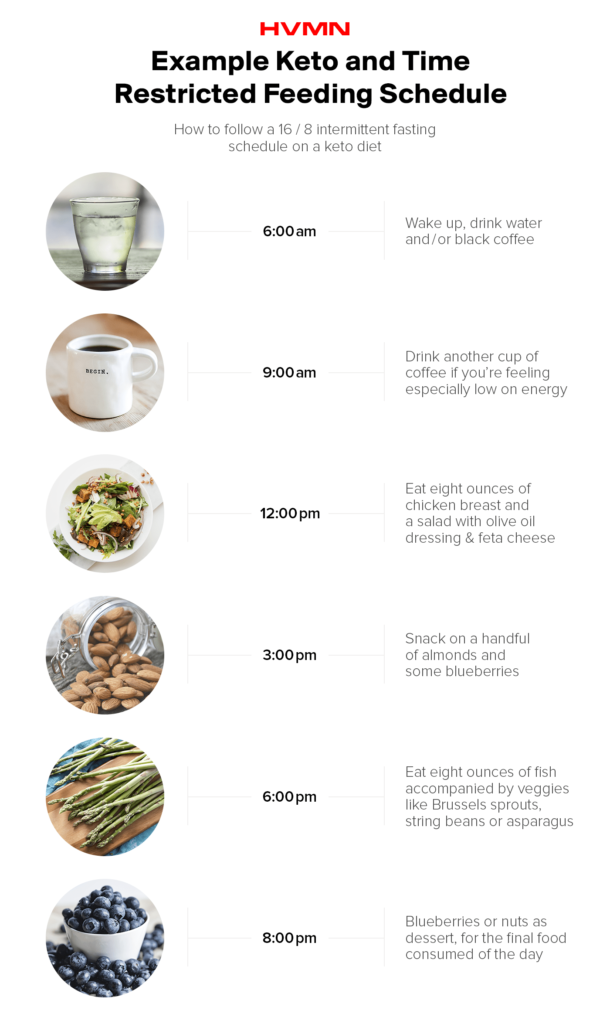
Are you struggling to navigate the world of keto-friendly foods? Starting a keto diet can be overwhelming, especially when it comes to making informed food choices.
As I began my journey on the keto diet, I found it challenging to determine what to eat and what to avoid. This guide breaks down the keto food list by food group, net carbs, and serving sizes, making it easier to stick to the diet.
Understanding what fits on a keto or low-carb diet is crucial for success. In this article, we’ll explore the keto food list and provide clarity on the best food choices.
Key Takeaways
- Understand the basics of the keto diet and its importance.
- Learn how to make informed food choices on keto.
- Discover the best keto-friendly foods by category.
- Find out how to track net carbs and serving sizes.
- Get clarity on what to eat and avoid on the keto diet.
Understanding the Keto Diet: A Brief Overview
For those looking to understand the keto diet, it’s essential to grasp the fundamental principles behind this low-carb, high-fat dietary regimen.
What Is the Keto Diet?
A ketogenic (or keto) diet is a low-carb, high-fat way of eating that helps your body switch from burning sugar to burning fat for energy. This shift — called ketosis — happens when carb intake is kept low enough to trigger fat-burning instead of relying on glucose.
The process involves drastically reducing the intake of carbohydrates and replacing them with fat. This reduction causes the body to enter a metabolic state called ketosis, where it becomes highly efficient at burning fat for energy.
Benefits of Following the Keto Diet
Following a keto diet can have numerous health benefits. Some of the most significant advantages include weight loss, improved blood sugar control, and enhanced mental clarity.
- Weight loss is achieved as the body burns stored fat for energy.
- Improved blood sugar control can be particularly beneficial for individuals with type 2 diabetes.
- Enhanced mental clarity is often reported, potentially due to the high-fat diet’s effect on brain function.
By understanding the keto diet’s basics and its benefits, individuals can make informed decisions about adopting this dietary approach.
Foods You Can Eat on the Keto Diet
Eating the right foods is crucial on a keto diet, with a focus on healthy fats, moderate protein, and low-carb vegetables. These foods help your body stay in ketosis while keeping you full and nourished.
Healthy Fats
Healthy fats are a cornerstone of the keto diet, providing energy and supporting overall health. Some of the best sources include:
- Avocados
- Olive oil
- Coconut oil
- Fatty fish like salmon
- Nuts and seeds, such as almonds and chia seeds
These fats not only support ketosis but also offer various health benefits, such as improved heart health and reduced inflammation.
Low-Carb Vegetables
Low-carb vegetables are essential for providing fiber, vitamins, and minerals on a keto diet. Some of the best options include:
- Leafy greens like spinach and kale
- Broccoli
- Cauliflower
- Asparagus
- Green beans
These vegetables are not only low in carbs but also rich in nutrients, making them a great addition to keto meals.
Protein Sources
Moderate protein intake is important on a keto diet, with a focus on high-quality protein sources. Some examples include:
- Meat: beef, pork, lamb
- Poultry: chicken, turkey
- Fish and seafood: salmon, shrimp, tuna
- Eggs
- Tofu and tempeh for vegetarians
Choosing the right protein sources can help support muscle mass and overall health while maintaining ketosis.
Dairy Options
Dairy can be part of a keto diet when consumed in moderation. Some keto-friendly dairy options include:
- Cheese: cheddar, mozzarella, feta
- Full-fat yogurt
- Heavy cream
- Butter
It’s essential to choose full-fat dairy products to keep carb counts low and support ketosis.
Foods You Should Avoid on the Keto Diet
Maintaining a keto diet means being mindful of the foods that can throw you off track. Certain foods are too high in carbs and can disrupt the keto diet’s effectiveness, making it challenging to achieve or maintain ketosis.
As I navigate the keto diet, it’s essential to understand that some foods are better avoided to ensure success. “The key to a successful keto diet is not just about cutting carbs, but also about focusing on nutrient-dense foods,” says a keto diet expert. The foods to avoid typically include those high in carbohydrates, sugars, and unhealthy fats.
High-Carb Fruits
Fruits are nutritious, but some are too high in carbs to be consumed freely on a keto diet. Fruits like bananas, apples, and grapes are high in natural sugars and can quickly add up in carbs. For instance, a medium-sized banana contains around 27 grams of carbs, which can take up a significant portion of the daily carb limit on a keto diet.
Sugary Foods and Drinks
Sugary foods and drinks are among the first things to eliminate on a keto diet. These include candy, cakes, cookies, and sugary beverages like soda and sports drinks. Consuming high-sugar foods can lead to a rapid spike in blood sugar levels, kicking you out of ketosis.
Refined Grains
Refined grains, such as white bread, pasta, and rice, are high in carbs and low in nutrients. They can cause a spike in blood sugar and insulin resistance, making it difficult to maintain ketosis. Instead, opt for whole, nutrient-dense foods.
Starchy Vegetables
While vegetables are a crucial part of a healthy diet, starchy vegetables like potatoes, corn, and peas are high in carbs. These should be limited or avoided on a keto diet to maintain the state of ketosis.
By being aware of these food groups and making informed choices, I can successfully navigate the keto diet and achieve my health and wellness goals. As with any diet, the key is balance and being mindful of what I eat.
Why Fats Are Important in a Keto Diet
Fats are not just a macronutrient on the keto diet; they are the backbone that supports overall energy and nutrition. When following a keto diet, the body shifts from relying on carbohydrates for energy to relying on fats, making them crucial for success.
The importance of fats on a keto diet cannot be overstated. They serve as the primary energy source, helping the body function optimally. Without sufficient fat intake, individuals may experience fatigue, decreased performance, and difficulty staying in ketosis.
Types of Healthy Fats
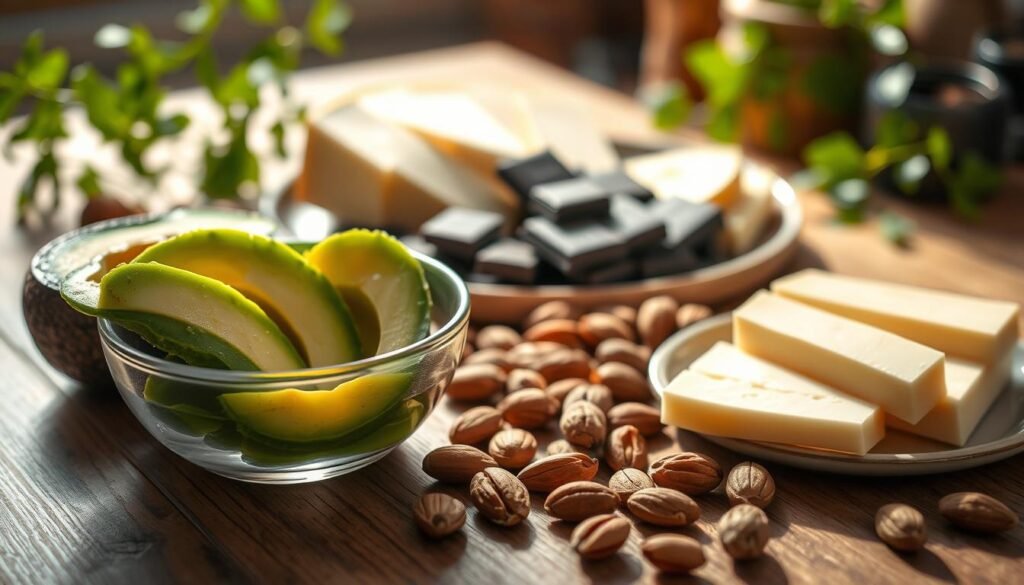
Not all fats are created equal. On a keto diet, it’s essential to focus on healthy fats that provide nutritional benefits. These include:
- Avocados and avocado oil
- Nuts and seeds, such as almonds and chia seeds
- Fatty fish, like salmon and sardines
- Coconut oil and other full-fat dairy products
How Fats Fuel the Body
Fats are a dense energy source, providing nine calories per gram. When carbohydrate intake is low, the body begins to break down fats into molecules called ketones, which are then used for energy. This process is fundamental to achieving and maintaining ketosis, the metabolic state in which the body burns fat for fuel.
By understanding the role of fats and incorporating healthy fats into your diet, you can optimize your energy levels and support your overall health and well-being on a keto diet.
The Role of Protein on the Keto Diet
The keto diet isn’t just about fats; protein is also a vital component that supports metabolism and muscle health. Protein is essential for maintaining muscle mass, keeping you full, and supporting overall metabolic health.
Recommended Protein Sources
When it comes to protein on keto, there are several excellent sources to consider. These include:
- Meat: Beef, pork, lamb, and other meats are rich in protein.
- Fish and Seafood: Fatty fish like salmon are not only high in protein but also rich in healthy fats.
- Eggs: Eggs are a versatile and protein-rich food that fits well within a keto diet.
- Poultry: Chicken and turkey are good sources of protein.
As Dr. Eric Berg notes,
“Eggs are one of the healthiest foods you can eat on a keto diet, providing essential proteins and vitamins.”
Ideal Protein Intake
Determining the ideal protein intake on a keto diet can vary based on individual factors such as age, sex, and activity level. Generally, the recommendation is to consume about 0.8 to 1 gram of protein per kilogram of body weight per day.
For example, if you weigh 70 kilograms (154 pounds), your daily protein intake should be around 56 to 70 grams.
The Impact of Carbohydrates on Keto
Understanding how carbohydrates affect your keto diet is crucial for achieving and maintaining ketosis. Carbohydrates play a significant role in determining the success of your keto journey, as their intake directly influences your body’s metabolic state.
To stay in ketosis, it’s essential to keep your daily carb intake low. The general guideline is to consume under 50g of total carbs per day, or approximately 20-30g of net carbs. Net carbs are calculated by subtracting fiber and sometimes sugar alcohols from the total carbohydrate count, as these have a minimal impact on blood sugar levels.
Understanding Net Carbs
Net carbs give you a more accurate picture of how different foods affect your blood sugar and ketosis. For instance, a vegetable might be high in total carbs but rich in fiber, making its net carb count much lower. Focusing on net carbs rather than total carbs can provide more flexibility in your diet, allowing you to include more nutrient-dense foods.
To calculate net carbs, you can use the following formula: Total Carbohydrates – Fiber (and sometimes Sugar Alcohols) = Net Carbs. This calculation helps in making informed choices about the foods you eat.
Foods High in Carbs
Identifying foods high in carbs is crucial for maintaining a keto diet. Common high-carb foods include sugary foods, grains, starchy vegetables, and high-carb fruits. Examples are:
- Sugary foods like candy, cakes, and cookies
- Grains such as wheat, rice, and oats
- Starchy vegetables like potatoes, corn, and peas
- High-carb fruits like bananas, apples, and grapes
Limiting or avoiding these foods is essential to maintaining the metabolic state of ketosis. By being mindful of your carbohydrate intake and focusing on whole, nutrient-dense foods, you can successfully navigate the keto diet.
Sample Keto-Friendly Meals
Keto meal planning is about more than just cutting carbs; it’s about enjoying satisfying meals that keep you in ketosis. Whether you’re just starting out or looking for new ideas, here are some delicious and easy-to-make keto meal suggestions.
Breakfast Ideas
Starting your day with a keto-friendly breakfast sets the tone for a successful day. Consider scrambled eggs with spinach, avocado toast with poached eggs, or a keto smoothie bowl with almond milk, chia seeds, and fresh berries.
Lunch Options
For lunch, opt for meals that are high in fat and moderate in protein. Grilled salmon with a side salad dressed in olive oil and vinegar is a great choice. Alternatively, a chicken Caesar salad without croutons can be very satisfying.
Dinner Suggestions
Dinner on a keto diet can be just as varied. Beef stir-fry with vegetables cooked in coconut oil is a tasty option. You can also try baked chicken thighs with a side of roasted broccoli.
Snack Choices
Snacking on keto is easy with the right choices. Reach for raw nuts like almonds and walnuts, cheese sticks, or celery sticks with almond butter. These snacks are not only keto-friendly but also convenient.
| Meal | Keto-Friendly Options |
|---|---|
| Breakfast | Scrambled eggs with spinach, Avocado toast |
| Lunch | Grilled salmon, Chicken Caesar salad |
| Dinner | Beef stir-fry, Baked chicken thighs |
| Snacks | Raw nuts, Cheese sticks, Celery with almond butter |
By incorporating these meal ideas into your keto diet, you can enjoy a variety of flavors while staying within your dietary goals. Remember, the key to a successful keto diet is planning and creativity in the kitchen.
Common Myths About the Keto Diet
As the keto diet continues to gain traction, it’s essential to address the myths and misconceptions surrounding it. Many people have misconceptions about the keto diet, such as believing it’s unhealthy to consume high amounts of fat or that it’s impossible to have energy without carbs.
Misconceptions About Fat
One of the most prevalent myths about the keto diet is that consuming high amounts of fat is detrimental to health. However, not all fats are created equal. Healthy fats, such as those found in avocados, nuts, and olive oil, are crucial for brain function, hormone production, and absorption of vitamins.
“The keto diet is not just about eating more fat; it’s about understanding the types of fat that are beneficial for your health,” says a renowned nutrition expert. The key is to focus on consuming saturated and unsaturated fats from reputable sources, which can help in maintaining a healthy cholesterol level and supporting overall well-being.

Carbs and Energy Levels
Another common misconception is that carbohydrates are necessary for maintaining energy levels. In reality, once the body adapts to using ketones as a primary energy source, many people report increased energy and mental clarity. This is because the body becomes efficient at burning fat for fuel, providing a sustained energy release.
- The body initially takes time to adapt to the new energy source.
- Some people may experience a temporary decrease in energy during the transition phase.
- Once adapted, many report improved physical and mental performance.
It’s also worth noting that the keto diet can help stabilize blood sugar levels, reducing the peaks and troughs associated with high-carb diets. This can lead to more consistent energy levels throughout the day.
Supplements to Consider on Keto
When following a keto diet, it’s essential to consider supplements that can support your overall health and ketosis. While a well-balanced keto diet should provide most of the necessary nutrients, certain supplements can help fill any nutritional gaps.
Electrolytes and Minerals
One of the common issues faced by individuals on a keto diet is the loss of electrolytes, which can lead to dehydration and other complications. Electrolyte supplements can help maintain the balance of sodium, potassium, and magnesium in the body. It’s crucial to choose a supplement that provides a balanced mix of these essential minerals.
Some of the key benefits of electrolyte supplements include:
- Reducing the risk of dehydration
- Minimizing muscle cramps and spasms
- Supporting overall hydration and energy levels
Protein Powders
Protein powders are another supplement that can be beneficial on a keto diet, especially for those who struggle to meet their protein needs through whole foods alone. Look for a protein powder that is low in carbs and made from high-quality sources such as whey, collagen, or plant-based proteins.
| Protein Source | Carb Content | Benefits |
|---|---|---|
| Whey Protein | Low | High-quality protein, supports muscle growth |
| Collagen Protein | Low | Supports skin, hair, and joint health |
| Plant-Based Protein | Low | Suitable for vegetarians, supports overall health |
Omega-3 Supplements
Omega-3 fatty acids are essential for heart health and can be particularly beneficial on a keto diet. Omega-3 supplements, typically derived from fish oil, can help reduce inflammation and support brain function.
When choosing an omega-3 supplement, consider the following:
- Look for products with high EPA and DHA content
- Choose a reputable brand that ensures purity and potency
- Follow the recommended dosage to maximize benefits
In conclusion, incorporating the right supplements into your keto diet can enhance your overall health and support your ketosis. Always consult with a healthcare professional before adding any new supplements to your regimen.
Tips for Staying on Track with Keto
As I navigated my keto journey, I discovered that meal planning and label reading were crucial to my success. Staying on track with a keto diet requires more than just understanding what foods to eat and avoid; it demands a strategic approach to maintaining that knowledge in daily life.
Meal Planning Strategies
Effective meal planning is the cornerstone of a successful keto diet. It involves more than just deciding what to eat; it’s about creating a structured plan that ensures you’re meeting your dietary goals. I found that dedicating a few hours each week to meal planning made a significant difference in my ability to stick to my keto goals.
- Create a weekly meal plan that includes breakfast, lunch, dinner, and snacks.
- Make a grocery list based on your meal plan to ensure you have the necessary ingredients.
- Prep meals in advance to save time during the week.
By having a clear plan, you’re less likely to make impulsive food choices that could derail your keto progress.
Reading Food Labels
Reading food labels is a critical skill for anyone on a keto diet. It’s essential to understand how to identify hidden carbs and sugars in packaged foods. When reading labels, look for the total carb count, fiber content, and serving size.
| Nutrient | What to Look For | Keto Friendly Range |
|---|---|---|
| Total Carbs | Lowest possible count | Less than 5g |
| Fiber | High fiber content | More than 3g |
| Sugars | Avoid added sugars | 0g |
Being diligent about reading labels will help you avoid foods that could kick you out of ketosis.
Finding Support Communities
Having a support system can make a significant difference in your keto journey. Whether it’s online forums, social media groups, or local keto meetups, connecting with others who share your goals can provide motivation and valuable advice.
I found that joining online keto communities was incredibly helpful. These groups often share recipes, tips for staying on track, and encouragement when you need it most.
By combining effective meal planning, diligent label reading, and a supportive community, you’ll be well-equipped to stay on track with your keto diet and achieve your health and wellness goals.
How to Transition to a Keto Diet
When starting a keto diet, one of the first decisions you’ll make is whether to transition gradually or immediately. This decision can significantly impact your experience and success on the keto diet.
Gradual vs. Immediate Transition
Transitioning to a keto diet can be done in two primary ways: gradual or immediate. A gradual transition involves slowly reducing your carbohydrate intake over a period of days or weeks, allowing your body to adjust to the new diet. On the other hand, an immediate transition involves drastically cutting carbs and entering ketosis as quickly as possible.
Both methods have their pros and cons. A gradual transition may be less shocking to your system, potentially reducing the severity of the “keto flu.” However, it may prolong the period before you enter ketosis. An immediate transition can lead to faster results but may also increase the risk of adverse effects if not done correctly.
- Gradual Transition Benefits:
- May reduce keto flu symptoms
- Allows for a more flexible adjustment period
- Immediate Transition Benefits:
- Quicker entry into ketosis
- Rapid weight loss
Adjusting Your Taste Buds
Adjusting to the keto diet isn’t just about changing your macronutrient intake; it’s also about adjusting your taste buds to new flavors and textures. Initially, you might find the diet restrictive or miss certain foods. However, as you progress, you’ll discover new keto-friendly foods that you enjoy.
Exploring new recipes and flavors can make the transition smoother and more enjoyable. Incorporating a variety of healthy fats, proteins, and low-carb vegetables can help keep your diet interesting and satisfying.
To make the transition more manageable, consider meal planning and prep, exploring keto-friendly products, and joining a keto community for support. With time, your taste buds will adjust, and you’ll find that the keto diet becomes a sustainable and enjoyable lifestyle choice.
Conclusion: Making Keto Work for You
As I reflect on my keto journey, I realize that success lies in personalizing my approach and embracing a sustainable lifestyle. The keto diet is not a one-size-fits-all solution; it’s about finding what works best for my body and lifestyle.
Tailoring My Keto Experience
Personalizing keto involves understanding my nutritional needs, lifestyle, and preferences. By focusing on whole, nutrient-dense foods and being mindful of my macronutrient intake, I can create a keto plan that suits me.
Adopting a Sustainable Lifestyle
Embracing a sustainable keto lifestyle means making long-term commitments to my health and well-being. It’s about developing healthy habits, being consistent, and being open to adjusting my approach as needed. By doing so, I can maintain a sustainable keto lifestyle that promotes overall well-being.
By personalizing my keto journey and adopting a sustainable lifestyle, I can achieve a healthier, more balanced life. This approach enables me to make informed choices that support my long-term health goals, ensuring that I can maintain a keto lifestyle that works for me.