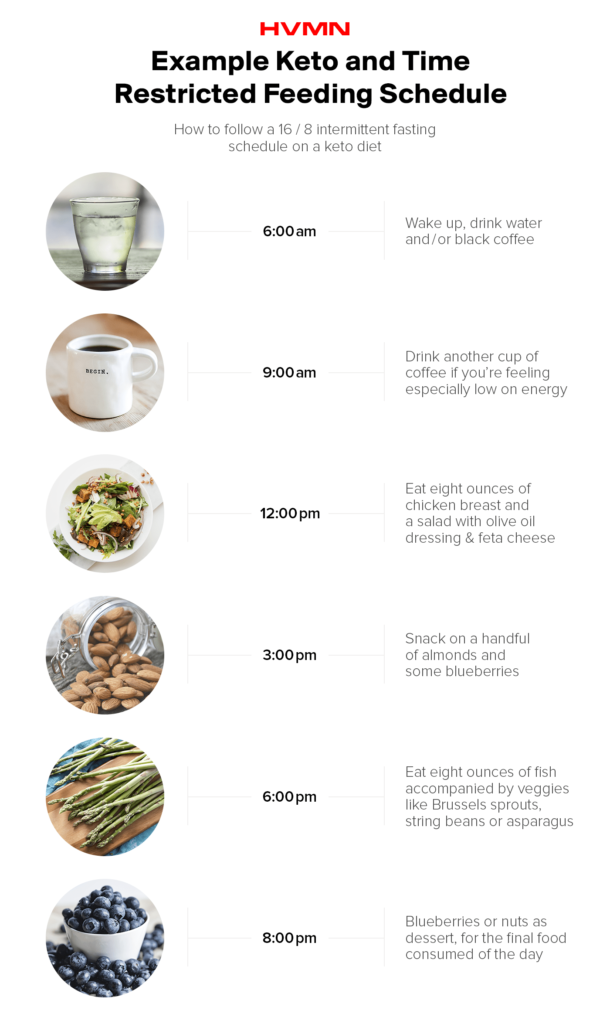
Why do so many people feel awful when they start a ketogenic diet, even when they’re doing everything ‘right’?
The answer often lies in a simple but overlooked area: electrolyte balance. These charged minerals are the silent conductors of your body’s essential functions.
They manage your hydration, nerve signals, muscle contractions, and blood pressure. When you cut carbs, your body’s handling of these vital nutrients shifts dramatically.
This guide focuses on the three most critical players. You’ll learn why they are non-negotiable for avoiding fatigue, headaches, and cramps—often called the “keto flu.”
We will break down the science of how low-carb eating changes your needs. You’ll get clear daily targets and practical ways to hit them through food and smart supplementation.
Mastering this balance is your secret weapon for sustained energy, sharp focus, and long-term success on your health journey.
Key Takeaways
- Electrolytes are minerals crucial for nerve function, muscle control, and hydration.
- A ketogenic diet significantly increases your body’s demand for specific electrolytes.
- Ignoring this need is a primary cause of the unpleasant “keto flu” symptoms.
- You often cannot get enough from food alone and may need a targeted plan.
- Proper balance leads to more energy, better mental clarity, and fewer cramps.
- This article provides clear, actionable steps to optimize your intake.
- Taking control of your minerals is fundamental to thriving on a low-carb lifestyle.
Why Electrolytes Are Your Secret Weapon on Keto
Many embark on a ketogenic journey only to hit a wall of fatigue and brain fog, unaware of the mineral shift happening within. The real game-changer isn’t just cutting carbs—it’s mastering your intake of charged minerals. These tiny particles conduct the electricity that makes your nerves fire, muscles contract, and heart beat steadily.
Think of them as your hidden conductors. When they’re in sync, you feel energized and clear-headed. When they’re off, every system struggles.
Getting this right is what separates those who merely survive a low-carb plan from those who truly thrive. For a solid foundation, our comprehensive keto guide covers the essentials.
The Keto Shift: How Low Carbs Change Your Mineral Balance
When you slash carbohydrates, your insulin levels plummet. This is great for burning fat. But it also sends a powerful signal to your kidneys.
They start excreting more sodium, a process known as ‘natriuresis of fasting.’ This crucial mineral loss triggers a disruptive cascade. It upsets the delicate balance of other key players in your body.
That initial “whoosh” of water weight isn’t just fluid. It’s a rapid exit for your valuable electrolytes, setting the stage for an imbalance.
Here’s the double whammy. Whole-food diets naturally lack the high sodium found in processed foods. At the same time, health-conscious people often fear adding salt. This creates a perfect storm for deficiency right when you need these minerals most.
Beyond Keto Flu: The Real Cost of Electrolyte Imbalance
What many call the “keto flu”—headaches, fatigue, leg cramps—is often just a severe electrolyte shortage in disguise. It’s your body’s loud signal that its mineral reserves are critically low.
Ignoring these signals has a cost that goes far beyond a rough first week.
A chronic imbalance can quietly stress your cardiovascular system. It may contribute to weaker bones over time. Most commonly, it keeps you stuck in a persistent, low-energy fog that undermines your efforts.
Understanding this fundamental shift is your first step toward taking control. Strategic replenishment supports your new way of eating and unlocks sustained vitality.
Magnesium, Potassium, and Sodium: The Non-Negotiable Trio
Forget everything you thought you knew about restricting salt. Thriving in ketosis requires you to embrace a powerful trio of charged minerals.
These three particles form the foundation of how your body operates. When their balance is right, you feel unstoppable.
Think of them as a delicate symphony. If one instrument is off-key, the entire performance suffers. The same is true for your internal chemistry.
Let’s start with the most misunderstood player. Often labeled a villain, sodium becomes an essential ally on a low-carb plan. Your daily need can skyrocket to between 3,000 and 5,000 mg.
It’s crucial for maintaining fluid balance and proper nerve function. Without enough, every cell in your body struggles to communicate.
Next, meet sodium’s crucial partner. This mineral works directly with its counterpart to regulate fluid inside your cells. It keeps your muscle contractions smooth and your heart rhythm steady.
Aim for 3,000 to 4,700 mg of this vital nutrient each day. It acts as a perfect counterbalance.
Finally, we have the relaxation mineral. Involved in over 300 enzymatic reactions, it’s a true multitasker. This nutrient calms your nervous system and is fundamental for creating cellular energy.
It also helps your muscles recover after activity. A target of around 400 mg per day supports these critical functions.
On a carb-restricted eating plan, your requirements for all three surge. Increased excretion and dietary changes create a higher demand.
Prioritizing this powerful trio is the cornerstone of feeling amazing. It helps you avoid the common pitfalls that derail many people’s efforts.
While food is the best source, sometimes you need a boost. Targeted electrolyte supplements can be a practical tool to ensure you meet your daily goals, especially during adaptation. For a deeper dive into smart supplementation, explore our guide on enhancing your keto lifestyle.
Mastering these minerals transforms your health journey from a struggle into a sustainable success.
Sodium: The Most Misunderstood Mineral on Keto

For decades, salt has been painted as a dietary villain, but on a low-carb diet, this story gets a complete rewrite. What you’ve been told about restricting this mineral often works against you when carbs are scarce.
Embracing a higher sodium intake is not just acceptable—it’s essential for feeling your best.
Why Your Body Dumps Sodium on Keto
When you cut carbs, your insulin levels drop. This is a key goal for fat burning. However, it sends a direct signal to your kidneys.
They begin excreting large amounts of this crucial mineral. This process is known as the ‘natriuresis of fasting.’
You lose both water and electrolytes rapidly. Even if you eat salty foods, your body might not hold onto enough. This loss is a primary trigger for headaches, fatigue, and dizziness.
How Much Sodium Do You Really Need Per Day?
General guidelines suggest under 2,300 mg per day. On a carb-restricted plan, research points to a much higher optimal range.
You likely need between 3,000 and 5,000 mg daily to function well. This aligns with broader health findings.
Large studies, like the PURE study, suggest a sweet spot for heart health may be between 4,000 and 6,000 mg of sodium daily.
In practical terms, that’s about 1.5 to 2.5 teaspoons of table salt. Don’t be afraid to use your salt shaker liberally.
Simple Ways to Get Enough Sodium (Beyond the Salt Shaker)
While salting your food is step one, diversifying your sources ensures you meet your goals. Here are some effective strategies.
| Source | Approximate Sodium Content | Notes |
|---|---|---|
| 1 tsp Table Salt | ~2,300 mg | Easy to measure; use on all cooked foods. |
| 1 cup Beef Bone Broth | ~500 mg | A hydrating, gut-friendly sipping option. |
| 1 oz Olives | ~200-300 mg | A tasty, whole-food snack. |
| 1 oz Parmesan Cheese | ~450 mg | Adds flavor and a mineral boost. |
| Electrolyte Powder (1 serving) | ~500-1,000 mg | Convenient for on-the-go replenishment. |
Make a habit of sipping warm broth throughout the day. Choose salty snacks like pickles or certain cheeses.
Consider a quality electrolyte supplement, especially during your first few weeks or after exercise. This approach helps maintain steady energy and clear focus.
View salt not as an enemy, but as a vital tool for success on your journey.
Potassium: The Crucial Counterbalance to Sodium
You’ve learned to embrace salt, but true electrolyte harmony requires a perfect dance with its cellular counterpart. This vital mineral works inside your cells, while sodium works on the outside.
Together, they regulate fluid balance and are essential for proper nerve signaling and muscle contraction. Getting enough of this cellular fluid regulator is especially important for your cardiovascular well-being on a low-carb plan.
The Potassium-Blood Pressure Connection on Keto
Adequate intake of this key mineral helps your blood vessels relax. It balances the effects of sodium, supporting healthy vascular function.
This isn’t just about feeling good today. Consistent, sufficient levels are linked to long-term health benefits.
Research indicates that an intake of 3.5 to 5 grams per day can help minimize risks associated with high blood pressure and kidney stones.
On a carb-restricted diet, paying attention to this connection is a smart move for your long-term wellness.
Your Daily Potassium Target on a Ketogenic Diet
To support your body’s needs, aim for 3,000 to 4,700 milligrams of this mineral per day. Hitting this target requires intention.
Many classic high-carb sources, like bananas and potatoes, are off-limits. This makes mindful meal planning essential.
Remember, it’s not just about the absolute amount. Maintaining a healthy ratio with sodium is key for optimal cellular function. A ratio of about 2:1 (sodium to this mineral) is often considered ideal.
Top Keto-Friendly Food Sources of Potassium
Fortunately, many delicious, low-carb options are packed with this essential nutrient. Incorporate these foods regularly to meet your daily goals.
| Food | Serving Size | Approximate Potassium | Keto-Friendly Note |
|---|---|---|---|
| Avocado | 1 medium | ~975 mg | High in healthy fats and fiber. |
| Spinach (cooked) | 1 cup | ~840 mg | A powerhouse leafy green. |
| Mushrooms (white, cooked) | 1 cup | ~555 mg | Versatile and flavorful. |
| Salmon | 6 oz fillet | ~730 mg | Excellent source of omega-3s. |
| Steak (sirloin) | 6 oz | ~490 mg | Provides heme iron and protein. |
| Pork Loin | 6 oz | ~630 mg | A lean, nutrient-dense meat. |
| Black Coffee | 8 oz cup | ~116 mg | A surprising source; every bit helps! |
Make a habit of adding avocado to salads, wilting spinach into eggs, or enjoying a hearty piece of salmon. By prioritizing these foods, you directly support your heart, muscles, and overall electrolyte balance on your keto journey.
Magnesium: The Relaxation and Energy Mineral
If you’re chasing better sleep and steady energy on a low-carb plan, one mineral deserves your full attention. It’s the master regulator of calm and a powerhouse for your cells.
This nutrient is involved in over 300 enzymatic reactions. It helps make DNA, supports muscle function, and calms your nervous system.
Nearly half of all people don’t get enough from their diet. When you’re in ketosis, the need can become even more pressing.
Spotting the Signs of Magnesium Deficiency
Knowing the symptoms is your first defense. A shortage often shows up in subtle but frustrating ways.
Pay attention to muscle cramps, especially those painful night-time charley horses. You might notice twitches in your eyelids or legs.
Other common signals include trouble falling asleep, feeling anxious, or a general sense of fatigue that coffee can’t fix. In more severe cases, it can even affect your heartbeat.
These signs are your body’s request for more of this crucial mineral.
Aiming for Your Optimal Magnesium Intake
To support all its roles, a daily target of about 400 milligrams is ideal. This amount helps with energy production and muscle recovery.
Meeting this goal is vital because your body can’t store large reserves. You need a consistent supply from your diet or supplements.
Since it powers so many processes, optimal intake is non-negotiable for feeling your best.
Think of it as daily maintenance for your engine. Without it, performance suffers.
Getting Magnesium from Your Diet and Supplements
You can find this mineral in delicious, low-carb foods. Excellent sources include dark chocolate (choose high-cocoa), avocados, almonds, and leafy greens like spinach.
Here’s a quick look at some top food sources:
| Food | Serving | Approximate Magnesium |
|---|---|---|
| Spinach (cooked) | 1 cup | ~157 mg |
| Almonds | 1 oz (about 23 nuts) | ~80 mg |
| Avocado | 1 medium | ~58 mg |
| Dark Chocolate (85%) | 1 oz | ~65 mg |
| Pumpkin Seeds | 1 oz | ~150 mg |
Even with a perfect diet, hitting 400 mg per day is challenging. Modern farming can deplete soil, reducing the mineral content in our food.
This is where high-quality supplements become a smart strategy. The form you choose matters for absorption.
Magnesium citrate is a highly bioavailable form. This means your body can truly use it. Other forms, like oxide, are not absorbed as well.
Adding a supplement can be a game-changer. It often improves sleep quality and helps your body manage stress.
Don’t let a lack of this key player undermine your efforts. It’s essential for turning your food into clean fuel and helping you unwind at the end of the day.
Are You Deficient? Recognizing Keto Electrolyte Imbalance
Headaches and cramps can be more than just an adjustment phase. They’re often clues to a deeper electrolyte imbalance.
Learning to read these signals is your first step toward feeling better. It lets you take precise action instead of just pushing through.
Sodium Deficiency vs. Potassium Deficiency vs. Magnesium Deficiency
What many call the “keto flu” is usually a mix of these shortages. Your body is asking for specific nutrients.
By comparing your symptoms, you can identify which mineral might be low. Here’s a clear breakdown to help you decode what’s happening.
| Mineral | Key Symptoms | What to Note |
|---|---|---|
| Sodium | Headaches, brain fog, persistent fatigue, weakness. | Often the first deficiency; linked to rapid fluid loss. |
| Potassium | Muscle cramps, twitching, heart palpitations. | Common during or after exercise; affects muscle control. |
| Magnesium | Night-time cramps, insomnia, anxiety, irregular heartbeat. | Impairs relaxation and sleep; needs consistent intake. |
See how the symptoms can overlap? That’s why keto flu often feels like a combination of all three.
A sodium deficiency might leave you struggling to concentrate. A lack of potassium could make your legs cramp up.
If you’re feeling on edge and can’t sleep, look at your magnesium levels. Listening closely allows you to fine-tune your intake.
Remember, the absence of these symptoms is a great sign. It means your electrolyte levels are likely in a healthy balance.
Food First: Building a Mineral-Rich Keto Plate
Your plate is your first and most powerful tool for mastering electrolyte balance on a low-carb diet. A food-first approach ensures you get these vital nutrients from wholesome, nutrient-dense sources.
Whole foods provide a symphony of co-factors and fibers that support absorption. Supplements have their place, but they work best when backing up a solid dietary foundation.
Planning Meals to Cover Your Electrolyte Bases
Strategic meal planning makes hitting your daily targets practical and delicious. It means intentionally including a variety of specific foods at every meal.
Prioritize unprocessed meats like beef, poultry, and fish. A 14 to 18-ounce portion can provide about one gram of potassium. Cook them in ways that retain their juices, like pan-searing.
Load up on non-starchy vegetables. A serving of broccoli or zucchini offers around 200 milligrams of potassium. They are also great sources of other essential minerals.
Don’t forget avocados, leafy greens, and nuts. A large spinach salad with an avocado and a handful of almonds creates a powerful mineral trio. This daily habit can significantly boost your intake.
Here’s how a day of intentional eating can add up:
| Meal | Food Choices | Key Electrolyte Contributions |
|---|---|---|
| Breakfast | 3-egg omelet with spinach, mushrooms, and avocado. | Potassium from greens and avocado; sodium from eggs and seasoning. |
| Lunch | Large salad with grilled chicken, pumpkin seeds, and olive oil dressing. | Magnesium from seeds; potassium from chicken and leafy greens. |
| Dinner | Pan-seared salmon with asparagus and a side of sautéed kale. | Potassium from salmon and veggies; balanced minerals from a varied plate. |
| Snacks | Celery with almond butter, a few olives, or a square of dark chocolate. | Sodium from olives; magnesium from nuts and chocolate. |
This approach turns every meal into an opportunity to support your health. You nourish your body with a complete spectrum of nutrients.
Why Broth and Lite Salt Can Be Game-Changers
Even with perfect planning, some days are hectic. Two simple tools can bridge the gap effortlessly.
Homemade bone broth is a hydration hero. Sipping a warm cup adds both sodium and potassium—about 200 to 300 milligrams of each per cup.
It’s also gut-friendly and deeply satisfying. Keep a pot simmering or have quality store-bought broth on hand for a quick mineral boost.
Then there’s Lite Salt. This is a convenient mix of sodium chloride and potassium chloride. A light sprinkle on your food can double your electrolyte payoff without extra effort.
Using Lite Salt is a smart hack to improve your sodium-to-potassium ratio, which is crucial for cellular function and blood pressure balance.
These strategies make hitting your goals more realistic. They are especially useful during the initial adaptation phase or after a sweaty workout.
By focusing on food as your foundation, you support your body with a complexity that pills and powders alone cannot match. You build lasting habits for sustained wellness on your journey.
Choosing the Right Electrolyte Supplement for Keto
Not all electrolyte supplements are created equal, and the wrong choice can leave you still feeling drained despite your efforts. The market is flooded with options, but only a few are truly designed for the unique demands of a low-carb lifestyle.
Your goal is to find a product that effectively fills the gaps your diet might miss. It should support your energy and focus without unwanted additives.
Smart supplementation works hand-in-hand with a food-first approach. It ensures you get consistent, bioavailable mineral support when you need it most.
Citrate vs. Chloride: Why Bioavailability Matters
The chemical form of the minerals in your supplement isn’t just a detail—it’s everything. Bioavailability refers to how much your body can actually absorb and use.
Two common forms are citrate and chloride. Citrate forms, like magnesium citrate, boast high absorption rates of 70-90%. They are also gentler on your digestive system.
Chloride forms, such as potassium chloride, have moderate bioavailability, around 50-70%. They are effective but may not be as efficient.
Choosing a supplement with highly bioavailable forms means you get more value from every serving. Your body can put those nutrients to work faster.
This table breaks down the key differences to help you decide:
| Mineral Form | Approximate Bioavailability | Key Considerations |
|---|---|---|
| Citrate (e.g., Magnesium Citrate) | 70-90% | Highly absorbable; often easier on the stomach; ideal for daily use. |
| Chloride (e.g., Potassium Chloride, Sodium Chloride) | 50-70% | Effective and common; the form found in table salt and Lite Salt. |
For optimal results, look for products that use citrate forms for magnesium and potassium. This ensures you’re getting the most from your supplements.
Powders vs. Pills: Which Format Serves You Best?
The delivery method impacts how quickly and flexibly you can address your needs. Powders and pills each have their place.
Electrolyte powders that you mix with water offer distinct advantages. They provide faster absorption because they’re already in a liquid solution.
You can easily adjust the dose to match your activity levels or symptoms. A single container also typically offers better value per serving than capsules.
Tablets and capsules are convenient for on-the-go use. However, they must dissolve in your stomach first, which slows down their action.
Their fixed dosage makes it harder to tailor your intake. For the rapid replenishment often needed on a ketogenic diet, powders are generally the superior choice.
Reading the Label: Key Ratios and Ingredients to Look For
Becoming a label detective is your best defense against ineffective products. You want to see adequate amounts of the key players in the right ratios.
Aim for a sodium-to-potassium ratio close to 2:1. This mirrors the ideal balance for cellular function and supports healthy blood pressure.
Check that magnesium is present in a bioavailable form, like citrate or glycinate. The label should clearly list the elemental electrolytes per serving.
Steer clear of products loaded with fillers, maltodextrin, or artificial sweeteners. These can spike insulin for some people, counteracting your low-carb efforts.
Your supplement should have a clean, straightforward ingredient list. It’s there to support your balance, not complicate it with unnecessary chemicals.
Investing in a high-quality powder designed for a keto diet simplifies your routine. It acts as a reliable safety net, ensuring you get the right electrolyte support every day.
Remember, these supplements are meant to fill specific gaps. They work best alongside a diet rich in whole, mineral-dense foods.
Your Daily Electrolyte Management Strategy
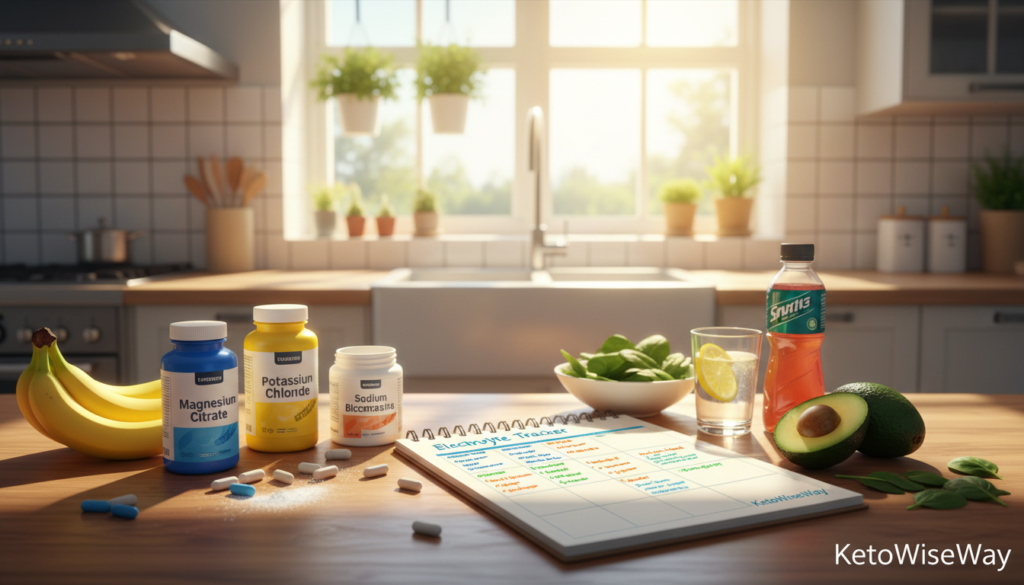
Managing your electrolytes day-to-day is the bridge between knowing what to do and actually feeling great. A practical, personalized plan turns complex science into simple, repeatable habits.
This strategy ensures you get enough electrolytes consistently. It helps you avoid dips in energy and focus.
Your intake should match your activity level and your body‘s signals. Let’s build a routine that works for your life.
When to Supplement: Adaptation, Exercise, and Symptom Relief
Timing is everything. Strategic supplementation at key moments keeps your balance steady.
First, prioritize the initial adaptation phase. This is the first two to four weeks on a low-carb diet.
Your body is flushing fluid and minerals rapidly. Consistent support during this period can prevent the dreaded “keto flu.”
Next, think about exercise. Physical activity increases sweat loss, which depletes key minerals.
Consider taking a supplement before or after your workout. This helps maintain muscle function and prevents cramps.
Finally, listen for symptoms. A headache, sudden fatigue, or a twitch is your cue.
At the first sign of imbalance, reach for an electrolyte boost. It’s faster relief than waiting for food to digest.
Spread your intake throughout the day. Don’t take your entire dose at once. Smaller, frequent servings are better absorbed.
This table outlines the key times to act:
| Scenario | Timing | Key Action |
|---|---|---|
| Keto Adaptation | First 2-4 weeks | Supplement daily, split across meals. |
| Around Exercise | Before/after workout | Replenish what’s lost through sweat. |
| Symptom Relief | At first sign of headache or cramp | Take a serving with water for quick support. |
Following this schedule makes management effortless. You stay ahead of shortages.
Hydration and Electrolytes: The Perfect Pair
Drinking plenty of water is crucial, but it’s only half the equation. Hydration without minerals can actually dilute your electrolyte levels.
You may need to pair your fluid intake with those essential charged particles. Aim for 2.5 to 3.5 liters of water per day as a general guide.
Adjust this based on your activity and climate. A long run on a hot day demands more of both.
For intense exercise in the heat, consider extra salt. Your sweat contains a lot of sodium.
The easiest method is to keep a bottle with an electrolyte mix handy. Sip on it throughout your day.
This simple habit ensures you’re always covered. It supports every cell in your body.
With a clear strategy, you maintain optimal levels day after day. Your energy and performance will thank you.
Conclusion: Mastering the Mineral Trifecta for Keto Success
Your journey to mastering a low-carb lifestyle culminates with one essential practice. Maintaining optimal electrolyte levels is foundational for long-term success. Proper balance supports your energy, muscle function, and overall health.
Your body has unique needs. Activity, climate, and physiology affect what you may need. Listen closely to find your perfect intake.
Prioritize mineral-rich food sources. Consider quality supplements to ensure you get enough electrolytes. This supports vital functions like your heart health.
Take action today. Assess your current plan. Commit to thriving in ketosis.
Here’s to your vitality on this keto diet. Master your internal balance for sustainable enjoyment.