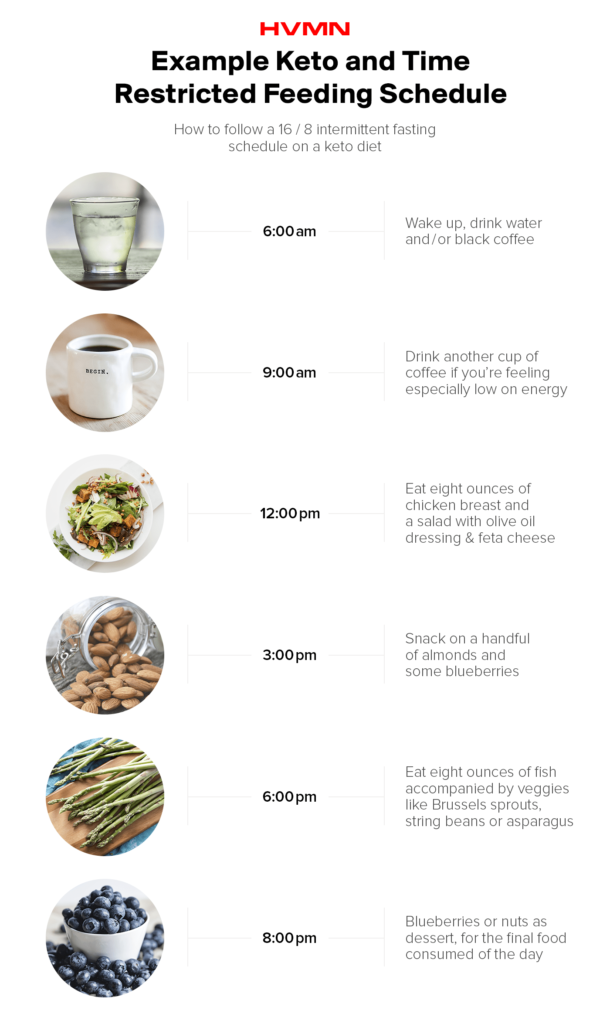
Are you struggling to maintain a ketogenic diet due to a lack of preparedness? Transitioning to a high-fat, low-carbohydrate lifestyle can be challenging, especially when it comes to grocery shopping.
I have found that having a well-stocked pantry is crucial for success on a keto diet. By focusing on the right foods, you can simplify meal planning and ensure that you’re meeting your dietary needs.
Careful planning and strategic grocery shopping are essential for maintaining a state of ketosis. In this article, we’ll explore the must-have items for a keto pantry.
Key Takeaways
- Understand the importance of a well-stocked pantry for a keto diet
- Learn how to simplify meal planning with the right foods
- Discover the essential items to keep in your keto pantry
- Maintain a state of ketosis with strategic grocery shopping
- Simplify your transition to a ketogenic lifestyle
Why a Keto Shopping List is Important
A well-planned keto shopping list is the foundation of a successful keto lifestyle. It helps me stay focused on my dietary goals and ensures that I’m consuming the right balance of macronutrients.
Benefits of Meal Planning
Meal planning is a crucial aspect of a keto diet. By planning my meals in advance, I can ensure that I’m always prepared and can maintain the required macronutrient ratios. This helps me stay in ketosis and achieve my dietary goals.
Effective meal planning also saves me time and reduces food waste. I can create a grocery list based on my meal plan, ensuring that I only buy the must-have items for my keto diet.
Avoiding Unwanted Carbs
One of the main challenges of a keto diet is avoiding unwanted carbs. By having a comprehensive keto shopping list, I can avoid high-carb foods and focus on low-carb groceries. This helps me stay within my daily carb limit and maintain ketosis.
I’ve learned to be mindful of food labels and choose products that are low in carbs and rich in healthy fats. This has become second nature to me, and I’ve developed a keen sense of what to look for when shopping for keto essentials.
Staying on Track with My Goals
Having a keto shopping list helps me stay on track with my dietary goals. By planning my meals and snacks in advance, I can ensure that I’m always on the right path. This helps me maintain motivation and achieve my goals.
I regularly review and update my keto shopping list to ensure that it remains relevant and effective. This helps me stay focused on my goals and make adjustments as needed.
Key Pantry Staples for a Keto Diet
Building a keto-friendly pantry requires careful selection of healthy fats, low-carb vegetables, and protein sources. These foods are the foundation of a successful keto diet, providing the necessary nutrients and energy to stay on track.
Healthy Fats to Include
Healthy fats are a crucial component of a keto diet, providing energy and supporting the absorption of vitamins. Some of my favorite healthy fats include:
- Avocados
- Olive oil
- Coconut oil
- Fatty fish like salmon
These foods are not only delicious but also rich in nutrients. As the saying goes, “Good fat is not something to be feared, it’s something to be celebrated.” Incorporating these healthy fats into my diet has been a game-changer.
Low-Carb Vegetables to Stock
Low-carb vegetables are another essential component of a keto pantry. They provide fiber, vitamins, and minerals without the excess carbs. Some of the best options include:
| Vegetable | Carb Count (per serving) | Nutritional Benefits |
|---|---|---|
| Leafy Greens (spinach, kale) | 1-2g | Rich in iron and antioxidants |
| Broccoli | 5g | High in vitamin C and fiber |
| Cauliflower | 5g | Versatile and rich in vitamin K |
These vegetables are not only low in carbs but also packed with nutrients, making them a great addition to my keto meals.
Protein Sources for My Meals
Protein is an essential macronutrient on a keto diet, supporting muscle growth and repair. Some of my go-to protein sources include:
- Meat: beef, pork, lamb
- Poultry: chicken, turkey, duck
- Fish and seafood: salmon, tuna, shrimp
- Eggs
As Dr. Eric Berg once said, “Protein is not just for building muscle; it’s also for maintaining overall health.” I make sure to include a variety of these protein sources in my meals to stay satisfied and support my overall health.
Essential Herbs and Spices for Flavor
The right herbs and spices can elevate keto cooking, making meals more enjoyable and satisfying. By incorporating a variety of herbs and spices into my keto recipes, I can add depth and complexity without adding carbs.
Keeping Meals Interesting
Using herbs and spices is an effective way to keep my keto meals interesting. Instead of relying on salt and sugar for flavor, I can use a range of herbs and spices to create delicious and varied dishes.
- Fresh Herbs: Basil, oregano, thyme, and rosemary add freshness and flavor to my keto dishes.
- Dried Spices: Turmeric, cumin, and paprika provide warmth and depth to my meals.
Boosting Nutritional Value
Many herbs and spices are not only flavorful but also packed with nutrients. For example, turmeric contains curcumin, which has anti-inflammatory properties, while thyme is rich in antioxidants.
Turmeric is a staple in my keto kitchen, adding a vibrant yellow color and a warm, earthy flavor to my dishes. It’s also known for its potential health benefits, including reducing inflammation.
Grocery List for Herbs and Spices
To stock my keto pantry with essential herbs and spices, I make sure to include the following on my grocery list:
| Herb/Spice | Use in Keto Cooking | Nutritional Benefit |
|---|---|---|
| Basil | Pesto, salads, and Italian dishes | Rich in antioxidants |
| Oregano | Pizza, salads, and Mediterranean dishes | High in antioxidants and antimicrobial properties |
| Turmeric | Curries, soups, and roasted vegetables | Contains curcumin, which has anti-inflammatory properties |
Must-Have Keto Snacks
Keto snacks are more than just a convenience; they’re a necessity for maintaining my dietary goals. When I’m on-the-go or need a quick energy boost, having the right snacks can make all the difference.
Ideas for On-the-Go Munching
For on-the-go munching, I rely on keto-friendly foods that are easy to carry and don’t require refrigeration. Some of my favorites include:
- Nuts like almonds and walnuts
- Seeds such as pumpkin and chia
- Cheese sticks or cubes
- Low-carb vegetables like celery and cucumber
These snacks are not only convenient but also provide a quick source of energy and help curb unwanted cravings.
Satisfying Cravings Without Guilt
One of the challenges of following a keto diet is managing cravings for unhealthy snacks. Fortunately, there are plenty of low-carb groceries that can satisfy my cravings without derailing my progress.
Some must-have items include:
- Dark chocolate with at least 85% cocoa content
- Keto-friendly energy bars
- Homemade keto fat bombs
By incorporating these snacks into my diet, I can enjoy a variety of flavors while staying true to my keto lifestyle.
In conclusion, stocking up on the right keto snacks is essential for my success on the keto diet. By choosing must-have items that are keto-friendly and low in carbs, I can manage hunger, satisfy cravings, and stay on track with my dietary goals.
Dairy Products to Embrace
Embracing the right dairy products is essential for maintaining a successful keto diet. Dairy products are a vital source of fats and proteins, making them a crucial part of keto meal planning.
When selecting dairy products for a keto diet, it’s crucial to focus on high-fat options. These not only provide the necessary fats but also help in keeping you satisfied.
High-Fat Dairy Options
Some of the best high-fat dairy products include cheese, full-fat yogurt, and heavy cream. These products are not only rich in fats but also provide a good amount of protein.
- Cheese: A versatile dairy product that can be used in various keto recipes.
- Full-fat yogurt: Provides a good source of probiotics along with fats.
- Heavy cream: Ideal for adding richness to keto dishes and beverages.
What to Avoid in Dairy
While dairy can be a great addition to a keto diet, it’s essential to avoid low-fat or sugary dairy products. These can kick you out of ketosis and hinder your progress.
“The key to a successful keto diet is maintaining high fat intake while keeping carbohydrate consumption low.” Avoiding unwanted dairy products is a step towards achieving this balance.
“Choosing full-fat dairy products over low-fat versions is a simple yet effective way to stay on track with your keto goals.”
By focusing on the right dairy products and avoiding the wrong ones, I can ensure that my keto diet remains effective and sustainable.
Nuts and Seeds as Keto-Friendly Choices
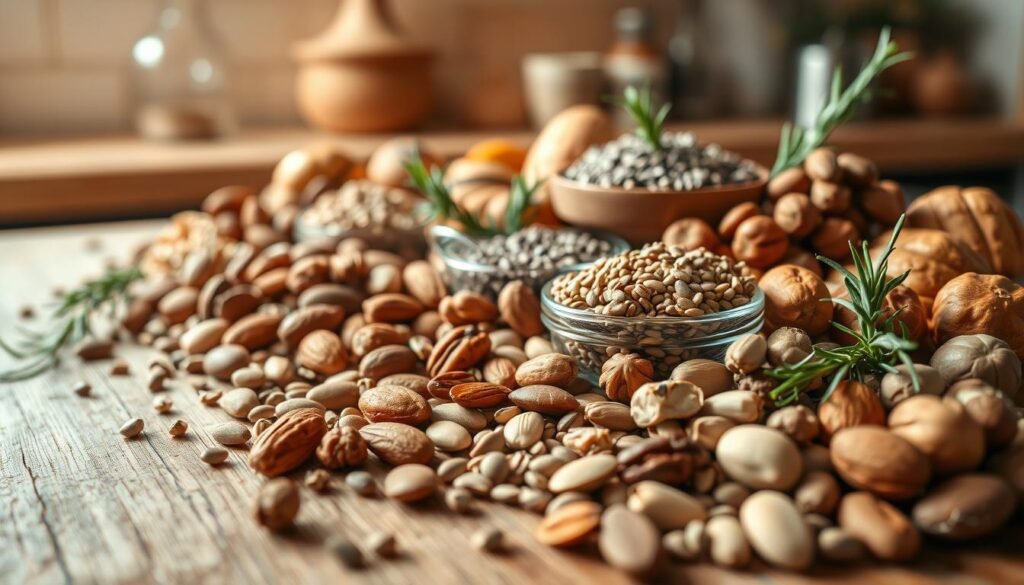
Nuts and seeds are not only keto-friendly but also packed with nutrients, making them ideal for my diet. They provide a rich source of healthy fats and protein, which are essential for maintaining a state of ketosis.
Best Options for Snacking
When it comes to snacking on a keto diet, nuts and seeds are top choices. Almonds and walnuts are excellent options due to their high fat content and low carbohydrate count. Other beneficial choices include chia seeds and flaxseeds, which are not only rich in omega-3 fatty acids but also fiber.
These snacks are not only satisfying but also help in maintaining the required macronutrient ratios for a keto diet. I often find myself reaching for a handful of almonds or walnuts when I need a quick energy boost.
Incorporating Into Meals
Incorporating nuts and seeds into my meals has been straightforward and beneficial. I add chia seeds to my morning smoothies for an extra dose of omega-3s and fiber. Flaxseeds are another favorite; I sprinkle them over salads or use them as an egg substitute in baking.
Nuts like almonds and walnuts are great as toppings for keto-friendly desserts or as ingredients in homemade keto granola. They add crunch and flavor, making my meals more enjoyable and satisfying.
By embracing nuts and seeds, I’ve not only diversified my keto diet but also ensured that I’m getting a good intake of essential nutrients. They are a simple yet effective way to stay on track with my keto goals.
Proteins: Meat and Seafood Choices
As I delve into the world of keto, I’ve come to realize that proteins, particularly from meat and seafood, are vital for a balanced diet. Protein sources are essential for maintaining muscle mass and overall health on a keto diet.
Best Cuts of Meat for Keto
When it comes to meat, choosing the right cuts is crucial. Here are some of the best options for a keto diet:
- Grass-fed beef: Rich in omega-3 fatty acids and conjugated linoleic acid (CLA), grass-fed beef is a nutritious choice.
- Pork chops and bacon: These are not only delicious but also high in fat, making them suitable for a keto diet.
- Lamb: Lamb is another great option, offering a rich flavor and high fat content.
Fish and Shellfish Selections
Fish and shellfish are not only rich in protein but also in healthy fats. Some top choices include:
- Salmon: High in omega-3 fatty acids, salmon is a great choice for keto dieters.
- Shrimp: Low in fat and calories, shrimp is a versatile seafood option.
- Crab: Rich in protein and low in fat, crab is another excellent choice.
As highlighted by a study, “A diet rich in omega-3 fatty acids, found in fatty fish like salmon, can help reduce inflammation and improve heart health.”
“A well-planned keto diet that includes a variety of protein sources can lead to significant health improvements.”
Sweeteners That Fit the Keto Lifestyle
When following a keto diet, finding the right sweeteners is crucial for satisfying sweet cravings without compromising ketosis. Sweeteners can be a game-changer for those who struggle to cut out sugary tastes completely.
I have found that understanding the difference between natural and artificial sweeteners is key to making informed choices that align with my keto goals.
Natural Sweeteners vs. Artificial
Natural sweeteners like stevia and erythritol are popular among keto dieters because they are derived from natural sources and do not raise blood sugar levels. On the other hand, artificial sweeteners such as aspartame and saccharin are also viable options, though some individuals may be sensitive to their effects.
Erythritol, for instance, is a sugar alcohol that has a negligible effect on blood sugar and insulin levels, making it a favorite among keto enthusiasts. It’s worth noting that while natural sweeteners are often preferred, artificial sweeteners can be useful in moderation.
Best Keto-Friendly Sweetener Options
Here are some of the best keto-friendly sweetener options available:
| Sweetener | Type | Glycemic Index |
|---|---|---|
| Stevia | Natural | 0 |
| Erythritol | Natural | 0 |
| Aspartame | Artificial | 0 |
| Saccharin | Artificial | 0 |
When choosing a sweetener, it’s essential to consider not just the taste but also how it fits into my overall keto diet plan. I always check the glycemic index to ensure it won’t affect my ketosis.
In conclusion, whether I opt for natural or artificial sweeteners, the key is moderation and ensuring they fit within my daily keto macros.
Low-Carb Baking Supplies
The key to delicious keto baked goods lies in using low-carb baking supplies like alternative flours and sugar substitutes. As I explore the world of keto baking, I’ve found that having the right ingredients is crucial for success.
Almond Flour and Coconut Flour
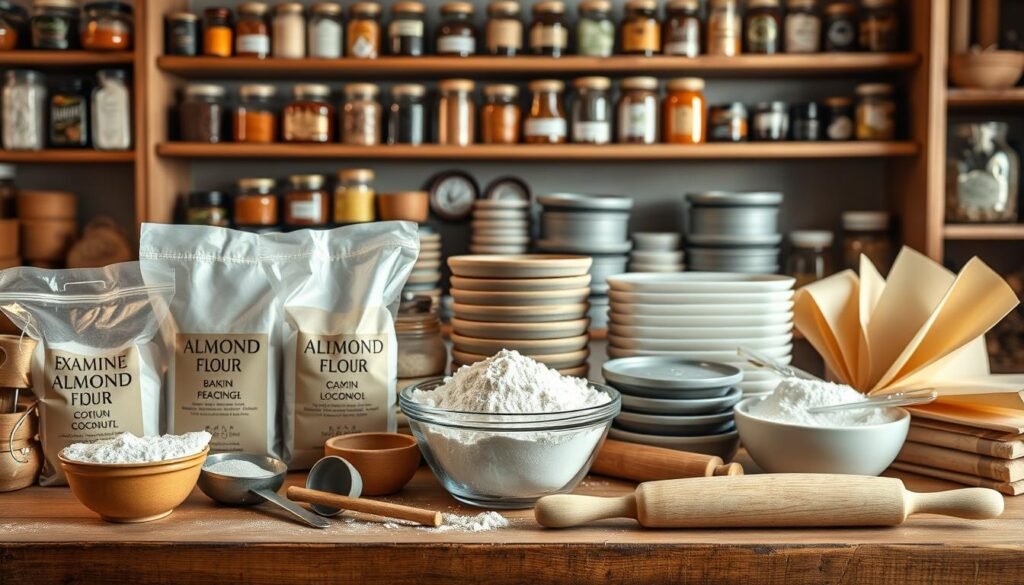
Two staple ingredients in low-carb baking are almond flour and coconut flour. Almond flour, made from ground almonds, is a popular choice for keto bakers due to its low carbohydrate content and versatility in recipes. On the other hand, coconut flour is highly absorbent and requires more liquid in recipes, but it’s also a valuable tool for creating low-carb baked goods.
As noted by keto baking expert, Maria Emmerich, “Almond flour and coconut flour are game-changers for those who want to enjoy baked goods while staying in ketosis.” This quote highlights the importance of these ingredients in keto baking.
Sugar Alternatives for Baking
When it comes to sweetening keto baked goods, sugar alternatives are essential. Options like stevia and erythritol provide sweetness without the carbohydrates. It’s essential to choose sugar substitutes that are keto-friendly and won’t affect blood sugar levels.
- Stevia: A natural sweetener that’s zero-calorie and doesn’t raise blood sugar.
- Erythritol: A sugar substitute that has a minimal impact on blood sugar and insulin levels.
- Monk Fruit Sweetener: A natural sweetener made from a type of melon, it’s calorie-free and doesn’t raise blood sugar.
By incorporating these low-carb baking supplies into my keto baking routine, I can enjoy a variety of delicious treats while staying within my dietary guidelines.
The Importance of Meal Prepping
Effective meal prepping is the backbone of a successful keto diet, allowing me to plan and prepare healthy meals in advance. By dedicating a few hours each week to meal prep, I can ensure that my pantry remains stocked with keto-friendly foods and that I’m always ready with a healthy meal or snack.
Organizing My Shopping List
To start meal prepping, I first organize my keto shopping list around the essentials: healthy fats, low-carb vegetables, and quality protein sources. I make sure to include a variety of foods to keep my meals interesting and ensure I’m getting a broad range of nutrients.
By planning my meals around these staples, I can create a shopping list that’s both efficient and effective, reducing food waste and saving time during the week.
Tips for Efficient Meal Prep
Efficient meal prep involves more than just cooking in bulk; it’s about creating a system that works for me. Here are some tips for efficient meal prep:
- Plan my meals around what’s in season and on sale at the grocery store.
- Cook proteins like chicken and beef in large batches to use throughout the week.
- Roast a variety of vegetables at once to use as sides or add to meals.
- Portion out snacks like nuts and cheese to grab on the go.
By implementing these strategies, I can enjoy a variety of keto meals without the daily stress of deciding what to eat or spending too much time in the kitchen.
Keeping My Pantry Stocked Long-Term
Maintaining a keto pantry long-term requires some planning and attention to detail. To keep my pantry stocked with keto essentials, I need to stay on top of rotation and expiration dates.
Effective Rotation and Expiration Management
Regularly rotating my pantry staples ensures that older items are consumed before they expire. I check expiration dates regularly and make a point to use products nearing their expiration dates in my meal prep.
Seasonal Shopping for Freshness
Shopping seasonally for fresh ingredients not only ensures that I have a varied supply of keto-friendly foods, but it also helps in maintaining the quality of my pantry staples. By incorporating seasonal produce into my meal planning, I can keep my diet interesting and prevent boredom with the same old recipes.
By implementing these strategies, I can maintain a well-stocked pantry with keto essentials, making long-term pantry management a breeze. This approach enables me to stick to my keto lifestyle while enjoying a diverse range of delicious and healthy meals.