What if you could transform your well-being and the planet’s future simply by changing what’s on your plate?
This lifestyle moves beyond a simple diet. It excludes all animal products. Instead, it focuses on whole, plant-based foods. About 3% of Americans now choose this path.
This guide provides a comprehensive roadmap for thriving. It covers essential nutrients, key food sources, and practical meal planning. You will learn how to get complete protein and iron from plants.
A properly planned plant-based way of eating is not restrictive. It is abundant and varied. It can support all life stages, from childhood through adulthood.
Key Takeaways
- A plant-based diet focuses on whole foods from plants.
- It excludes all animal products for various personal reasons.
- This lifestyle requires planning to get all essential nutrients.
- Key nutrients to monitor include protein, iron, and vitamin B12.
- A well-planned approach is sustainable and supports long-term vitality.
- This guide will show you how to build balanced, delicious meals.
What Is Vegan Health Food and Why Does It Matter?
At its core, a plant-based diet is defined by what it includes as much as what it excludes. It consists solely of nourishment from plants. This means fruits, vegetables, beans, whole grains, nuts, and seeds are all central.
All animal-derived items are omitted. This includes meat, dairy, eggs, and even honey. It is a distinct choice from vegetarianism, which often allows dairy and eggs.
People choose this path for several powerful reasons. Many seek improved personal well-being and body function. Others are driven by a deep ethical concern for animals.
A significant motivation is reducing environmental impact. This lifestyle is seen as a way to lower one’s carbon footprint.
There is no single way to follow this eating pattern. Several structured approaches have emerged to fit different goals and preferences. Personalization is a key to long-term success.
The fundamental principle across all types remains the same. Consuming a wide variety of nutrient-dense plants is essential. This variety helps you meet all your nutritional needs.
| Diet Type | Key Focus | Typical Foods |
|---|---|---|
| Raw Vegan | Consumes only uncooked, unprocessed plant foods. | Fresh fruits, vegetables, nuts, seeds, sprouted grains. |
| Vegan Keto | Minimizes carbohydrates, emphasizes high fat and moderate protein. | Avocados, coconut oil, leafy greens, tofu, nuts and seeds. |
| High-Protein Vegan | Prioritizes protein intake for muscle support or satiety. | Lentils, tempeh, seitan, edamame, protein powders from plants. |
| Mediterranean Vegan | Emphasizes heart-healthy fats, whole grains, and legumes. | Olive oil, chickpeas, farro, tomatoes, olives, leafy vegetables. |
| Whole-Food Plant-Based | Focuses on minimally processed items, avoids refined sugars and oils. | Sweet potatoes, brown rice, berries, beans, a wide variety of vegetables. |
Your daily diet should include a colorful mix of these items. This ensures you get adequate protein, iron, zinc, and other vital nutrients. Planning helps you avoid deficiencies like vitamin B12, which requires a fortified source or supplement.
The benefits of this way of eating can be substantial. Many people report increased energy and better digestion. Research also links well-planned plant-based diets to a lower risk of heart disease and support for weight management.
Understanding the Nutritional Cornerstones of a Vegan Diet
The secret to long-term success without animal products lies in mastering your intake of several crucial compounds. A well-planned approach focuses on getting the right amount of key nutrients your body needs.
This ensures your energy levels stay high and your overall well-being is supported. Let’s break down these essential pillars.
Vitamin B12: The Non-Negotiable Supplement
Vitamin B12 is unique. It is made by microorganisms and is not found in unfortified plants. This makes it a critical focus for anyone following this way of eating.
A consistent source is non-negotiable to prevent serious issues like anemia. Fortified nutritional yeast, plant milks, or a reliable supplement are the best strategies.
Consulting with a doctor can help you determine the right form and dosage for your needs.
Complete Protein: Building Blocks from Plants
Your body needs protein to build and repair tissues. The good news is that all essential amino acids are available from plants.
You get complete protein by eating a variety of foods like legumes, grains, nuts, and seeds throughout the day. There’s no need to combine them perfectly at every meal.
For example, lentils with brown rice or hummus with whole-grain pita provides all the building blocks you need.
Iron and Zinc: Maximizing Mineral Absorption
Iron and zinc from plant foods are absorbed less easily than from animal foods. But you can significantly boost your uptake.
Excellent sources include lentils, spinach, and pumpkin seeds. Pair these iron-rich foods with vitamin C-rich fruits like oranges or bell peppers.
This simple trick enhances iron absorption. Try to avoid having large amounts of calcium-rich foods at the same meal, as it can inhibit uptake.
Calcium and Vitamin D: Foundations for Bone Health
Calcium and vitamin D work together for strong bones. Many vegans get sufficient calcium from fortified plant milks, yogurts, and leafy vegetables like kale.
Vitamin D is often called the sunshine vitamin. Sensible sun exposure helps your bodies produce it.
During winter months or if you live in northern latitudes, a vitamin D2 or vegan D3 supplement is a wise choice to make sure your levels are optimal.
Omega-3 Fatty Acids: Sourcing ALA, EPA, and DHA
Omega-3 fatty acids are vital for brain and heart health. The plant form is called ALA, found in chia seeds, flaxseeds, and walnuts.
Your body can convert some ALA into the long-chain forms EPA and DHA, but the process is limited. For a direct source of EPA and DHA, consider an algae-based supplement.
Including a tablespoon of ground flax or chia in your daily diet is a great habit. An algae oil supplement provides a reliable safety net for these important nutrients.
By focusing on these cornerstones, your diet includes all the essential components for thriving. Well-planned vegan diets are abundant and can fully support your nutritional needs.
How to Build a Balanced and Well-Planned Vegan Plate
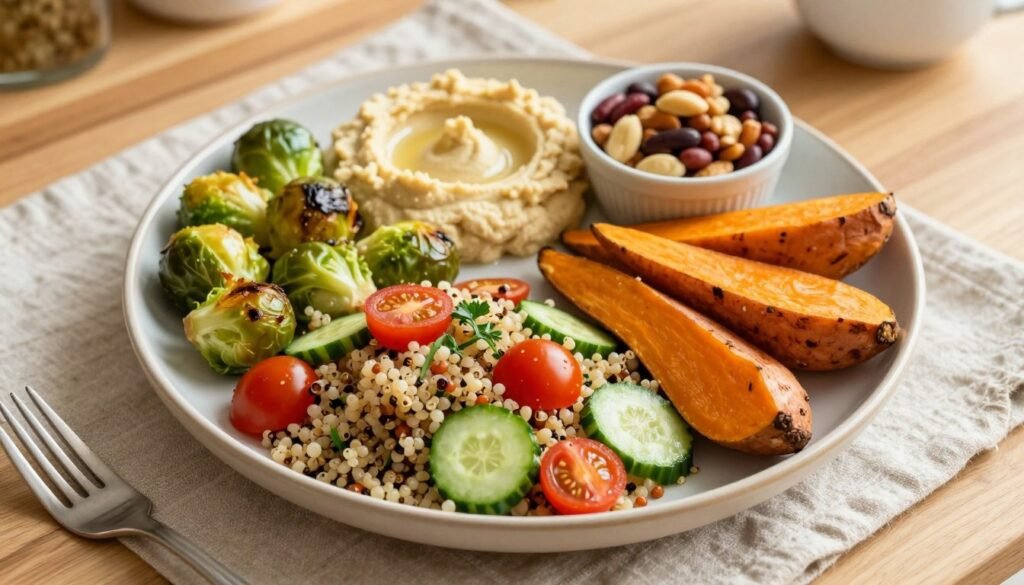
Building a nourishing plate without animal products is simpler than you might think. It all starts with a visual blueprint.
This model guides you to include all essential nutrients in the right amount. Think of your plate as divided into clear sections.
A well-constructed plate has three main components. This structure ensures your diet includes everything your body needs for energy.
- Half the Plate: Colorful Vegetables and Fruits. Fill this space with a rainbow of produce. Different colors provide different vitamins and antioxidants.
- One Quarter: Protein-Rich Legumes or Tofu. This section is for beans, lentils, chickpeas, or tempeh. These foods are your primary source of protein and iron.
- One Quarter: Whole Grains. Opt for brown rice, quinoa, or whole-wheat pasta. These grains offer sustained energy and fiber.
- A Small Accent: Healthy Fats. Add a sprinkle of nuts or seeds, or a few slices of avocado. This completes the nutritional profile.
Variety is the non-negotiable cornerstone of this way of eating. Rotating your protein and grain sources prevents boredom.
It also guarantees a broader spectrum of nutrients. Try new colored vegetables and fruits each week to make sure you get a wide variety.
Practical guidance on portions turns the model into reality. Aim for several servings of leafy greens in your daily diet.
Include a protein source with every main meal. This habit supports muscle maintenance and keeps you feeling full.
Fortified foods are your secret weapon for key nutrients. They seamlessly cover gaps like vitamin B12, vitamin D, and calcium.
Use fortified plant milk in your cereal or smoothie. Sprinkle nutritional yeast on popcorn or pasta for a cheesy flavor and a B12 boost.
Applying the plate model is easy with simple meal ideas. Here are examples for a full day.
- Breakfast: A smoothie with fortified plant milk, spinach, banana, and a tablespoon of ground flax seeds. Pair it with a slice of whole-grain toast.
- Lunch: A large salad with mixed greens, chickpeas, quinoa, cherry tomatoes, and a lemon-tahini dressing. The variety here is excellent.
- Dinner: A stir-fry with tofu, broccoli, bell peppers, and snap peas over brown rice. Add a side of edamame for extra protein.
This approach to building meals is logical and satisfying. Well-planned vegan diets are abundant and nutritionally complete.
You gain all the benefits of eating from plants. Your meals become colorful, diverse, and deeply nourishing.
Top Vegan Protein Powerhouses for Sustained Energy
Sustained energy and muscle support are within reach when you center your meals on these plant-based powerhouses. A common myth suggests people on this lifestyle struggle to meet their protein needs.
This is simply not true. Ample protein is available from a wide variety of plants.
Adequate intake supports your body’s repair processes. It also promotes lasting fullness and stable energy levels throughout your day.
Legumes: Beans, Lentils, and Peas
Legumes form the foundation of a protein-rich plate. A single cooked cup can deliver between 10 and 20 grams of this vital nutrient.
They are also packed with fiber, iron, and folate. This makes them a complete package of essential nutrients.
Proper preparation can boost their benefits. Soaking dried beans before cooking improves their digestibility.
It also helps your body absorb minerals more effectively. Incorporate them into your meals with ease.
Try a hearty lentil soup or a robust three-bean chili. These dishes are satisfying and incredibly nourishing.
Tofu, Tempeh, and Seitan
These versatile staples offer concentrated protein in familiar forms. They are minimally processed and incredibly adaptable in the kitchen.
Tofu, made from soybeans, is a blank canvas. It absorbs marinades and sauces beautifully.
A 3.5-ounce serving provides about 9 grams of protein. Crumble it for a scramble or cube it for a stir-fry.
Tempeh is a fermented soy product with a firm, nutty flavor. The fermentation process may enhance nutrient absorption.
It offers around 20 grams of protein per serving. Slice it thin and grill it for a savory main course.
Seitan, made from wheat gluten, has a remarkably meaty texture. It contains approximately 25 grams of protein per serving.
It works perfectly in stews, sandwiches, and kebabs. These options provide excellent variety for your weekly menu.
Nutritional Yeast: The Cheesy Protein Boost
This golden flake is a flavor-enhancing superstar. It delivers a savory, cheesy, umami taste without any dairy.
Just one ounce provides about 16 grams of protein and 6 grams of fiber. Many brands fortify it with essential vitamin B12.
This makes it a dual-purpose powerhouse for your pantry. Sprinkle it, often called “nooch,” over air-popped popcorn or cooked pasta.
You can also blend it into salad dressings or coat roasted vegetables with it. It effortlessly boosts the protein and B12 content of any dish.
Combining these sources ensures your diet includes all necessary building blocks. You can enjoy everything from a simple tofu scramble to a tempeh bacon sandwich.
Your meals become diverse, delicious, and deeply sustaining. This approach proves that plant foods are more than capable of supporting an active, vibrant lifestyle.
Essential Healthy Fats: Nuts, Seeds, and Their Supercharged Allies
The journey to nutritional completeness leads directly to the world of nuts, seeds, and their unique allies. These small but mighty ingredients deliver a concentrated source of essential fatty acids.
They are fundamental for a well-rounded eating pattern. Your body relies on these healthy fats for critical functions.
Beyond their fat content, they pack a powerful punch of protein, fiber, and minerals. A single ounce can provide between 5 and 12 grams of protein.
They are also rich in iron, magnesium, zinc, selenium, and vitamin E. Let’s explore the standout performers in this category.
Almonds, Walnuts, and Their Butters
Almonds are celebrated for their high vitamin E content. This antioxidant supports skin and cellular well-being.
Walnuts are one of the best plant sources of alpha-linolenic acid (ALA). This is a crucial omega-3 fatty acid.
For the greatest benefits, choose raw or dry-roasted nuts. Select natural nut butters that list only nuts and perhaps a pinch of salt.
Avoid products with added sugars or hydrogenated oils. A spoonful of almond butter on apple slices makes a perfect snack.
Hemp, Chia, and Flax Seeds
These three seeds are true nutritional superstars. Each brings a unique set of advantages to your meals.
Hemp seeds offer about 9 grams of complete protein per ounce. This means they contain all essential amino acids your body needs.
Chia seeds are high in ALA and have a gel-forming property. Soak them in liquid to create delicious puddings or use them as a thickener.
Flax seeds are another excellent source of ALA. Ground flax is a popular egg substitute in baking.
It adds moisture and binds ingredients together. This variety ensures you never get bored.
The Role of Algae and Seaweed
For long-chain omega-3s like DHA, look to the sea. Algae is the original source of these fats in the marine food chain.
Spirulina and chlorella are protein-rich forms of algae. Seaweed, such as nori and kelp, provides iodine.
Iodine is essential for proper thyroid function. Intake should be moderated due to variable iodine content.
An algae-based supplement is a reliable way to get EPA and DHA directly. It’s a smart choice for many people.
These fats play several critical roles in your system. They are vital for supporting brain function and reducing inflammation.
They also promote heart health and aid in absorbing fat-soluble vitamins. Including them daily is simple and rewarding.
- Stir a tablespoon of ground flax into your morning oatmeal or smoothie.
- Sprinkle shelled hemp seeds over salads or avocado toast for a crunchy boost.
- Use nori sheets to make quick vegetable and rice wraps.
- Consider an algae-based omega-3 supplement to ensure adequate DHA intake.
Integrating these items creates a diverse and deeply nourishing eating pattern. Your diet includes all the essential fats it requires.
Fortified Foods: Your Secret Weapon for Key Nutrients
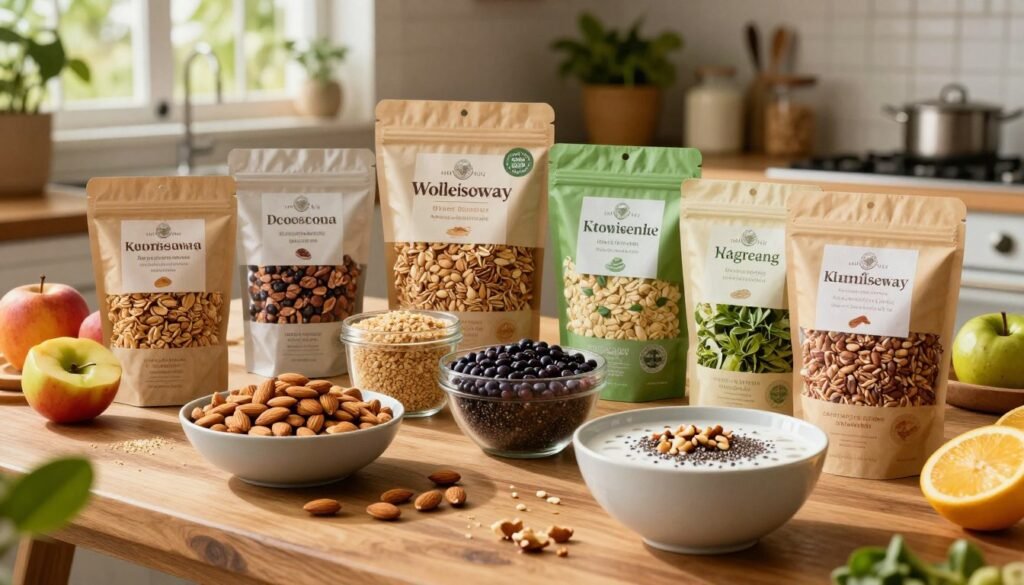
Navigating a plant-based lifestyle successfully often involves a clever strategy: leveraging fortified products. These are items that have specific nutrients added during processing.
This practice is invaluable for obtaining compounds like vitamin B12, vitamin D, calcium, and sometimes iron. They act as a reliable safety net in your daily routine.
Think of them as a helpful complement. They should not replace a diet rich in whole plants like fruits, vegetables, and whole grains. Instead, they fill specific gaps efficiently.
Plant-Based Milks and Yogurts
Dairy alternatives like soy, almond, and oat milk are common staples. Selecting versions fortified with calcium and vitamins D and B12 is crucial.
These fortified foods help people meet needs that are vital for bone strength. Always compare nutritional labels when you shop.
Look at the protein content and check for added sugars. Choosing unsweetened plant-based milks helps minimize extra sugar in your daily diet.
Fortified yogurt made from soy or coconut follows the same principle. It provides a creamy, probiotic-rich option that also delivers key vitamins.
Breakfast Cereals and Nutritional Yeast
Many morning cereals are potent sources of B12. Check the ingredient list for “cyanocobalamin” or “methylcobalamin.”
Consuming them regularly can help you maintain adequate levels. Nutritional yeast is another superstar in this category.
This flaky, savory seasoning is often fortified with vitamin B12. Just a tablespoon or two can significantly contribute to your daily target.
It adds a cheesy, umami flavor to popcorn, pasta, and soups. This makes it a delicious and functional addition to your meals.
Here is a comparison of popular fortified options to guide your choices:
| Product Type | Key Fortified Nutrients | What to Look For on the Label | Practical Serving Tip |
|---|---|---|---|
| Soy Milk | Calcium, Vitamin D, Vitamin B12, Riboflavin | At least 20% DV for calcium and vitamin D per serving. | Use in smoothies or pour over fortified breakfast cereal. |
| Almond Milk | Calcium, Vitamin D, Vitamin E | Unsweetened variety; check protein content is often lower. | Great for baking or making oatmeal. |
| Fortified Breakfast Cereal | Vitamin B12, Iron, Vitamin D, Folate | “Whole grain” as first ingredient; low added sugar. | Pair with fortified milk and berries for a quick meal. |
| Nutritional Yeast | Vitamin B12, Protein, B-Vitamins | Fortified with B12 (cyanocobalamin). | Sprinkle on salads, roasted veggies, or popcorn. |
| Plant-Based Yogurt | Calcium, Vitamin D, sometimes B12 | Live active cultures; check for protein source like soy. | Enjoy with nuts seeds and fruit for a snack. |
Incorporating these items is simple. Use fortified soy milk in your morning coffee or smoothie. Sprinkle nutritional yeast on savory dishes for a flavor and nutrients boost.
Choose a fortified cereal as a quick breakfast or snack. This way, you make sure your diet includes these critical elements.
Remember, a balanced approach works best. Fortified foods are powerful tools. They work alongside a varied plate full of colorful plants to support your well-being.
The Proven Health Benefits of a Vegan Diet
Robust research now confirms what many have experienced. A well-planned plant-based diet can be a shield against chronic illness.
Studies show significant risk reductions for major conditions. This lifestyle is linked to a 23% lower risk of type 2 diabetes.
It is also associated with a 35% reduced risk of prostate cancer. Cardiovascular disease risk sees a meaningful decrease.
These health benefits stem from the natural composition of plants. Plant-based diets are rich in fiber, vitamins, minerals, and antioxidants.
They tend to be lower in saturated fat and cholesterol compared to animal foods. This nutritional profile supports your body in multiple ways.
Reduced Risk of Chronic Diseases
Key scientific findings highlight protection against coronary heart disease and hypertension. The mechanisms behind these benefits are well understood.
A higher intake of protective phytochemicals and fiber plays a crucial role. These compounds are abundant in vegetables, fruits, and whole grains.
Lower consumption of saturated fat and cholesterol is another key factor. This directly supports cardiovascular health.
Well-planned vegan diets emphasize these protective foods. They systematically exclude animal products that contribute to risk factors.
Effective Weight Management Support
This way of eating has a positive impact on weight control. Plant-based diets are typically less energy-dense.
They are more satiating due to high fiber content. This can support healthy weight loss or maintenance effortlessly.
Your meals become naturally filling without excessive calories. People often find it easier to manage their body weight.
Including a variety of legumes, vegetables, and whole grains helps you feel full longer. This is a practical benefit for long-term success.
Improved Metabolic Health Markers
Overall metabolic function often improves with this lifestyle. Better blood sugar control is a common outcome.
Improved lipid profiles, including lower LDL cholesterol, are frequently observed. Reduced systemic inflammation is another significant advantage.
These changes help create a healthier internal environment. They contribute to the reduced risk of heart disease and diabetes.
Key nutrients like iron and zinc are still important. A balanced diet includes them from plants like lentils and pumpkin seeds.
The Importance of Whole Food Choices
These health benefits are most pronounced with a specific focus. Emphasizing whole, minimally processed foods is essential.
Not all foods labeled for vegans eat are equally beneficial. Processed foods high in sugar and refined oils should be limited.
Your daily diet should center on whole grains, legumes, nuts, seeds, and produce. This ensures you get the full spectrum of benefits.
Vegans should make sure to include a reliable source of vitamin B12. This is crucial for maintaining optimal health.
When planned thoughtfully, this diet offers a powerful combination of disease prevention and vitality. It represents a proactive way to care for your long-term well-being.
Overcoming Common Challenges and Making the Transition
Adopting a new way of eating isn’t without its obstacles, yet each challenge has a practical solution. The initial transition can bring up questions about convenience, social settings, and getting the right nutrients.
You are not alone in facing these challenges. A thoughtful approach turns potential roadblocks into simple routines.
Whether you shift gradually or all at once is a personal choice. Both paths can lead to success when you have the right tools and knowledge.
Smart Snacking and On-the-Go Meals
Finding satisfying snacks and portable meals is a common hurdle. The key is preparation.
Keep wholesome options within easy reach to maintain energy. This helps you avoid less nutritious, processed foods when you’re busy.
Excellent portable choices include:
- Trail mix with a variety of nuts, seeds, and dried fruits.
- Fresh whole fruit like apples or bananas.
- Pre-portioned hummus with carrot and celery sticks.
- Pre-made bean burritos on whole grains tortillas.
These items provide a balanced mix of protein, fiber, and healthy fats. They support your body throughout a busy day.
Vegan Baking and Cooking Swaps
Traditional recipes often rely on eggs and dairy. Simple swaps let you enjoy all your favorite dishes.
Baking becomes easy with a few clever substitutions. These alternatives bind and moisten just like the originals.
For one egg, try one of these:
- Flax egg: Mix 1 tbsp ground flax seeds with 3 tbsp water. Let it thicken for 5 minutes.
- Chia egg: Use the same method with chia seeds.
- ¼ cup unsweetened applesauce or mashed banana.
For dairy, the options are plentiful. Use plant-based milks, yogurts, and butters in equal amounts.
These swaps work seamlessly in pancakes, muffins, and sauces. Your meals stay familiar and delicious.
Your personal transition approach matters. Some people prefer a slow shift, like starting with “Meatless Mondays.”
Others switch their milk first. A full, immediate change also works well for many.
Choose the way that feels sustainable for your lifestyle. There is no single correct path.
Planning is your greatest ally for long-term success. Reading labels becomes second nature.
You’ll learn to identify animal products and find fortified foods. This is how you make sure your diet includes key elements like vitamin B12.
Consulting a doctor or registered dietitian provides personalized advice. This is especially wise if you manage a health condition.
They can help you create a balanced plan. This ensures you get adequate iron, zinc, and other vital nutrients from plants.
Well-planned vegan diets are linked to numerous health benefits. These include support for weight loss and a lower risk of heart disease.
By tackling challenges head-on, you build a resilient and enjoyable daily diet. Your meals become a source of joy and vitality.
Conclusion: Embracing a Vibrant, Plant-Powered Lifestyle
Embracing a lifestyle centered on plants is a powerful step toward personal vitality and environmental stewardship. This guide has shown that a well-planned diet, rich in a variety of whole grains, legumes, nuts, seeds, and produce, provides all essential nutrients.
Remember to secure a reliable source of vitamin B12, often through fortified foods or a supplement. Paying attention to iron, calcium, and omega-3s will help your body thrive.
View this lifestyle not as restriction, but as an exciting exploration of new flavors and meals. The benefits extend beyond your own well-being.
You are now equipped to make informed choices. Consider exploring plant-based cookbooks or connecting with online communities. Make sure to consult a healthcare provider to personalize your plan.
Your journey toward a vibrant, plant-powered life is filled with abundance and positive impact.