Can you really stretch your grocery dollars while still enjoying bold flavor and real nutrition?
For over 15 years I have shared recipes to help you handle rising food costs. This guide collects 32 practical dishes that turn simple ingredients into filling, tasty options.
You will find a clear list of recipes that save you time and money. Each idea fits common pantry staples and works in one kitchen routine. Follow simple steps that take only minutes to plan for the week.
This approach gives you a realistic way to keep your family satisfied without constant price shock. Read on to learn how to organize shopping, reuse ingredients, and make salads and dinners that feel indulgent, not thrifty.
Key Takeaways
- Use this list of 32 recipes to reduce grocery waste and save time.
- Focus on versatile ingredients that stretch across multiple meals.
- Plan in minutes each week to free up time and cash.
- Simple ideas can turn pantry staples into high-flavor dishes.
- Smart shopping helps your kitchen deliver nutrition for the whole family.
The Reality of Healthy Eating on a Tight Budget
Grocery costs have climbed so fast that your weekly cart can feel unrecognizable. Recent data shows that what used to cost $100 now often runs between $150 and $300 in many U.S. regions.
You can still control spending without losing flavor. Preparing chicken and other proteins at home usually costs less per serving than processed takeout. In many cases, making a simple chicken dish or a fresh salad at home saves money and boosts nutrition.
Small planning steps matter. If you spend just a few minutes mapping out recipes and ingredients, you avoid last-minute, expensive choices. That short time saves both cash and stress.
- Fast food often costs more per serving than home-cooked alternatives.
- Versatile staples extend across several meals and reduce waste.
- Cooking lets you dial in flavor and portion size for every single meal.
| Expense Area | Typical Impact | Practical Fix |
|---|---|---|
| Grocery inflation | Cart totals up 50–200% | Plan weekly menus; buy staples in bulk |
| Takeout/processed food | Higher cost per serving | Cook proteins like chicken at home |
| Last-minute buying | Wasted ingredients, higher spend | Spend minutes planning; use leftovers |
Why Beans and Legumes Are Your Best Friends
Simple pulses—beans, lentils, chickpeas—turn basic ingredients into filling, flavorful dishes.
They pack protein and fiber for pennies per serving. That makes them ideal if you want to lower costs without losing nutrition. Canned or dried beans last long in the pantry and fit many recipes.
High-Protein Bean Soups
Bean-based soup is fast to make and stretches well. Sauté onion and garlic in a pan, add canned tomatoes, beans, water or broth, salt, and pepper.
This dish often gives more iron and complex carbs per serving than processed alternatives. You can double it and refrigerate for quick lunches or dinner.
Flavorful Black Bean Tacos
Black beans make tacos hearty and low-cost. Warm the beans with cumin, garlic, and diced tomato. Pile onto bread or tortillas with onion, peas, or avocado.
“Legumes let you create satisfying dishes in minutes while keeping grocery totals down.”
- High-Protein Tuna & Chickpea Salad: ready in minutes for a quick protein-rich lunch.
- Use pantry staples—tomatoes, garlic, onions—for deep flavor without extra spend.
Maximizing Nutrition with Versatile Egg Recipes
A few eggs in the fridge can turn pantry staples into fast, satisfying lunches. Eggs are a complete protein and supply choline for brain health and lutein for eye support even when prices change.
Simple Egg-Based Lunches
Grated Egg Avocado Toast is viral for a reason: it takes under 5 minutes and packs flavor with minimal ingredients. Use grated hard-cooked egg, mashed avocado, a squeeze of tomato juice, salt, and a dash of pepper.
Make a single-serve egg salad with Greek yogurt for a creamy, high-protein spread. Add chopped tomatoes, garlic, and herbs to lift the flavor.
- Eggs stay affordable versus many meat-based dinner options and fit your weekly plan.
- Turn one cooked egg into a rice or potato bowl, or fold into a quick soup or curry for extra protein.
- Mastering basic egg techniques saves time and ensures a reliable, nutritious serving whenever you need it.
“Eggs give you flexible, nutrient-dense dishes in minutes.”
Building Filling Foundations with Whole Grains
Whole grains give your weekly menu a reliable, filling foundation that stretches ingredients farther. Brown rice, quinoa, and farro supply complex carbs, B vitamins, and fiber to keep you energized through the day.
One practical fact: a 2-pound bag of rice costs just a few dollars and yields over 20 servings. That makes rice one of the best pantry values for any recipe plan.
- Use brown rice or quinoa as the base for a simple dinner or side dish.
- Add chicken or another lean protein for balance and staying power.
- Stir in garlic and fresh herbs to boost flavor without pricey sauces.
- Turn leftover potatoes and vegetables into a hearty quinoa salad to cut waste.
Tip: plan two grain-based recipes per week. They form easy building blocks, simplify shopping, and help you avoid expensive snacks between meals.
Mastering the Art of Affordable Pasta Dishes
A pot of pasta gives you a fast canvas for vegetables, proteins, and bold flavor.
Pantry Pasta Essentials
Keep simple staples handy: dried pasta, canned tomatoes, tomato paste, olive oil, garlic, and onions. These items store well and cut cook time to minutes.
Wholewheat pasta adds fiber and holds up to robust toppings. Toss in canned beans or tuna for extra protein without extra cost.
Vegetable-Loaded Sauces
Caramelized onion pasta uses tomato paste and garlic to build a velvety sauce in about 35 minutes. Finish with basil and a splash of olive oil for depth of flavor.
- Use leftover potatoes or peas in a bake to add texture and stretch servings.
- Make a simple tomato and basil sauce that lifts plain pasta into a restaurant-style dish per serving.
- Prepare a large pan of pasta primavera to use seasonal vegetables all week.
“Pasta turns nearly any fridge ingredient into a satisfying dish.”
Seasonal Vegetables for Nutrient-Dense Meals
Choosing in-season vegetables turns simple shopping into big savings and better flavor.
Carrots, cabbage, and potatoes give the most nutritional bang for your dollar when you buy them at peak ripeness.
Make vegetables the star of your plate instead of expensive proteins. Roast root vegetables with herbs for a hearty, nutrient-dense dish that pairs well with rice or a light salad.
- Focus on carrots and cabbage to get top vitamins for low cost.
- Roasted potatoes and mixed roots hold up well and stretch servings.
- Simple rice bowls with colorful vegetables create a gourmet-feeling recipe with minimal spend.
“Let seasonal produce lead your planning; it saves money and lifts every recipe.”
| Vegetable | Peak Season | Best Use |
|---|---|---|
| Carrots | Fall–Spring | Roast, slaws, soups |
| Cabbage | Fall–Winter | Salad, stir-fry, braise |
| Potatoes | Fall–Spring | Roast, mash, bake |
| Mixed roots | Fall–Winter | Roast trays, grain bowls |
Plan weekly around what’s in season so you can take advantage of store sales and keep your kitchen stocked with fresh produce. With flexible recipes, you can enjoy high-quality food without overspending.
Smart Shopping Strategies to Lower Your Grocery Bill
Smart shopping starts with a short plan and a sharp eye at the price tag. Before you step into the store, scan the weekly flyer and list the proteins and produce on sale. This small step helps you shape dinners and reduces impulse buys.
Shopping Seasonally
Choose produce that’s in season—tomatoes, onions, and potatoes often cost less and taste better. Seasonal picks give you more flavor per dollar and keep your pantry flexible for salads, soups, and roasted dishes.
Checking Unit Prices
Divide the total cost by weight or number of servings to find the true value. This method reveals when bulk rice or beans is cheaper per serving than smaller packages.
Compare brands and sizes to see which gives the best per serving cost before you buy.
Building Around Sales
Design your weekly menu from sale items. If chicken or canned tomatoes are discounted, plan two or three recipes that use those ingredients.
Use a simple pan to make a large batch of sauce or soup. That saves time and stretches servings across lunches and dinner.
- Keep a running list of staples like rice, olive oil, and beans to stock up when on sale.
- Ask store staff where weekly markdowns are; you can find deals on eggs, bread, and seasonal produce.
- Compare cost per serving across brands to make informed buys that preserve flavor and value.
| Strategy | How to Do It | Typical Benefit |
|---|---|---|
| Seasonal shopping | Buy tomatoes, onions, potatoes in season | Better flavor, lower price per serving |
| Unit price checks | Divide cost by weight or servings | Find true value; choose larger packs when cheaper |
| Menu around sales | Plan dinners using weekly flyer items | Lower weekly spend; build varied recipes |
| Batch cooking | Cook soup or sauce in one pan for multiple servings | Saves time, reduces waste, stretches ingredients |
The Benefits of Batch Cooking and Meal Prep
Spending a single afternoon prepping staples can free up weekdays and cut fridge stress.
Dedicate just 1–2 hours each weekend to cook beans, boil grains, and chop vegetables. That small block of time means you can pull together a quick food bowl or assemble a fast meal without scrambling after work.
Cook extra soup, stew, or casserole and freeze portions. On busy nights you’ll have a homemade dinner ready that beats takeout for taste and cost.
Prep protein components in advance—roasted chicken, spiced lentils, or cooked tofu—so you can top bowls, salads, or wraps in minutes. Prepped grains and chopped veg make building a balanced dish fast and reliable.
“Batch cooking saves time, cuts waste, and makes weeknights calmer.”
- Spend 1–2 hours prepping and gain many low-effort dinners.
- Freeze double batches to avoid last-minute takeout.
- Pre-cooked protein and grains let you assemble a nutritious plate in minutes.
Quick and Healthy Meals on a Budget
With a few versatile ingredients, you can build fast plates that meet nutrition goals.
Plan one hour or less to prep several recipes that carry you through the week. A week of dietitian-approved dishes can cost as little as £29 per person and still meet the Eatwell Guide for five portions of fruit and vegetables and 30g of fiber daily.
Keep staples like rice, canned tomatoes, garlic, and eggs to turn into soup, salad, or a simple pasta dish in minutes. Use chicken or tuna for low-cost protein that stretches across servings.
“A quick stir-fry with onions, peas, and pepper or a tomato-and-olive oil pasta delivers great flavor in under 20 minutes.”
- Use potatoes and beans for filling sides and higher fiber per serving.
- Swap ingredients by sale: cheese for tuna, basil for frozen vegetables.
- Batch sauces in a pan and freeze portions to cut time and waste.
| Quick Dish | Main Ingredients | Time |
|---|---|---|
| Tomato-garlic pasta | pasta, canned tomatoes, garlic, olive oil, basil | 15 minutes |
| Simple chicken stir-fry | chicken, onion, pepper, rice, soy or oil | 20 minutes |
| Bean and vegetable soup | beans, carrots, tomatoes, onion, water, salt | 30 minutes |
Creative Ways to Use Pantry Staples
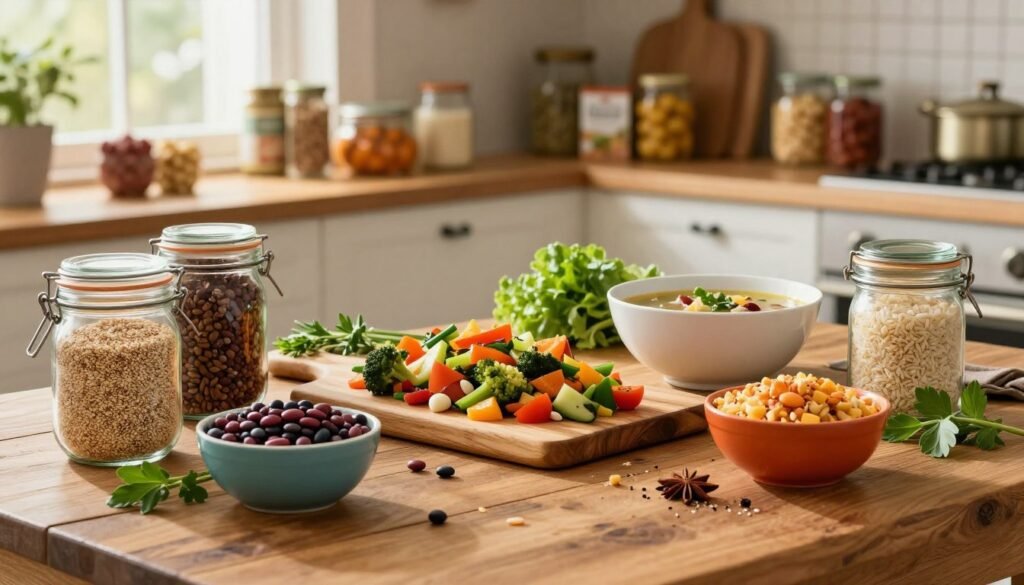
With a few pantry basics and smart spices, you can craft dozens of reliable recipes.
The backbone of your cupboard—dried lentils, canned beans, and whole grains—lets you build a fast, satisfying meal any night.
Turn lentils into a warming stew or blend beans into a creamy dip that doubles as a sauce for pasta. Add canned tomatoes, garlic, and herbs to lift flavor without fresh produce.
Keep one roasted chicken or a can of tuna as a quick protein option. Use grains for bowls, toss in beans, and finish with a spice mix for a bright, simple dish.
Tip: experiment with smoked paprika, cumin, and lemon zest to make pantry ingredients taste gourmet. Small jars of soy or chili garlic sauce transform basic plates into bold dinner choices.
“Your pantry is the secret weapon that turns simple items into crowd-pleasing recipes.”
- Stir lentils into soups for extra protein and texture.
- Use grains as a base for warm bowls topped with beans or chicken.
- Keep versatile sauces to boost flavor fast.
How to Reduce Food Waste and Save Money
Leftovers are not a failure — they are your fastest route to savings and flavor. The most expensive food is what you toss, so plan how to use extra portions before they spoil.
Keep a simple list on your fridge of what’s in the fridge and pantry. That one habit cuts guesswork and helps you build dinner from what you already own.
Turn leftover chicken, potatoes, or rice into a new dish in minutes. Fry rice with garlic and egg, or shred chicken into a tomato and curry sauce to top pasta or serve with salad.
Store produce correctly to extend life: keep garlic cool and dry, tomatoes at room temperature, and leafy greens wrapped in paper towels to hold water.
- Plan around what you have: design one meal each week from surplus items.
- Reimagine leftovers: cold roast potatoes become a warm hash; extra rice becomes fried rice.
- Use simple seasonings: salt, pepper, lemon, or curry powder refresh a tired dish.
“Every plate you save is money back in your pocket.”
Understanding Unit Pricing for Better Value
A quick unit-price check can reveal which jar or carton truly saves you money. When you compare price per ounce, pound, or unit, you see the true cost behind packaging and brand names.
Don’t assume bigger is cheaper. Sometimes the larger pack costs more per ounce. Doing the math at the shelf keeps your grocery total low and your pantry smarter.
Take a moment to compare tags for common items. You can find better value for sauce, eggs, or grains by checking the unit price rather than the sticker price.
- Check unit price to spot hidden savings that add up across every shop.
- Compare sizes—small packages can be cheaper per unit than bulk jars.
- Apply the habit for staples you buy often; small savings become large yearly gains.
Mastering unit pricing helps you buy higher-quality items when it matters. With this simple skill, you shop with confidence and protect your weekly spend without guesswork.
Incorporating Frozen Produce for Year-Round Savings
Frozen produce gives you peak-season flavor without the seasonal price swings. Vegetables and fruit are harvested at ripeness and frozen fast, which preserves nutrients and keeps costs low. This makes frozen bags a reliable pantry staple.
They arrive washed and chopped, so you save prep time when you need dinner quickly. Add frozen peppers or tomato to a chicken stir-fry, toss mixed veg into pasta, or stir peas into a rice bowl for extra protein and color.
Use a hot pan with garlic and a splash of sauce to sauté frozen vegetables. That technique builds fast flavor and keeps the texture lively. Keep bags of potatoes, peas, and mixed peppers in your freezer so you can pull together any dish in minutes.
- Frozen produce reduces waste — use only what you need and keep the rest frozen.
- It stretches expensive fresh items and supports a steady, nutritious food routine year-round.
“Frozen vegetables let you enjoy peak-season taste whenever you need quick, reliable ingredients.”
Balancing Flavors Without Expensive Ingredients
Master the quartet of salt, acid, fat, and heat to make humble pantry items taste complex and bright.
Start small: use a pinch of salt, a splash of oil, and a squeeze of lemon to wake up rice, beans, or roasted vegetables.
Spice blends and fresh herbs change profiles fast. Toast whole spices, then crush them to release aroma. This costs little but adds depth.
Think of one simple protein—like chicken—and aim to contrast flavors. Add a little cheese or a tangy sauce at the end to lift the plate.
Practice acid and heat: a dash of vinegar or hot pepper brightens rich elements and makes every bite more interesting.
“You don’t need expensive food to make meals feel gourmet; balance and technique do the heavy lifting.”
- Use oil with aromatics to bloom flavor quickly.
- Add cheese sparingly for umami and creaminess.
- Experiment with spices to reinvent simple ingredients.
Planning Your Weekly Menu for Success
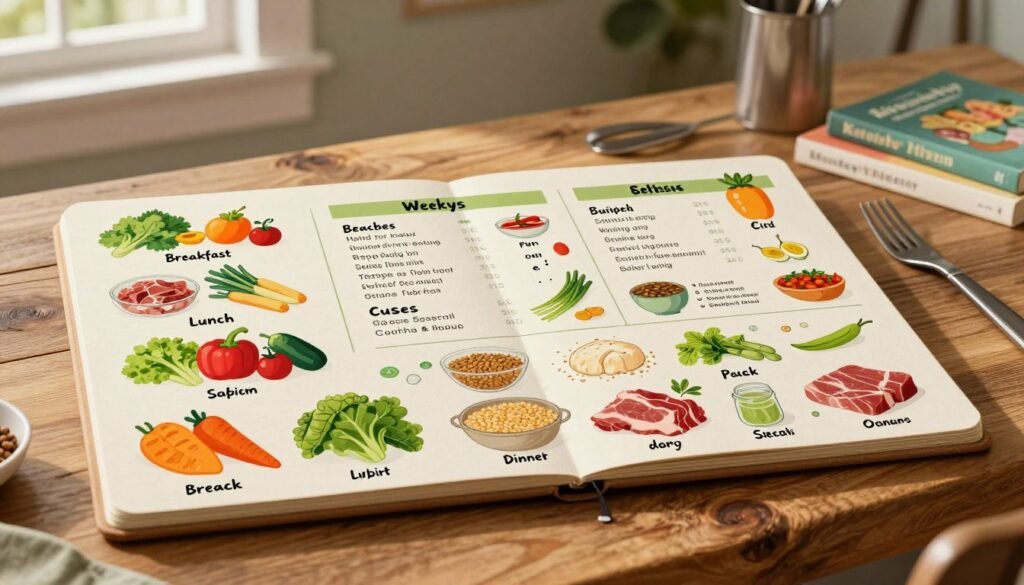
Set aside thirty minutes each week to map out your recipes and you’ll cut stress and needless shopping trips.
Start with three go-to recipe ideas that use the same ingredients in different ways. Pick one grain, one vegetable, and one protein to rotate across lunch and dinner.
Plan so your chicken or other proteins appear in two different dishes. That reduces waste and keeps your fridge lean and useful.
- Fewer impulse buys and one fewer store trip each week.
- Use key recipes to stretch ingredients into multiple plates.
- Swap items for sale to keep your budget on track.
When you lock in a simple plan, you save time and avoid takeout. Over weeks this habit lowers cost, lifts variety, and makes every dinner feel intentional.
Conclusion
Smart shopping and simple routines pay off. Use versatile staples like beans and eggs, embrace batch cooking, and check unit prices to stretch your grocery dollars while keeping flavor high.
Plan briefly each week and treat leftovers as ingredients, not waste. Small moves—frozen produce, quick sauces, and proper storage—add up to major savings across months.
Try one or two recipes from this guide this week. You’ll likely see lower costs, less stress, and tastier plates. Here’s to your success in the kitchen as you keep exploring affordable, satisfying ways to nourish your family.