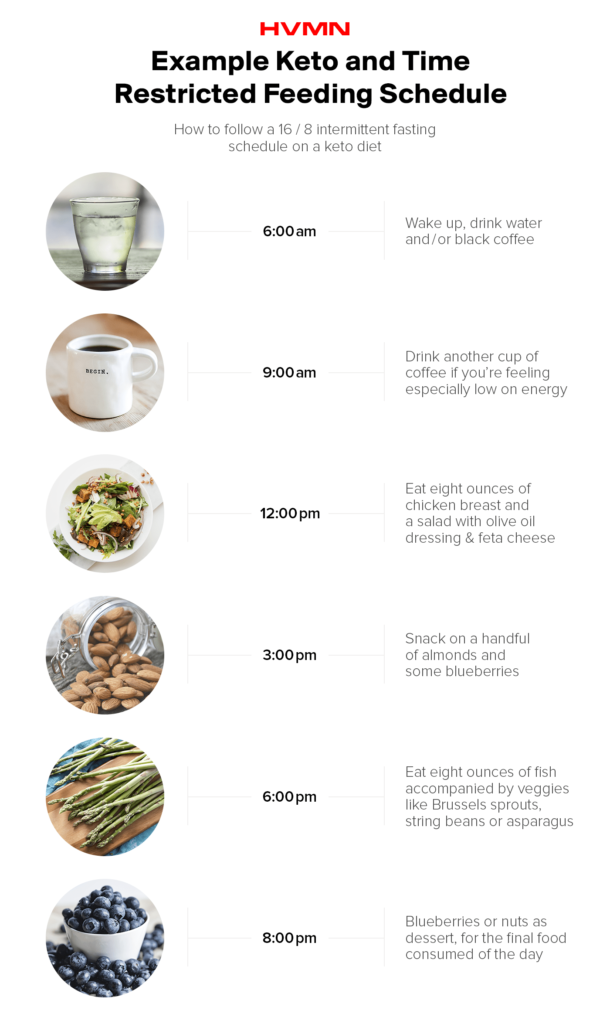
Have you ever wondered if your body needs a different path to lose weight?
Starting a ketogenic diet often feels promising, but you can stall despite strict efforts. Many people begin to cut carbs and fat, track calories, and expect quick results, yet their weight or energy won’t change as hoped.
Some of this comes down to biology. Your unique metabolism, meal choices, and daily carb intake shape whether you reach ketosis and burn fat. Small calorie slips, hidden carbs in foods, or inconsistent meal timing can slow progress over time.
This intro will help you spot common gaps in your plan and point to simple adjustments that support healthy weight loss. You’ll learn why steady efforts matter, when to track meals more closely, and which low carb shifts can improve your energy and results.
Key Takeaways
- Personal metabolism affects how you respond to a ketogenic diet.
- Hidden carbs and excess calories often block weight loss.
- Tracking meals and timing helps stabilize energy and progress.
- Small, consistent changes beat quick fixes for lasting results.
- Understanding ketosis guides smarter low carb decisions.
Understanding Why Keto Is Not Working For Me
Internal hormone balance has a major influence on how your body burns stored fat. Hormones like progesterone, estrogen, cortisol and insulin guide appetite, energy and weight. A strict keto diet can help some people, yet hormone shifts may limit visible results.
Chronic stress often raises cortisol. High cortisol can stall weight loss and change fat distribution. That makes steady progress harder, even when your diet seems perfect.
Key reasons to check beyond macros include hidden imbalances and underlying medical issues. No two bodies respond the same way. If your hormones are off, your ability to enter fat-burning states can lag.
- Individual physiology affects how fast you lose weight.
- Hormonal imbalances can block progress despite strict tracking.
- Addressing stress and endocrine issues often improves long-term results.
If you are not seeing expected weight loss, work with a clinician. Testing and small diet adjustments can help you lose weight more sustainably. Many people find better health and lasting loss after resolving hormonal issues.
The Impact of Hidden Carbohydrates
Hidden carbohydrates can quietly erase the benefits of a strict low-carb plan. You may track meals and still miss small sugars, starches, and additives that raise your daily intake.
Common Sneaky Sources
Processed foods often hide added sugar and starch. Packaged sauces, salad dressings, and snack products are common culprits.
Dairy and nuts can contain carbs you don’t expect. Flavored yogurts, milk, and some nut mixes add up fast.
“You must limit your carbs to 30 to 50 grams per day to maintain ketosis,” many coaches remind.
Tracking Your Macros
Track protein, fat, and carbs so your diet supports weight and weight loss goals. Aim for carbs that make up only 5%–10% of total calories.
- Nate P. lost 70 pounds by finding hidden carbs in his daily food intake.
- Avoid too many fat bombs and low carb desserts — extra calories can stall loss.
- Prioritize non-starchy vegetables and whole food options to boost health and keep carbs low.
Evaluating Your Daily Calorie Intake
Start by checking whether your daily calories match the energy you burn each day.
To lose weight, you must maintain a modest calorie deficit. Most experts recommend a steady loss of 1–3 pounds per week to protect your health.
Even on a strict keto diet, calorie-dense foods like avocados, nuts, and cheese can add up fast. Eating too many of these healthy foods will stall progress.
Many people also face insulin resistance. That condition makes losing weight keto harder if your daily intake is too high.
Track portions and log your meals for a week. You may find extra snacks or larger servings that push calories above your target.
“Balance your energy expenditure with food intake to create the conditions for steady fat loss.”
| Goal | Weekly Target | Action |
|---|---|---|
| Safe weight loss | 1–3 pounds | Create a modest calorie deficit; monitor weekly progress |
| Carb control | Maintain low daily carbs | Prioritize non-starchy vegetables and track sauces |
| Portion checks | Daily logging | Weigh servings, note snacks, adjust fat portions |
| Insulin concerns | Individualized plan | Consult a clinician if losing weight stalls |
The Role of Protein and Fat Ratios
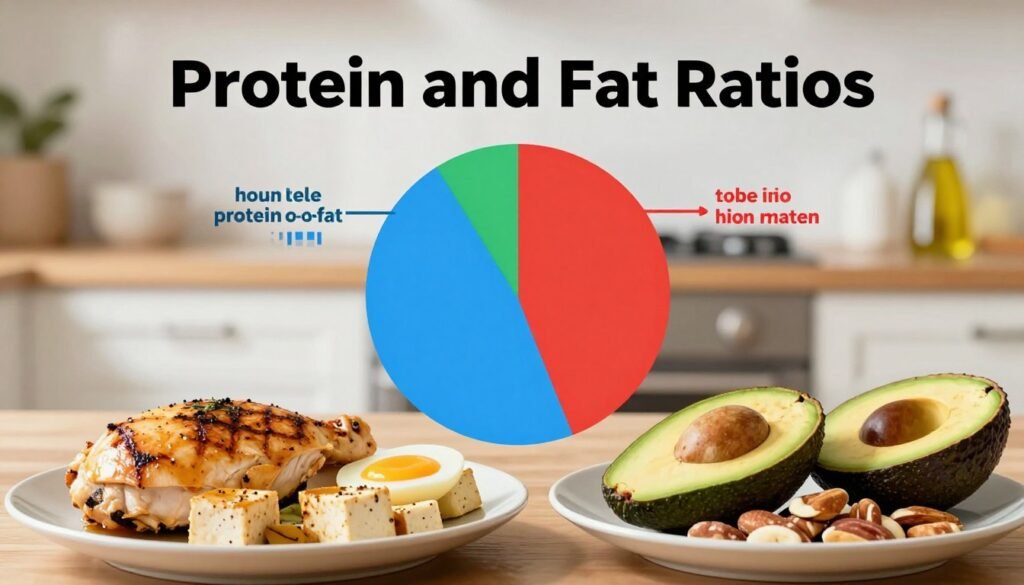
Adjusting how much protein and fat you eat can change how your body burns fuel. The right mix helps your metabolism favor fat as an energy source. That supports steady weight loss and more stable energy through the day.
Finding Your Ideal Macronutrient Balance
Aim for roughly 55–60% healthy fats and 35% protein in an ideal scenario. Too much protein can convert to glucose and slow your transition into ketosis.
- Use measured servings and track protein and fat to protect your weight goals.
- Supplements like Orgain’s Keto Collagen Protein Powder (10 g protein, 3 g carbs, 5 g fat) can help meet targets without overshooting carbs.
- If you miss ketosis, slightly lower protein and raise fat so your body burns fat for energy.
- Choose high-quality protein sources and whole foods to support health and loss.
| Target | Ratio | Action |
|---|---|---|
| Fat | 55–60% | Prioritize olive oil, avocado, fatty fish |
| Protein | ~35% | Track grams; consider collagen powder servings |
| Carbs | <10% | Limit starchy foods; focus on non-starchy vegetables |
Addressing Nutrient Density and Whole Foods
Choosing whole foods over packaged items can improve how your body uses fuel and supports weight loss.
Relying on processed foods — even those labeled low carb or keto-friendly — often leaves gaps in vitamins and fiber. These products can be calorie-dense and nutrient-poor, which may stall weight progress.
Prioritize eggs, fatty fish, olive oil, and full-fat dairy to supply quality protein and fat. Add non-starchy vegetables and leafy greens to boost fiber and micronutrients in your meals.
Examine snack bars, fast-food options, and convenience products. Many are high in hidden calories and offer little real nutrition.
Make a simple rule: if an item has a long ingredients list, choose a fresh alternative. This supports health, steady loss, and better energy for daily activity.
| Choice | Nutrient Density | Typical Calories |
|---|---|---|
| Whole eggs, salmon, olive oil | High (protein, omega-3, vitamins) | Moderate — satiating |
| Non-starchy vegetables, leafy greens | High (fiber, vitamins) | Low — fills meals |
| Packaged low carb snacks | Low to moderate (often processed) | Often high — watch portions |
| Nuts, dairy (plain) | Moderate (calcium, protein) | Calorie-dense — measure servings |
How Stress and Sleep Affect Weight Loss

Sleep debt and ongoing tension can quietly undo careful food choices. Stress and poor rest change hormones that guide hunger, energy, and how your body stores fat.
The Cortisol Connection
Chronic stress raises cortisol, which shifts your body toward holding fat around the midsection. That pattern makes steady weight loss harder even when calories and protein look right.
High cortisol also raises blood sugar and heart rate, which reduces your ability to burn fat. If you have insulin issues, this effect can be stronger and slow progress further.
Improving Sleep Hygiene
Poor sleep changes leptin and ghrelin, the hormones that control appetite. This can make you crave carbs and larger portions, and that undermines a low-carb or keto diet plan.
Improve sleep by keeping a regular bedtime, limiting screens before bed, and using short stress-reduction practices like meditation or breathing. Over time, these steps can boost energy and help you lose weight.
“Prioritize rest and stress control to create a better environment for weight loss.”
| Issue | Effect | Quick Action |
|---|---|---|
| High cortisol | Midsection fat, raised blood sugar | Stress techniques, short walks, therapy |
| Poor sleep | Higher appetite, low energy | Regular sleep schedule, screen curfew |
| Hormone imbalance | Slower fat burning | Check insulin, consult clinician |
Considering Medical Factors and Medications
Medical conditions and certain drugs can change how your body handles weight and calories. If you follow a strict diet and still see no loss, check for common causes like hypothyroidism, PCOS, or Cushing’s syndrome.
Certain prescriptions — beta-blockers, some antidepressants, corticosteroids, and insulin — can alter metabolism and raise body weight. These meds may blunt your response to a keto diet or other low-carb plans.
Talk with your clinician about testing and a review of your health history. Do not stop medications without medical guidance.
“If you feel stuck despite good habits, a medical review often reveals key issues to address.”
- Rule out endocrine problems if weight loss stalls.
- Discuss how drugs affect appetite, water balance, and calories.
- Consider coordinated care: diet plus medical treatment when needed.
| Factor | Impact on weight | Action |
|---|---|---|
| Hypothyroidism | Slower metabolic rate, harder loss | Thyroid testing, medication adjustment |
| Medications | Appetite change, fluid retention | Review prescriptions with provider |
| Hormone disorders | Insulin issues, central fat gain | Endocrine consult, tailored plan |
Conclusion
A tailored plan that fits your life and biology will deliver more reliable results than one-size-fits-all instruction.
Balance matters: match protein, fat, and carbs across your meals. Keep calories in check and track intake so your diet supports steady weight loss and helps your body reach ketosis when appropriate.
Check stress, sleep, and hormones if results stall. Manage cortisol with better rest and simple stress steps to protect energy and support losing weight.
Focus on whole foods, sensible portions, and consistent habits. Small, steady efforts will improve health and bring lasting weight and loss results over time.